Frequently Asked Questions
Results (263)
Click the question to read the answer.
-
Effective for the 2025 calendar year, and every year thereafter, producers no longer have collection targets and do not have to collect a minimum weight of used tires.
A producer’s individual management requirement is determined by formulas found in section 12 of the Regulation. See the tables below for details:
Management requirements for all tires
Performance Year Supply Report Year Formula *2025 2024 [(2020 supply + 2021 supply + 2022 supply) / 3)]×65% 2026 2025 [(2021 supply + 2022 supply + 2023 supply) / 3)]×65% 2027 2026 [(2022 supply + 2023 supply + 2024 supply) / 3)]×65% 2028 2027 [(2023 supply + 2024 supply + 2025 supply) / 3)]×65% 2029 2028 [(2024 supply + 2025 supply + 2026 supply) / 3)]×65% 2030 2029 [(2025 supply + 2026 supply + 2027 supply) / 3)]×70% Management requirements for large tires
Performance Year Supply Report Year Formula *2025 2024 [(2020 supply + 2021 supply + 2022 supply) / 3)]×60% 2026 2025 [(2021 supply + 2022 supply + 2023 supply) / 3)]×60% 2027 2026 [(2022 supply + 2023 supply + 2024 supply) / 3)]×60% 2028 2027 [(2023 supply + 2024 supply + 2025 supply) / 3)]×60% 2029 2028 [(2024 supply + 2025 supply + 2026 supply) / 3)]×60% 2030 2029 [(2025 supply + 2026 supply + 2027 supply) / 3)]×60% It is important to note that producers must ensure that all collected tires are managed, regardless of what their minimum management requirement is.
Note: Producers with a management requirement below a certain threshold may be exempt from registering with and reporting to RPRA.
See our FAQ ‘How do I determine if I am an exempt tire producer?’ to learn more.
-
Tire collection sites are established to facilitate the responsible recycling and management of used tires. The types of tires accepted at these sites include, but are not limited to:
Examples of Accepted Tires:
- Automobile tires (cars, SUVs, light-duty trucks)
- Motorcycle tires
- Motor assisted bicycle tires (e.g., mopeds, non-kick scooters)
- Tractor tires
- Tires on industrial and agricultural vehicles and equipment
- Transport truck tires
- Trailer tires (e.g., boat trailers, RVs)
- All-terrain vehicle (ATV) tires
- Riding lawn mower tires
- Aircraft tires (if not supplied on an aircraft)
- Snow blower tires
- Small tires (1 kg to <5 kg), such as:
- Wheelbarrow tires
- Dolly tires
Examples of Tires That Are Not Accepted:
- Bicycle tires (muscle-powered)
- Stroller and kick scooter tires (non-motorized)
- Power-assisted bicycle tires (e.g., electric bicycles)
- Personal mobility device tires (e.g., wheelchairs, medical scooters)
Tires can be dropped off on or off the rim. Collection sites must accept tires on rims.
-
You are a tire producer if you supply new tires to consumers in Ontario and you have a permanent establishment in Canada. New tires are supplied to Ontario in two ways – sold on new vehicles or sold as loose tires. The definition for tires producers (as outlined in section 3 of the Tires Regulation) applies in both cases.
New loose tires that are marketed to consumers in Ontario
- For new tires where there is a brand holder resident in Canada: you are the producer for those new tires if you are the brand holder of the new tires (the legislation defines brand holder to mean a person who owns or licenses a brand or who otherwise has rights to market a product under the brand) and resident in Canada.
- For new tires where there is no brand holder resident in Canada: you are the producer for the new tires if you are the importer of those new tires and resident in Ontario.
- For new tires where there is no brand holder or importer resident in Ontario: you are the producer for the new tires if you are the first person to market those tires in Ontario and resident in Ontario.
- For new tires where there is no brand holder, importer or marketer resident in Ontario: you are the producer for the new tires if you are the person that marketed those new tires and non-resident in Ontario.
New vehicles with new tires that are marketed to consumers in Ontario
- For new vehicles where there is a brand holder resident in Canada: you are the producer for the new tires on those new vehicles if you are the manufacturer of the vehicles (the legislation defines vehicle to include motor vehicles, muscular-powered equipment and trailers) and resident in Canada.
- For new vehicles where there is no manufacturer resident in Canada: you are the producer for the new tires on those new vehicles if you are the importer of those new vehicles and resident in Ontario.
- For new vehicles where there is no manufacturer or importer resident in Ontario: you are the producer for the new tires on those new vehicles if you are the marketer of those new vehicles in Ontario and resident in Ontario.
- For new vehicles where there is no manufacturer, importer or marketer resident in Ontario: you are the producer for the new tires on those new vehicles if you are the marketer of those new vehicles and non-resident in Ontario.
-
You are a tire collector if you operate a tire collection site where more than 1000 kgs of tires are collected in a year. A tire collection site is a location where used tires are collected, including:
- Repair shops, garages and vehicle dealerships (where used tires are collected as part of changing tires for customers)
- Auto salvage and recycling sites
- Any other site where end-of-life vehicles with tires are managed
You are not a tire collector if you operate a tire collection site where you:
- Also retread tires or process tires (you would be a tire retreader or a tire processor for those sites); or
- Only collect tires from the on-site servicing of vehicles that you own or operate (such as a site where you service your rental car fleet)
Municipalities can choose to operate collection sites, but they are exempt from registering with RPRA. For more information about municipal sites see: How does the Tires Regulation affect municipalities and First Nations?
-
Operators of tire collection sites will have to independently enter into commercial agreements with producers or producer responsibility organizations (PROs) to secure tire collection services. As long as a collection site is part of a producer’s tire collection system, the producer, or their PRO, is obligated to ensure tires are picked up from that site.
Since producers have legal obligations under the Tires Regulation, producers, or their PROs, will need tires to meet their management requirements. While tire collectors (i.e., operator of collection sits) are no longer required to register with RPRA, the collection site must be part of a producer’s collection system for the tires to count toward a producer’s management requirements
A list of registered PROs and producers is available on RPRA’s website on the Find a registrant page.
-
A producer’s management requirement is how much Blue Box material they must ensure is collected and processed into recovered resources each year. Management requirements are calculated based on what they supplied into Ontario one year prior and the resource recovery percentage as set in the regulation. A producer’s management requirement is calculated separately for each Blue Box material category (beverage container, glass, flexible plastic, rigid plastic, metal and paper).
Some producers are exempt from having a management requirement based on their supply data, for more information on exemptions see the FAQ Are there exemptions for Blue Box producers? If a producer does not have a management requirement they do not have any collection, management or promotion and education obligations.
A producer with a management requirement must also provide collection and promotion and education services in Ontario. Most producers will contract the services of a producer responsibility organization (PRO) to meet their collection, management and promotion and education obligations.
To view your management requirement(s), log into your registry account, download a copy of your Blue Box Supply Report and review the section with your minimum management requirements. Management requirements for a given year are determined by supply data from two years prior. For example, 2026 management requirements were based on 2024 supply data (submitted in producers’ 2025 Supply Report).
Unsure if you are a Blue Box producer? See our FAQs Am I a producer of Blue Box product packaging? And Am I a producer of paper products and packaging-like products?
-
An alternative collection system is one of three types of collection and management systems for Blue Box materials. Producers can choose to establish or participate in an alternative collection system to meet their collection, management, and promotion and education requirements under the Blue Box Regulation.
An alternative collection system can be established by one or more producers or PROs. The system must demonstrate that it can meet all system regulatory requirements as well as the minimum management requirements for participating producer(s). A producer can choose to meet their obligations using an alternative collection system instead of participating in the common collection system.
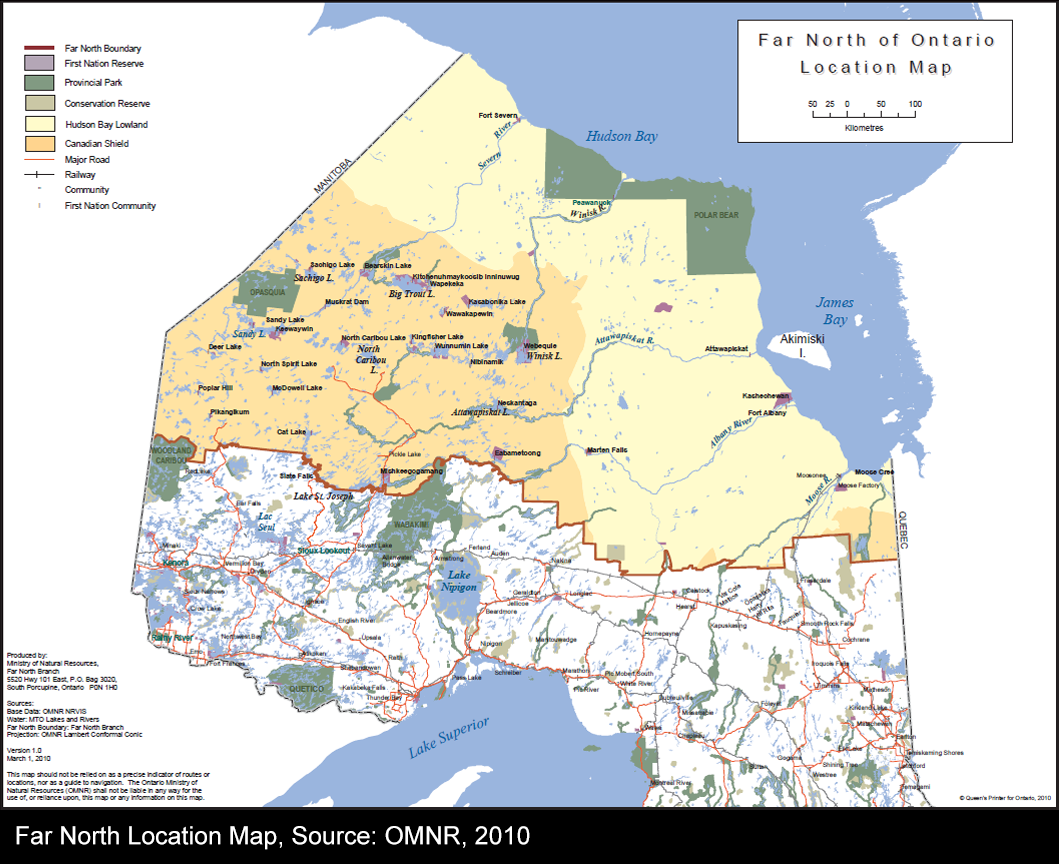
Types of alternative collection systems may vary and can include depot or return-by-mail systems. Alternative collection systems must service all eligible communities south of Ontario’s Far North.
For more information on alternative collection system registration criteria, please reach out to [email protected].
Also see: ‘What is the Blue Box common collection system?’, ‘What is a Blue Box supplemental collection system?’
-
A supplemental collection system is one of three types of collection and management systems that producers can choose to establish or participate in to contribute to their collection, management, and promotion and education requirements under the Blue Box Regulation.
Supplemental collection systems are not required to service all eligible communities south of Ontario’s Far North. Therefore, a producer participating in this type of system is still required to participate in the common collection system to meet their obligation to collect and manage Blue Box materials from all eligible communities, and to provide a promotion and education program.
One or more producers or PROs can establish a supplemental collection system. If a producer or PRO wishes to use a supplemental collection system’s collected materials towards producer minimum management requirements, that system should register with RPRA.
For more information on supplemental collection system registration criteria, please reach out to [email protected].
Also see: ‘What is the Blue Box common collection system?’, ‘What is a Blue Box alternative collection system?’
-
Producers of oil filters and non-refillable pressurized containers have individual management requirements which are determined by the formulas found in section 2 of the HSP Regulation multiplied by the number found in section 31 of the regulation.
Oil filters
A producer’s minimum management requirement is determined by the formulas summarized in the table below.
Performance Year Supply Report Year Formula 2025 2024 [(2024+2023+2022)/3] × 85% 2026 2025 [(2025+2024+2023)/3] x 85% 2027 2027 [(2026+2025+2024)/3] x 85% 2028 2027 [(2027+2026+2025)/3] x 85% Non-refillable pressurized containers
A producer’s minimum management requirement is determined by the formulas summarized below.
Performance Year Supply Report Year Formula 2025 2024 [(2024+2023+2022)/3] × 30% 2026 2025 [(2025+2024+2023)/3] x 30% 2027 2027 [(2026+2025+2024)/3] x 30% 2028 2027 [(2027+2026+2025)/3] x 30% It is important to note that producers must ensure that all collected HSP are managed, regardless of what their minimum management requirement is.
Note: Exempt producers are not required to meet minimum management requirements.
See our FAQ “How do I determine if I am an exempt HSP producer?” to learn more.
-
Reuse under the Tires Regulation means either of the following:
- Tires that are sold and reused for their original purpose with or without modification. Modification includes repair but does not include retreading. For example, a repaired tire must be sold as a complete tire. A repair to a tire that remains on a vehicle, such as fixing a flat tire, does not count as reuse.
- Tires that are reused without modification for a new purpose. For example, a tire being reused as a bumper, or other similar apparatus for absorbing shock. Tires that are reused without modification for a new purpose does not include tires that are deposited on land.
The entire weight of the reused tire can be counted towards a producer’s management target.
-
Readily accessible to the public means a site can be accessed by any consumer who wants to drop off used materials for free to be recycled, reused or refurbished.
A public collection site cannot restrict the type of products accepted. For example, an electronics collection site cannot refuse to accept printers or large televisions. Retail stores are only required to accept materials of a similar size and function to the products supplied at that location. For example, a mobile phone kiosk may choose to accept only mobile phones.
Collection sites can request reasonable requirements when consumers drop off an item to ensure health and safety. For example, sites may require that used oil filters are dropped off in sealed containers, light tubes are taped together, etc.
Publicly accessible collection sites and events will appear on the Where to Recycle map. Note: In October 2026, the Where to Recycle map moved from rpra.ca to OntarioRecycles.ca, RPRA’s website to keep the public informed about the circular economy and recycling in Ontario.
Restrictions
If a collection site has restrictions, for example due to an Environmental Compliance Approval (ECA), municipal by-law, or fire code provision, the restrictions may be applied, and the collection site will still be considered readily accessible to the public. For example, a municipal depot that has an ECA to accept materials only from residents of the community can apply this restriction and still be considered readily accessible to the public. Similarly, a collection site with an ECA that prohibits collection from the industrial, commercial and institutional sectors may apply these restrictions and still be considered readily accessible to the public. And a collection site that has restrictions on how it can be accessed (such as drive-in only) may enforce these restrictions and still be considered readily accessible to the public.
Read this related FAQ: What is the difference between a public and private collection site?
-
The common collection system is the Blue Box material collection and management system established by PROs on behalf of producers. Blue Box materials that are picked up through curbside residential collection, for instance, are processed through the common collection system. The system came into effect on July 1, 2023, as outlined in the Blue Box Regulation. The common collection system services all eligible communities south of Ontario’s Far North.
It is one of three types of collection and management systems that producers can choose to use to meet their minimum management requirements. Producers who use the common collection system to meet their obligations will contract with a PRO that is participating in the common collection system.
Also see: ‘What is a Blue Box Alternative collection system?’, ‘What is a Blue Box supplemental collection system?’
-
RPRA recognizes the commercially sensitive nature of the information that parties submit to the registry. RPRA is committed to protecting the commercially sensitive information and personal information it receives or creates in the course of conducting its regulatory functions. In recognition of this commitment, RPRA, in addition to the regulatory requirements of confidentiality set out in the Resource Recovery and Circular Economy Act 2016 (section 57), has created an Access and Privacy Code that applies to its day-to-day operations, including the regulatory functions that it carries out.
Obligated material supply, collection, and resource recovery data will only be made public in aggregate form, to protect the confidentiality of commercially sensitive information.
RPRA will publish the names and contact information of all registered businesses – producers, service providers (collectors, haulers, processors, etc.), and producer responsibility organizations. The public will also have access to a list or method to locate any obligated material collection sites, as this information becomes available.
As part of its regulatory mandate, the Registrar will provide information to the public related to compliance and enforcement activities that have been undertaken.
The information that is submitted to the Registry will be used by the Registrar to confirm compliance and to track overall collection and management system performance. It will also be used by RPRA to update its policies and procedures and by the Ministry of Environment, Conservation and Parks for policy development.
-
A producer responsibility organization (PRO) is not necessarily required to include each and every collection site in Ontario in their collection system. However, producers and PROs acting on their behalf are required to establish and operate a collection system that meets the requirements of the Tires Regulation.
If a collection site operator is unable to be included in a collection system, the operator should contact RPRA’s Compliance Team at [email protected], 647-496-0530 or toll free at 1-833-600-0530 for assistance.
Read Compliance Bulletin – Tire Collection Systems for more information. The contact information for all registered PROs is available on the producer responsibility organization webpage.
-
Under the Blue Box Regulation, there are three types of exemptions that apply to producers:
- Based on a producer’s gross annual revenue,
- based on the weight of Blue Box materials supplied into Ontario, and
- for producers of newspaper
1. Any producer whose gross annual Ontario revenue from products and services is less than $2,000,000 is exempt from all producer requirements under the regulation. In the case where the producer is a franchisor, it is the gross annual revenue of the system that is used to determine if an exemption applies.
Any producer who meets the exemption must keep any records that demonstrate its gross annual Ontario revenue is less than $2,000,000 in a paper or electronic format that can be examined or accessed in Ontario for a period of five years from the date of creation.
See our FAQs to understand what revenues municipalities and registered charities should consider when determining whether or not they are an exempt producer.
2. A producer who is above the revenue-based exemption level may still be exempt from performance requirements (collection, management and promotion and education) if their supply weight is below the exemption levels outlined in the table below.
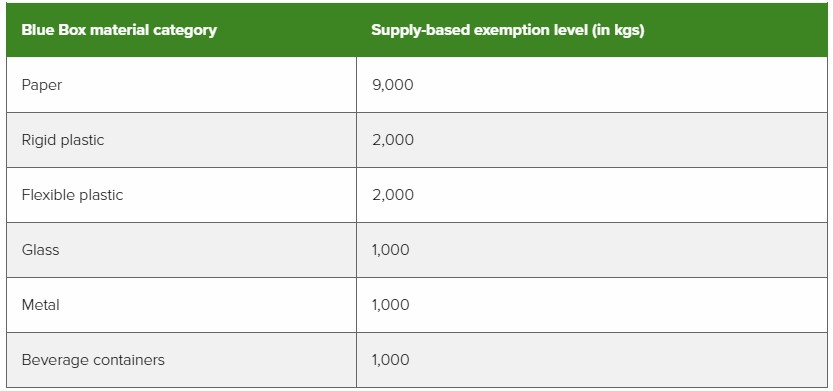
If a producer’s annual revenue is more than $2,000,000 and supply weight in all material categories is less than the tonnage exemption threshold, the producer is required to register and report.
If a producer’s annual revenue is more than $2,000,000 and supply weight in at least one material category is above the tonnage exemption threshold, the producer is required to meet all obligations (registration, reporting, collection, management, and promotion and education). However, producers are only required to meet their minimum management requirement in material categories where they are above the exemption level.
3. As outlined in the amended Blue Box Regulation (released April 19, 2022), producers of newspapers may be exempt from collection, management, and promotion and education requirements. For the purposes of this exemption, “newspapers” includes newspapers and any protective wrapping and any supplemental advertisements and inserts that are provided along with the newspapers.
For a producer to qualify for this exemption, newspapers must account for more than 70% of their total weight of Blue Box materials supplied to consumers in Ontario in a calendar year. If exempt, the producer is not required to meet collection, management, and promotion and education requirements for all Blue Box materials they supply in Ontario in the following two calendar years.
A producer whose newspaper supply accounts for 70% or less of their total weight of Blue Box materials is subject to collection, management, and promotion and education requirements for all Blue Box materials they supply in Ontario.
-
If you collect used tires at your site as a result of onsite servicing of your vehicles, you are not a tire collector for the purposes of the Tires Regulation. These collection sites are considered private collection sites and may be used to achieve management requirements but cannot be used to meet the requirements of a public collection system (e.g., site is not open to the public for tire drop-offs).
-
RPRA has developed a library of resources to support Registry users navigate the online system and meet their regulatory requirements. RPRA consistently adds to this pool of resources based on upcoming requirements, emerging needs, and questions we receive from stakeholders.
View Registry resources for each program:
-
Producers are required to establish and operate a collection system that meets the accessibility requirements in the regulation. Producers must ensure that all HSP collected is managed regardless of what their minimum management requirements are.
For producers to meet their obligations, they have the choice of establishing and operating their own collection and management system or working with one or more producer responsibility organizations (PROs) that are registered with RPRA.
Large producers have an additional requirement to provide call-in collection services. Learn more.Please contact the Compliance Team at 1-833-600-0530 or [email protected] to discuss other requirements under the HSP Regulation.
See our FAQ to understand “Am I a small, large or exempt HSP producer?“. For more guidance, read the Hazardous and Special Products Collection Systems Compliance Bulletin.
-
Yes, a producer, a PRO (producer responsibility organization) on behalf of a producer, or a service provider on behalf of either party, can collect any product or material (including materials or products that are not designated under the Resource Recovery and Circular Economy Act, 2016 (RRCEA)). For example, a battery producer may choose to collect batteries that weigh over 5kg; a tire producer may choose to collect bicycle tires; or a Blue Box producer may choose to collect books.
Products or materials that are not designated under RRCEA regulations cannot be counted towards meeting a producer’s collection or management requirements under RRCEA.
If designated materials are co-collected with materials that are not designated, a person must use a methodology or process acceptable to the Authority to account for those materials. Anyone considering this can contact the Compliance Team to discuss at [email protected] or 833-600-0530.
For example, if bicycle tires are collected at the same time as automotive tires, they must be accounted for separately both when collected and when sent to a processor.
-
To set up your tire collection and management network, you must establish a publicly accessible collection system based on your supply volume or sales methods and implement a downstream management system to meet your specific regulatory targets using registered service providers. Alternatively, you may sign up with a Producer Responsibility Organization (PRO) to arrange and operate these systems on your behalf.
For more compliance guidance to producers who are required to establish and operate tire collection systems, read our Compliance Bulletin -Tire Collection Systems.
-
Under the Blue Box Regulation, a building is a “facility” if it is one of the following:
- A multi-residential building with six (6) or more dwelling units
- A public or private school
- An Elders’ lodge
- A not-for-profit retirement home
- A not-for-profit long-term home
To be considered an “eligible facility” – a facility that is eligible to receive Blue Box collection services under the Blue Box Regulation – one of the following must apply:
a) The facility is located within a community* that has or will join the common collection system and was previously serviced under the legacy Blue Box program (e.g., received depot or curbside collection from the municipality, local service board or First Nation before it joined the common collection system). This facility is eligible to receive collection service on its host community’s transition date.
or
b) The facility was not previously serviced under the legacy Blue Box program but is planning to register for collection under the new Blue Box system. Facilities in this category will be eligible to receive Blue Box collection services under the producer run program starting January 1, 2031.
*A “community” refers to a municipality, local service board or First Nation
To better understand when your eligible facility is eligible for Blue Box collection, see the chart below:
Facility category (detailed above) July 1, 2023-Dec. 31, 2025 (During transition) Jan. 1, 2026-Dec. 31, 2030 Jan. 1, 2031, onwards a) Previously received service from host community Eligible as of the community’s transition date (see transition schedule). Eligible for continuation of same type of service (depot or curbside). Facilities are eligible to register for curbside Blue Box collection.
More information on registration for Blue Box service beginning in 2031 will be shared at a later date.b) Has not previously received service from host community Not eligible for service during this period. Not eligible for service during this period. If you have questions, please contact the Compliance and Registry Team at [email protected] or 1-833-600-0530 (toll-free).
-
You are a tire processor if you receive and process tires for resource recovery or disposal. Processing means you are transforming tires into their constituent parts, including by shredding, chipping, grinding, cutting or cryogenic crushing. You are also a tire processor if you engage in activities to chemically alter tires, such as depolymerization.
-
A battery producer qualifies for an exemption if their average weight of supply for that calendar year is:
- Less than or equal to 2,500 kg of rechargeable batteries, or
- Less than or equal to 5,000 kg of primary batteries.
Average supply weight is determined using the following formula:
Average weight of rechargeable batteries = (Y3 + Y4 + Y5) / 3
- Eg. 2025 average weight of supply = (2022 + 2021 + 2020) / 3
Average weight of primary batteries = (Y2 + Y3 + Y4) / 3
- Eg. 2025 average weight of supply = (2023 + 2022 + 2021) / 3
Battery producers that meet the exemption criteria are exempt from:
- Registering and reporting to RPRA.
- Establishing a collection and management system.
- Meeting management requirements.
- Promotion and education requirements.
Producers must verify that they continue to meet the exemption annually, since their average weight of supply will change from year to year.
Exempt producers must keep records related to the weight of batteries (by category) supplied into Ontario each year and provide them to RPRA upon request.
Producers are advised to confirm their exemption with the Compliance Team at 833-600-0530 or [email protected].
Also see our FAQ: ‘How are battery producers’ minimum management requirements determined?‘
-
Collection sites are required to accept used tires that are of similar rim size and weight as the new tires (or tires on new vehicles) that they sell. Use the Authority’s Find a Collection Site map to find a drop-off location and call ahead to confirm that the collection site will accept your tires.
-
Individual Producer Responsibility (IPR) means that producers are responsible and accountable for collecting and managing their products and packaging after consumers have finished using them.
For programs under the Resource Recovery and Circular Economy Act, 2016 (RRCEA), producers are directly responsible and accountable for meeting mandatory collection and recycling requirements for end of life products. With IPR, producers have choice in how they meet their requirements. They can collect and recycle the products themselves, or contract with producer responsibility organizations (PROs) to help them meet their requirements.
-
A lighting producer qualifies for an exemption if their average weight of supply for that calendar year is less than or equal to 700 kg.
Average supply weight is determined using the following formula:
Average weight of lighting supply = (Y3 + Y4 + Y5) / 3
Eg. 2025 average weight of supply = (2022 + 2021 + 2020) / 3
Lighting producers that meet the exemption criteria are exempt from:
- Registering with and reporting to RPRA
- Establishing a collection and management system
- Meeting a management requirement
- Promotion and education requirements
Producers must verify that they continue to meet the exemption annually, since their average weight of supply will change from year to year.
Producers that are exempt must keep records of the materials they supplied, as set out in section 30 of the regulation.
Producers are advised to confirm their exemption with the Compliance Team at 833-600-0530 or [email protected].
See our FAQs: “How are lighting producers’ minimum management requirements determined?” and “What do I have to do if I am an exempt lighting producer?”
-
Lighting producers are required to establish and operate a lighting collection system that meets the accessibility requirements in the EEE Regulation. A producer must ensure that all lighting collected is managed regardless of what their minimum management requirements is.
A producer has the choice of establishing and operating their own collection and management systems or working with one or more producer responsibility organizations (PROs) registered with RPRA to meet their obligations.
For detailed information on lighting producer requirements, visit our Lighting Producer webpage.
If you have further questions about lighting producer requirements, contact the Compliance and Registry Team at [email protected] or 1-833-600-0530.
-
A tire producer qualifies for an exemption if their average weight of supply for that calendar year is less than 1,175 kg.
Average supply weight is determined using the following formula:
Average weight of tire supply = (Y3+Y4+Y5) / 3
E.g. 2025 average weight of supply = (2022 + 2021 + 2020) / 3
Tire producers that meet the exemption criteria are exempt from:
- Registering and reporting to RPRA
- Establishing a collection and management system
- Meeting a management requirement
Producers must verify that they continue to meet the exemption annually, since their average weight of supply will change from year to year.
Exempt producers must keep records related to the weight of tires supplied into Ontario each year and provide them to RPRA upon request.
Producers are advised to confirm their exemption with the Compliance Team at 833-600-0530 or [email protected].
-
Only residential Blue Box costs and tonnes are eligible for industry funding. Therefore, the portion of tonnes and costs from IC&I must be accounted for. There are different ways to calculate these allocations, including those listed below.
- For collection, IC&I allocations may be determined by dividing the number of IC&I stops on a collection route by the total number of stops. The number of IC&I stops as a ratio of total stops is a good indicator of costs for collection activities. This allocation may then be applied to all costs and/or tonnes reported in that contract.
- For Non-Blue Box allocations (e.g., if a truck co-collects Blue Box material and organics), costs must be apportioned to account for the collection of an additional waste stream.
- Allocations for processing costs may be based on tonnes. For instance, if a municipality owns a Material Recovery Facility (MRF) that processes Blue Box material from another municipality, the tonnes and costs related to that processing would have to be removed from the reported tonnes and costs.
- Depot costs may be handled in a similar manner, using the proportion of IC&I tonnes to remove ineligible costs. Alternatively, costs could be deducted according to the time that depot staff spend on Non-Blue Box materials, or the percentage of space at the depot allotted to Non-Blue Box materials.
If you are still having trouble allocating IC&I and Non-Blue Box percentages, contact the Authority at [email protected] for assistance.
-
No. RPRA does not administer contracts or provide incentives. Under the Regulations, producers will either work with a producer responsibility organization (PRO) or work directly with collection sites, haulers, refurbisher’s and/or processors to meet their collection and management requirements. Any reimbursement for services provided towards meeting a producers’ collection and management requirements will be determined through commercial contracts.
To discuss any payment, contact your service provider or a PRO. RPRA does not set the terms of the contractual arrangements between PROs and producers.
-
Beginning October 1, 2021, producers of oil filters and non-refillable pressurized containers, or PROs acting on their behalf, are required to establish and operate a promotion and education program including the following:
- promote their collection and management services with respect to the type of HSP they are obligated for
- provide the following information on a website with respect to that type of HSP:
- the location of each HSP collection site established or operated by the producer that is accessible to the public and the types of HSP accepted at each site
- the location and date of each HSP collection event held by the producer and the types of HSP accepted at each event
- a description of the collection services provided by the producer, other than HSP collection sites and HSP collection events
- a description of how the producer manages that type of HSP after it is collected
- create promotional and educational materials with respect to that type of HSP that include the following:
- the website URL
- a description of how that type of HSP is collected and managed
- the producer shall make the promotional and educational materials available to retailers that supply that type of HSP, municipal governments and Indigenous communities, and shall solicit and consider feedback on how the promotional and educational materials can be improved
- the producer shall promote each HSP collection event for that type of HSP in the local municipality or territorial district where it will be held for at least one week prior to the date of the event using a combination of two or more forms of media, including but not limited to:
- local print publications
- local print media
- local radio
- local signage or social media
-
Beginning October 1, 2021, producers, or PROs acting on their behalf, of oil containers, antifreeze, pesticides, solvents, paints and coatings are required to establish and operate a promotion and education program including the following:
- Promote their collection and management services with respect to the type of HSP they are obligated for
- Provide the following information on a website with respect to that type of HSP:
- the location of each HSP collection site established or operated by the producer that is accessible to the public and the types of HSP accepted at each site
- the location and date of each HSP collection event held by the producer and the types of HSP accepted at each event
- a description of the collection services provided by the producer, other than HSP collection sites and HSP collection events
- a description of how the producer manages that type of HSP after it is collected
- Create promotional and educational materials with respect to that type of HSP that include the following:
- the address of the website
- a description of how that type of HSP is collected and managed
- The producer shall make the promotional and educational materials available to retailers that supply that type of HSP, municipal governments and Indigenous communities, and shall solicit and consider feedback on how the promotional and educational materials can be improved
- The producer shall promote each HSP collection event for that type of HSP in the local municipality or territorial district where it will be held for at least one week prior to the date of the event using a combination of two or more forms of media, including but not limited to:
- local print publications
- local print media
- local radio
- local signage or social media
-
1. You will need the following information to create a Registry account:
- CRA Business Number (BN)
- Legal Business Name
- Business address and phone number
- Address of where you work (if different from the main office)
- Contact information for your additional users
2. You will need to provide the address and phone number for each site where you retread and/or process tires.
3. You will need to identify which of the following tire categories are applicable to your business:
- Large tires (over 700 kg)
- Other tires (700 kg or less)
4. If you are a processor, you will also need to identify which of the following materials are applicable to your process:
- Crumb rubber
- Tire derived mulch
- Tire derived aggregate
- Tire derived rubber strips and chunks
- Fluff/fibre
- Tire derived steel/metal
- Other
If your business performs multiple roles (e.g., hauler and processor), you only need to create one registry account and identify the additional roles. If you are a producer, use your producer account to add roles.
-
As an obligated HSP producer, you are required to:
- register and report annual supply and performance data of obligated materials
- meet mandatory and enforceable requirements for collection and management
- meet mandatory and enforceable requirements for promotion and education
- meet mandatory and enforceable requirements for auditing, verification, and record keeping
These requirements vary based on material type and amount of material the producer supplies.
-
RPRA is the regulator designated by law to oversee the operation and wind up of current waste diversion programs under the Waste Diversion Transition Act, 2016. The Authority provides oversight, compliance, and enforcement activities with respect to regulations made under the Resource Recovery and Circular Economy Act, 2016.
-
If you select credit card as your method of payment, this will be done through your Registry account.
Follow these steps to complete your payment:
Follow these steps to complete your payment:
- In the payment method section of the Registry, select credit card as your preferred method.
- Enter your credit card details.
- Click PAY and the payment will process automatically.
Please note:
- Invoices are due on receipt.
- Invoices are in CAD funds and payments must be sent in CAD.
- Payment will be reflected in your Registry account once your transaction has been processed.
- Registrants can save a credit card as their preferred payment method.
- Hazardous Waste Program (HWP) registrants can enrol in Manifest Autopay with credit card as their saved payment method.
If you have questions about fee payment, contact our Compliance and Registry Team at [email protected] or call 1-833-600-0530.
How do I pay my fees to RPRA by cheque?
If you select cheque as your method of payment, follow these steps to complete your payment:
- Make your cheque payable to “Resource Productivity and Recovery Authority”
- Enter your Invoice Number on the memo line of the cheque
- Send your cheque to:
- Resource Productivity Recovery Authority
- PO Box 46114, STN A
- Toronto, ON
- M5W 4K9
Please note:
- Invoices are due on receipt.
- Invoices are in CAD funds and payments must be sent in CAD.
- It may take 2-4 weeks for your payment to be reflected in your Registry account due to mail and cheque processing times.
If you have questions relating to fee payment, contact our Compliance and Registry Team at [email protected] or call 1-833-600-0530.
-
Brand holders and producers that supply products and packaging are required by legislation to meet individual mandatory collection and resource recovery requirements and may face compliance and enforcement consequences for failing to do so. The executive attestation ensures that executives responsible for managing the brand holder’s or producer’s business are aware of these requirements and can ensure that appropriate measures are put in place to achieve compliance with the regulations.
-
A producer’s individual management requirements are determined by formulas found in section 14 of the Regulation, summarized in the table below:
Performance Year Supply Report Year Formula 2025 2024 (2020 supply + 2021 supply + 2022 supply) / 3×65%* 2026 2025 (2021 supply + 2022 supply + 2023 supply) / 3×65% 2027 2026 (2022 supply + 2023 supply + 2024 supply) / 3×65% 2028 2027 (2023 supply + 2024 supply + 2025 supply) / 3×65% 2029 2028 (2024 supply + 2025 supply + 2026 supply) / 3×65% 2030 2029 (2025 supply + 2026 supply + 2027 supply) / 3×70% *For reports submitted in 2024, producers should use RPRA’s manual calculator
It is important to note that producers must ensure that all ITT/AV collected is managed regardless of what their minimum management requirement is.
Note: Producers with a management requirement below a certain threshold may be exempt from registering with and reporting to RPRA. See our FAQ ‘How do I determine if I am an exempt ITT/AV producer?’ to learn more.
-
Yes, any tire type collected and managed within a collection system can be used to meet a producer’s management requirement.
Producers who supplied large tires have to ensure that large tires recovered equals at least 60 per cent of their average weight of supply.
-
You are a Blue Box processor if you process Blue Box material that was supplied to a consumer in Ontario for the purposes of resource recovery.
For the purpose of resource recovery, processing includes, and is not limited to:
- Sorting
- Baling
- Paper and cardboard shredding
- Plastic reprocessing, which includes grinding, washing, pelletizing, compounding, etc.
- Crushed glass reprocessing
- Aluminum and steel reprocessing
See our FAQs to understand “Who is a consumer under the Blue Box Regulation”.
-
No. If a municipality has a private company operating a site on their behalf, the company is not required to register the municipally-owned sites as long as the tires are picked up by a registered hauler and delivered to a registered processor or retreader.
If the private company owns or operates collection sites that are not owned by a municipality, it is required to register and report its non-municipally-owned sites.
To ensure tires continue to be picked up from your sites, you will need to make sure those sites are included in the collection systems established by tire producers or producer responsibility organizations (PROs). Since most producers will work with PROs to establish their collection systems, municipalities should contact a registered PRO.
Visit our webpage about PROs for more information.
-
Producers are required to establish and operate a collection system for batteries that meets the accessibility requirements in the regulation. Producers must ensure that all batteries collected are managed regardless of their minimum management requirements.
For producers to meet their obligations, they have the choice of establishing and operating their own collection and management system or working with one or more producer responsibility organizations (PROs) that are registered with the Authority.
Please contact the Compliance Team at 833-600-0530 or [email protected] to discuss other requirements under the Batteries Regulation.
-
Producers are required to establish and operate a collection system for ITT/AV that meets the accessibility requirements in the regulation. Producers must ensure that all ITT/AV collected is managed regardless of what their minimum management requirements are.
Producers have the choice of establishing and operating their own collection and management systems or working with one or more producer responsibility organizations (PROs) registered with the Authority to meet their obligations.
Please contact the Compliance Team at 833-600-0530 or [email protected] to discuss other requirements under the EEE Regulation.
-
Registry Resources such as Registry Procedures, Compliance Bulletins, and Reporting Guides can be found on our Tires Registry Resources webpage.
-
Impacts on producers of antifreeze and/or oil filters provided in new vehicles
Supply reporting
Vehicle brand holders, importers and marketers are now obligated for antifreeze and/or oil filters that are supplied in new vehicles sold in Ontario.
Subsection 7(2) of the amended HSP Regulation states that these producers must report to RPRA the weights of antifreeze and/or oil filters that were supplied in new vehicles sold in Ontario in 2022, 2023 and 2024. This change to the producer hierarchy may impact supply reports previously submitted to RPRA. It may also require producers to submit a supply data verification report if they meet the definition of a large producer, based on the newly submitted supply data. Producers who need to submit adjusted supply data as a result of this change to the producer hierarchy should contact RPRA before July 31, 2025.
Although there may be adjustments to the historical supply data, the collection and management requirements for the 2025 calendar year remain unchanged.
Management requirements
Beginning January 1, 2026, these vehicle brand holders, importers and marketers of antifreeze and/or oil filters supplied in new vehicles will also be required to fulfill collection and management obligations, including reporting on their performance in meeting their obligations.
This includes ensuring there are sufficient collection sites in a community based on the size of the producer and that the HSP material is managed within 3 months of being collected. Specifically, oil filter producers must ensure that the weight of the recovered resources from managing oil filters in 2026, and every year thereafter, meets or exceeds their individual management requirement as calculated under subsection 31(3) of the HSP Regulation.
Impacts on producers of antifreeze and/or oil filters not supplied in new vehicles
The producer hierarchy for antifreeze and/or oil filters supplied in containers (i.e., not supplied in new vehicles) remains unchanged.
These producers may have reported tonnage for antifreeze and/or oil filters supplied in new vehicles as part of their supply reports in previous years and, if so, they should contact RPRA before July 31, 2025 to clarify their obligations and make changes to their supply data, as required.
-
No, producers are not required to sign up with a PRO to meet their regulatory requirements. It is a business decision if a producer chooses to work with a PRO, and a producer can choose to meet their obligations without a PRO.
Most producers will choose to contract with a PRO to provide collection, hauling, processing, retreading and/or refurbishing services to achieve their collection and management requirements unless they carry out these activities themselves.
-
If First Nation communities, municipalities or other collection site operators want to collect used HSP as a service to customers or residents, they need to ensure their sites are included in a producer’s collection network.
Most producers will be working with service providers, such as PROs, processors or haulers to operate their collection networks. To join a collection network, First Nation communities, municipalities, and collection site operators should contact a service provider registered with RPRA. View the list of registered service providers here.
Municipalities and First Nations communities can also hold collection events. Collection events are typically one to two day events where members of the public or community can drop off materials such as HSP. These communities should contact a service provider if they are interested in providing these services to their residents.
All municipalities, territorial districts and First Nation communities can contact producers or PROs to arrange a pickup once they collect a specific amount of HSP material. The minimum amount required for pickup differs by category. For further information about this option, please see our Recycling in First Nation Communities page.
-
As an obligated Blue Box producer, you are required to:
- Register with RPRA
- Report supply data to RPRA annually
- Meet mandatory and enforceable requirements for Blue Box collection systems
- Meet mandatory and enforceable requirements for managing collected Blue Box materials, including meeting a management requirement set out in the regulation
- Meet mandatory and enforceable requirements for promotion and education
- Provide third-party audits of actions taken towards meeting your collection and management requirements, and report on those actions to RPRA through annual performance reports
-
No. Section 68 subsection (3) of the Resource Recovery and Circular Economy Act states that “a person responsible for establishing and operating a collection system shall ensure that no charge is imposed at the time of the collection.”
-
Free riders are obligated parties that:
- Have not registered or reported to RPRA
- Have not established a collection and management system (if they are so required to), or;
- Are not operating a collection and management system (if they are so required to).
See our FAQs to understand “What is RPRA’s approach to free riders?”, and “What do I do if I think a business is a free rider?”
To note:
- Some producers only have requirements to register and report. Please refer to your specific program page on our website to understand producer obligations.
- Collection and management systems may be accomplished by a producer responsibility organization (PRO) on behalf of a producer through contractual arrangements between the producer and PRO. If a PRO is managing a producer’s collection and management requirements, producers must identify that PRO to RPRA.
-
Producers are now required to service eligible facilities that were not serviced by the legacy Blue Box program beginning in 2031.
The registration portal is closed until RPRA receives direction from the Ministry of the Environment, Conservation and Parks on the transitioning of these facilities.
In the interim, facilities that want to receive Blue Box collection must continue with private collection (or initiate collection with a private service provider, if they have not been serviced before).
If you have further questions, please contact the Ministry of the Environment, Conservation and Parks.
-
A public collection site must be readily accessible to the public and accept designated used materials during regular business hours. Publicly accessible collection sites and events appear on the Where to Recycle map. Note: In October 2026, the Where to Recycle map moved from rpra.ca to OntarioRecycles.ca, RPRA’s website to keep the public informed about the circular economy and recycling in Ontario.
A private collection site (e.g. office or school that collects designated materials) does not need to be publicly accessible. Private collection sites do not appear on the map.
Read this related FAQ: What does it mean for a collection site to be readily accessible to the public?
-
The Tires Regulation states that at least one collection site or event per year is required in a territorial district with a population of 1,000 or more. Read Compliance Bulletin – Tire Collection Systems for more information.
-
RPRA collects 13% Harmonized Sales Tax (HST) on applicable fees. This requirement is based on a ruling received from the Canada Revenue Agency (CRA), which determined that HST must be charged on fees collected under the Resource Recovery and Circular Economy Act, 2016 (RRCEA).
HST applies to all RRCEA producer responsibility programs, as well as the Excess Soil and Hazardous Waste programs.
Invoices issued before January 1, 2023, were amended to reflect HST. Registrants can access amended invoices in their Registry accounts under the Invoices tab, where the HST amount and the amended invoice date are shown.
Important notes:
- On the amended invoices there have been no changes to the Invoice Total and registrants will not be required to pay any additional monies to RPRA for past invoices.
- Registrants may be able to claim input tax credits for the HST collected on RPRA fees, for both the amended invoices and new invoices issued January 1, 2023, onwards. However, RPRA is not in a position to provide tax advice and suggests you consult your internal or external accountants to seek their counsel.
- All new invoices issued effective January 1, 2023, will contain appropriate information identifying the amount of the HST and other relevant details. These invoices will also be displayed under the “Invoices” tab in a registrants’ Registry account.
-
A producer’s individual management requirement is determined by formulas found in section 13 of the Regulation. See the table below for details:
Supply Report Year for Primary Batteries Supply Report Year for Rechargeable Batteries Formula Performance Year 2023 2022 [(2023+2022+2021)/3] + (2022+2021+2020)/3] × 45% 2025* 2024 2023 [(2024+2023+2022)/3] + (2023+2022+2021)/3] × 50% 2026 2025 2024 [(2025+2024+2023)/3] + (2024+2023+2022)/3] × 50% 2027 2026 2025 [(2026+2025+2024)/3] + (2025+2024+2023)/3] × 50% 2028 *For reports submitted in 2024, producers should use RPRA’s manual calculator.
It is important to note that producers must ensure that all collected batteries are managed, regardless of what their minimum management requirement is.
Note: Producers with a management requirement below a certain threshold may be exempt from registering with and reporting to RPRA.
See our FAQ ‘How do I determine if I am an exempt battery producer?’ to learn more.
-
A producer’s individual minimum management requirement is determined by the following formulas, found in section 14 of the Electrical and Electronic Equipment (EEE) Regulation, summarized in the following chart:
Performance Year Supply Report Year Formula 2025 2024 (2020 supply + 2021 supply + 2022 supply) / 3×30% 2026 2025 (2021 supply + 2022 supply + 2023 supply) / 3×30% 2027 2026 (2022 supply + 2023 supply + 2024 supply) / 3×30% 2028 2027 (2023 supply + 2024 supply + 2025 supply) / 3×30% 2029 2028 (2024 supply + 2025 supply + 2026 supply)/ 3×30% 2030 2029 (2025 supply + 2026 supply + 2027 supply)/ 3×30% 2031 2030 (2026 supply + 2027 supply + 2028 supply)/ 3×35% It is important to note that producers must ensure that all lighting that is collected is managed, regardless of their minimum management requirement.
Note: Producers with a management requirement below a certain threshold may be exempt from registering with and reporting to RPRA. See our FAQ ‘How do I determine if I am an exempt lighting producer?’ to learn more.
-
RPRA received a ruling from the CRA that HST must be charged on its fees under the Resource Recovery and Circular Economy Act, 2016 (RRCEA). RPRA has determined that this ruling applies to all RRCEA producer responsibility programs and the Excess Soil and Hazardous Waste programs.
Before January 1, 2023, you paid Hazardous Waste fees to the Ministry of the Environment, Conservation and Parks. Now, you are paying fees to RPRA to cover the costs of building, operating and providing support for the new HWP Registry. These RPRA fees are subject to HST.
-
The InKind Advertising Program was established to allow members of the Canadian Newspaper Association (CNA) and the Ontario Community Newspapers Association (OCNA) to contribute newspaper linage to municipalities in lieu of cash funding to satisfy their steward obligations under the Waste Diversion Act, 2002 (later replaced by the Waste Diversion Transition Act, 2016). The program was approved by the Minister of the Environment in November 2005 through an amendment to the Blue Box Program Plan.
The amount of advertising linage that was required to be contributed by CNA/OCNA stewards each year was determined by their financial obligation under the Blue Box Program Plan. Municipalities received their allocation of linage based on the value of each municipality’s cash funding in the program year.
In accordance with the Blue Box Program Plan, the Resource Productivity and Recovery Authority (RPRA) was responsible for the administration and allocation of funding through the InKind program.
-
The requirement for Blue Box producers to provide collection service to eligible facilities – multi-residential buildings, schools, and specified long-term care homes and retirement homes – in eligible communities that did not receive service under the legacy Blue Box program has been delayed to 2031.
Facilities in communities that did not receive Blue Box collection under the legacy program that want to receive collection between 2026 and 2030 must continue with private collection, or initiate collection with a private service provider if they have not been serviced before.
RPRA will open its facilities registry well in advance of the 2031 start date to allow eligible facility owners and operators to register. Stakeholders can subscribe to RPRA’s mailing list to receive updates.
-
Eligible Ontario institutions are obligated to manage their waste under several regulations, each of which imposes different obligations and requirements.
Under the Ontario Environmental Protection Act, Industrial, Commercial and Institutional (IC&I) sector organizations have obligations to establish and operate an internal collection system that separates the waste generated on-site into different material categories (i.e., a source-separation program).
The Blue Box Regulation, under the Resource Recovery and Circular Economy Act, obligates producers of Blue Box material to collect, manage, and report on the materials that they supply to consumers both on-site and off-site.
-
Producers of mercury-containing barometers, thermometers and thermostats are required to provide a call-in collection service. A pick up must be arranged for that type of HSP regardless of the brand within three months from being notified if requested by the following representatives:
- a council of the band
- a municipality not located in the Far North
- a territorial district that is not located in the Far North
- a depot owned or operated by the Crown not in the Far North
Producers shall make reasonable efforts to collect the HSP within one year of being notified by a representative of a council of the band located on a reserve in the Far North.
For producers to meet their obligations, they have the choice of establishing and operating their own collection and management system or working with one or more producer responsibility organizations (PROs) that are registered with RPRA.
Please contact the Compliance and Registry Team at 1-833-600-0530 or [email protected] to discuss other requirements under the HSP Regulation.
-
A collection site is required to:
- accept all used materials that are designated under the program the collection site operates under*,
- accept materials dropped off free of charge, and
- accept materials dropped off during regular business hours.
The amount and type of materials a collection site must accept varies by which program they operate under.
*More information on what materials must be accepted for each recycling program can be found here.
Note: In October 2026, the Where to Recycle map moved from rpra.ca to OntarioRecycles.ca, RPRA’s website to keep the public informed about the circular economy and recycling in Ontario.
-
The Excess Soil Registry is a record of excess soil generation and movement established and maintained by the Authority to:
- enable regulated persons to comply with registration and notice filing requirements outlined in sections 7.2, 8 and 19 of the
- enable the ministry access to notice filings and associated data; and
- enable public access to the information contained in notice filings.
When requirements are triggered, Project Leaders, Reuse Site Owners or Operators, and Residential Development Soil Depot Owners or Operators, as defined in the Excess Soil Regulation, are required to ensure notices are filed to the Excess Soil Registry for certain Project Areas (where Excess Soil is generated), Reuse Sites (where Excess Soil is deposited), and Residential Development Soil Depot sites (where Excess Soil is temporarily placed).
For more information on the regulatory requirements on who needs to file a notice, refer to the following resources:
-
More information about the program and the associated regulations is available through the following resources:
- The ministry’s Hazardous Waste Management webpage: https://www.ontario.ca/page/hazardous-waste-management-business-and-industry
- The revised Registration Guidance Manual for Generators of Liquid Industrial and Hazardous Waste.
- Regulation 347: General – Waste Management under the Environmental Protection Act: https://www.ontario.ca/laws/regulation/900347
- Ontario Regulation 323/22: Subject Waste Program under the Resource Recovery and Circular Economy Act: https://www.ontario.ca/laws/regulation/r22323
-
First, contact your PRO to confirm if the collection site should be considered private or if it can be removed entirely from their collection system. If they confirm it can be removed from the system, ask them to deactivate it so it no longer appears on the map.
If you aren’t working with a PRO, request to remove your collection site through the Where to Recycle map directly by:
- looking up the location,
- clicking the location,
- clicking the ‘Report an issue for this location’ link, and
- filling out the form asking to remove the collection site.
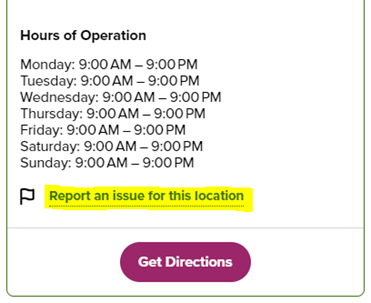
Note: In October 2026, the Where to Recycle map moved from rpra.ca to OntarioRecycles.ca, RPRA’s website to keep the public informed about the circular economy and recycling in Ontario.
-
If your collection site isn’t part of a PRO’s collection network, it won’t appear on the Where to Recycle map. The map populates collection sites with data entered by producers or PROs on their behalf.
If you are working with a PRO and your site is not listed on the map, contact your PRO.
If you aren’t already working with a PRO and want to add your collection site to the map, you can find a list of PROs and their contact information on the applicable program page of RPRA’s website.
Note: In October 2026, the Where to Recycle map moved from rpra.ca to OntarioRecycles.ca, RPRA’s website to keep the public informed about the circular economy and recycling in Ontario.
-
Battery, electronics, lighting and tire collection sites must be operated during regular business hours throughout the calendar year.
Household hazardous waste collection sites may open seasonally. The Where to Recycle map should reflect the time of the year when the collection site operates.
Note: In October 2026, the Where to Recycle map moved from rpra.ca to OntarioRecycles.ca, RPRA’s website to keep the public informed about the circular economy and recycling in Ontario.
-
Yes, producers are obligated to provide collection services to new single-family residences, but these locations must become eligible sources first.
A new residence becomes an eligible source only after the local municipality, local services board, or First Nation registers the new single-family residences (also referred to as “natural growth”) by updating its address information with the Common Collection System Administrator, Circular Materials. Once the new addresses are properly registered, producers are obligated to provide collection services as soon as is practicable.
Municipalities, local services boards and First Nations should contact Circular Materials if they have new residences that need Blue Box collection service. Contact information can be found by visiting Circular Materials’ website and typing in your community’s name.
-
Producers are legally required to offer collection services to eligible facilities starting in 2031. A facility that did not receive Blue Box collection services under the legacy program but would like to receive Blue Box collection services from 2026 to 2030 must contract directly with a private service provider for private collection.
-
Blue Box materials supplied to the IC&I sector are not obligated, therefore, deductions are available for materials supplied to a consumer in an IC&I setting.
Blue Box producers may deduct materials that are collected from a business or institution where producers are not required to provide Blue Box collection services. Examples include:
- Offices
- Stores and shopping malls
- Restaurants
- Hotels
- Hospitals
- Community centres
- Places of worship
- Recreation facilities
- Sports and entertainment venues
- Universities and colleges
- Manufacturing facilities
- Golf courses
- Cemeteries
- Amusement parks
Producers are responsible for material collected from eligible sources in the producer run Common Collection System, Alternative or Supplemental Collections Systems. Material from these categories is not allowed to be deducted:
- Material that is collected from a residence through a curbside or depot collection service.
- Material that is generated at a facility (including multi-residential buildings, retirement homes, long-term care homes and schools).
- Material that is collected from a public space (including an outdoor area in a park, playground or sidewalk, or a public transit station).
- Material collected under an alternative or supplemental collection system.
Please see the Reporting Guidance Ineligible Source Deductions for the 2026 Blue Box Supply Report for more information on how to determine and use these deductions.
Also see our FAQs: ‘What deductions are available to producers under the Blue Box Regulation?’, ‘Who is a consumer under the Blue Box Regulation’
-
In accordance with the legislation (Resource Recovery Circular Economy Act 2016, section 57), RPRA is required to comply with strict confidentiality requirements. RPRA has also developed an Access and Privacy Code that applies to its day-to-day operations.
The Registry has been developed according to cybersecurity best practice principles. This includes VPN-based restrictions, staff training on all cybersecurity policies, staff access to the Registry on a strict role-requirement basis, and registry interface security features (example: two-factor authentication).
-
Registry Resources such as Registry Procedures, Compliance Bulletins, and Reporting Guides can be found on our Batteries Registry Resources webpage.
-
Registry Resources such as Registry Procedures, Compliance Bulletins, and Reporting Guides can be found on our Blue Box Registry Resources webpage.
-
Registry Resources such as Registry Procedures, Compliance Bulletins, and Reporting Guides can be found on our Hazardous and Special Products Registry Resources webpage.
-
Registry Resources such as Registry Procedures, Compliance Bulletins, and Reporting Guides can be found on our ITT/AV Registry Resources webpage.
-
Registry Resources such as Registry Procedures, Compliance Bulletins, and Reporting Guides can be found on our Lighting Registry Resources webpage.
-
RPRA has developed an Excess Soil Registry Resources webpage to help users navigate the online system and complete common activities such as account creation, filing and searching for notices. Resources include step-by-instructions and walk-through videos.
-
In determining whether an obligated producer used best efforts to meet their management requirements, the Compliance Team will consider whether the producer, acting in good faith, took all reasonable steps to meet the requirements outlined in the applicable regulation.
For example, best efforts in the context of management requirements may involve a producer regularly monitoring the volume of material being collected and managed, and implementing plans for increasing those volumes if the requirements are unlikely to be met.
Producers can contact the Compliance Team to ask specific questions about fulfilling their obligations.
-
For the purposes of tire supply data verification:
- “Large tire producer” means a tire producer with a three-year rolling average supply weight that is more than 500,000 kilograms.
- Example: for the 2026 supply data report, the three-year rolling average supply weight is calculated as: (weight supplied in 2023 + weight supplied in 2022 + weight supplied in 2021)/3
Only large producers are required to submit a supply data verification report. While small producers are not required to submit a verification report, they are still subject to inspections. Review the Tire Registry Procedure – Audit for more information.
If you are unsure if your company meets the definition of a large producer, contact RPRA’s Compliance and Registry Team at [email protected] or 833-600-0530.
- “Large tire producer” means a tire producer with a three-year rolling average supply weight that is more than 500,000 kilograms.
-
Producer supply data is used to calculate their individual minimum management requirements under the Batteries Regulation.
To learn how calculations are formulated, visit the FAQ How are battery producer minimum management requirements determined?
-
Producer supply data is used to calculate their individual minimum management requirements under the EEE Regulation.
To learn how calculations are formulated, visit the FAQ How are ITT/AV producer minimum management requirements determined?
-
There are two allowable deductions for Blue Box materials:
The “installation deduction” for materials collected from an eligible source at the time a related product was installed or delivered (e.g., packaging that is removed from the house by a technician installing a new appliance).
The “ineligible source deduction” for materials deposited into a receptacle at a location that is collected from a business or institution where Blue Box collection services are not provided under the regulation. This was expanded by the regulatory amendment in July 2023.
Blue Box producers may deduct materials that are collected from a business or institution where producers are not required to provide Blue Box collection services. Examples include offices, stores and shopping malls, restaurants, community centres, recreation facilities, sports and entertainment venues, universities and colleges, and manufacturing facilities.
Producers cannot deduct the following materials collected through the collection systems established under the Blue Box Regulation:
- Material that is collected from a residence through a curbside or depot collection service.
- Material that is collected from a public space (including an outdoor area in a park, playground or sidewalk, or a public transit station).
- Material collected under an alternative or supplemental collection system.
Materials that are deducted cannot count toward a producer’s management requirement.
Please see the Reporting Guidance Ineligible Source Deductions for the 2026 Blue Box Supply Report for more information on how to determine and use these deductions.
-
Collection
- Public or municipal contract-based collection of or from:
- Permanent or seasonal single and multi-family households (including rental, cooperative or condominium residential)
- Multi-family households are defined as residential units in buildings with six or more units (per O.Reg 103/94)
- Senior citizen residences and long-term care facilities
- Public and secondary schools collected along a residential collection route, concurrently with residential tonnes
- Permanent or seasonal single and multi-family households (including rental, cooperative or condominium residential)
- The residential component of publicly-operated (municipally-owned or contracted) drop-off depots, at dedicated depots, or depots at landfill sites
- Public space recycling containers, if they are collected on a residential collection route concurrently with residential tonnes (tonnes from special events/festivals are not eligible)
- Municipally owned and operated campgrounds can be reported as residential only if there are permanent households or seasonal households, i.e. a trailer park (weekend campgrounds are
considered IC&I)
Processing
- Public or municipal contract-based collected materials from permanent or seasonal single and multi-family households (including rental, cooperative or condominium residential)
- Collected materials from senior citizen residences and long-term care facilities where the materials are processed at a municipally-owned or contracted MRF
- Public or municipal contract-based collected materials from public and secondary schools, collected during residential collection
- Collected materials from public and secondary schools where the materials are processed at a municipally-owned MRF
- Residential components of publicly-operated (municipally-owned or contracted) drop-off depots, located either at dedicated depots or landfill sites
- Public space recycling containers that are comingled with residential Blue Box materials (e.g.
bins in public parks) collected along a residential route
To learn more, read pages 9 and 10 of the Datacall User Guide.
- Public or municipal contract-based collection of or from:
-
Single stream collection is defined as a collection system where all materials are collected in a commingled mixture and there is no pre-sorting.
A multi-stream collection system has at least two or more separate bins for different materials (e.g. a bin for containers and plastics, and another bin for paper/fibers).
-
Public and private schools (as defined under the Education Act) may be eligible to receive Blue Box collection service under the producer-run recycling system.
Schools that previously received service from their host community under the legacy Blue Box program will be automatically included in Blue Box collection from their host community and do not need to take any additional action.
Any school that was not previously serviced under the legacy Blue Box program may receive collection service beginning in 2031. These schools will have to register with RPRA. More information will be shared closer to this date.
Also see our FAQ: Is my facility eligible to receive Blue Box collection services?
-
Not-for profit long-term care homes, not-for-profit retirement homes and Elders’ lodges may be eligible to receive Blue Box collection service under the producer-run recycling system.
If these facilities previously received service from their host community under the legacy Blue Box program, they will be automatically included in Blue Box collection from their host community and do not need to take any additional action.
A not-for profit long-term care home, not-for-profit retirement home or Elders’ lodge that was not previously serviced under the legacy Blue Box program may receive collection service beginning in 2031. These facilities will have to register with RPRA. More information will be shared closer to this date.
Also see our FAQ: Is my facility eligible to receive Blue Box collection services?
-
Under the producer-run system, residences are eligible for Blue Box collection. Residences are buildings with five or less residential units. Building developments with five or less units are considered residences and will also receive service from the producer-run system.
Townhouses, stacked townhouses or row houses with six or more units may also be considered residences if one of the following applies:
- each unit receives curbside garbage collection, or
- the building uses a common collection point where residents drop off their waste and from which the local government collects garbage.
Townhouses, stacked townhouses or row houses with six or more units that do not meet the criteria above are not eligible to receive Blue Box collection from the producer-run program until 2031, as these types of buildings are considered facilities. To learn more see our FAQ: “Is my facility eligible to receive Blue Box collection services?”
-
The Ministry of the Environment, Conservation and Parks is responsible for overseeing the Hazardous Waste Program and conducting compliance and enforcement activities. The program is set out under Regulation 347: General – Waste Management under the Environmental Protection Act and Ontario Regulation 323/22: Subject Waste Program under the Resource Recovery and Circular Economy Act.
Questions related to the regulations should be directed to the ministry at [email protected]
-
Producers of fertilizers have no collection requirements.
-
An ITT/AV producer qualifies for an exemption if their average weight of supply for that calendar year is less than or equal to 5,000 kg.
Average supply weight is determined using the following formula:
Average weight of ITT/AV supply = (Y3 + Y4 + Y5) / 3
Eg. 2025 average weight of supply = (2022 + 2021 + 2020) / 3
ITT/AV producers that meet the exemption criteria are exempt from:
- Registering and reporting to RPRA
- Establishing a collection and management system
- Meeting a management requirement
- Promotion and education requirements
Producers must verify that they continue to meet the exemption annually, since their average weight of supply will change from year to year.
Exempt producers must keep records related to the weight of ITT/AV supplied into Ontario each year and provide them to the RPRA upon request.
Producers are advised to confirm their exemption with the Compliance Team at 833-600-0530 or [email protected].
-
There are exemptions under the HSP Regulation for category A and B producers. If an HSP producer meets the exemption threshold for a material type, they are not required to establish a collection system, manage those materials or implement a promotion and education program.
Producers of refillable pressurized containers that meet the exemption threshold are still required to provide a call-in collection service.
An HSP producer qualifies for an exemption if their average weight of supply for the previous calendar year is less than or equal to the weight (in tonnes) specified in the chart below:
Type of HSP Exempt (Less than <) Oil Filters 3.5 Non-refillable Pressurized Containers 3 Antifreeze 20 Oil Containers 2 Solvents 3 Paints and Coatings 10 Pesticides 1 Refillable Pressurized Containers 8 Mercury-containing Devices N/A Fertilizers Propane Containers (refillable) Producers must verify that they continue to meet the exemption annually, since their average weight of supply will change from year to year.
See our FAQ “Am I a small, large, or exempt HSP producer?” to determine how to calculate if you are an exempt HSP producer.
HSP producers that meet the exemption criteria are exempt from:
- Registering and reporting to RPRA
- Establishing a collection and management system
- Meeting a management requirement
- Promotion and education requirements
Exempt producers must keep records related to the weight of HSP supplied into Ontario each year and provide them to RPRA upon request.
Producers are advised to confirm their exemption with the Compliance and Registry Team at 1-833-600-0530 or [email protected].
-
To delete a duplicate collection site, submit a request through the Where to Recycle map directly by:
- looking up the location,
- clicking the location,
- clicking the ‘Report an issue for this location’ link, and
- filling out the form by asking to remove the duplicate collection site.
If the request is for multiple locations, contact the Compliance Team at [email protected] with the following information:
- the issue,
- name and address for each collection site, and
- your contact information.
Note: In October 2026, the Where to Recycle map moved from rpra.ca to OntarioRecycles.ca, RPRA’s website to keep the public informed about the circular economy and recycling in Ontario.
-
To update the type of collection site, submit a request through the Where to Recycle map directly by:
- looking up the location,
- clicking the location,
- clicking the ‘Report an issue for this location’ link, and
- filling out the form by providing the correct collection site type.
If the request is for multiple locations, contact the Compliance Team at [email protected] with the following information:
- the issue,
- name and address for each collection site, and
- your contact information.
Note: In October 2026, the Where to Recycle map moved from rpra.ca to OntarioRecycles.ca, RPRA’s website to keep the public informed about the circular economy and recycling in Ontario.
-
Collection sites for batteries, electronics, household hazardous waste, lighting, and tires that are reported by producers, or PROs on their behalf, appear on the map.
Collection sites that are considered private (e.g. a recycling bin inside a business that is not accessible to the public) do not appear on the map.
Note: In October 2026, the Where to Recycle map moved from rpra.ca to OntarioRecycles.ca, RPRA’s website to keep the public informed about the circular economy and recycling in Ontario.
-
If a municipality chooses not to operate any tire collection sites, residents can be directed to a registered collector.
Contact RPRA’s Compliance and Registry Team at [email protected], 647-496-0530 or toll free at 1-833-600-0530 if you or your residents have any issues dropping off less than 10 tires to a registered collector’s site.
-
Paints, pesticides, solvents fertilizers obligated under the HSP Regulation along with their primary packaging must be accepted at collection sites collecting the corresponding material. For instance, empty paint cans and pesticide aerosols obligated under the HSP Regulation must be accepted at collection sites collecting paint and pesticides.
See our FAQ to understand “Under the HSP Regulation, is the packaging of antifreeze, pesticides, solvents, paints and coatings obligated?” and “Are containers that are obligated under the HSP Regulation obligated as Blue Box materials?“
-
Under the Blue Box Regulation which came into effect on July 1, 2023, eligible locations for collection in a First Nation community include:
- Private residences
- Public and private schools
- Elders’ lodges (or retirement homes)
- Not-for-profit long-term care facilities
Locations that are not eligible for Blue Box collection or funding under this program include:
- Commercial properties
- Band owned and operated facilities such as daycares or community, wellness, cultural and language centres.
- Note: Although costs of collection from these properties are not covered under the Blue Box system, First Nations can apply for Indigenous Services Canada (ISC) funding to support these costs. Please speak to your region’s ISC officer for more information on how to apply.
-
Under the WDTA Blue Box program, municipalities could choose to accept these materials in their programs. This choice varied between municipalities.
Under the producer-run Blue Box program, none of these materials are considered obligated Blue Box materials. The Blue Box Regulation specifically states that hard or soft cover books or products made from flexible plastic that is ordinarily used for the containment, protection and or handling of food, such as cling wrap, sandwich bags or freezer bags are not Blue Box materials. Pots and pans do not meet the definition of Blue Box material under the Regulation.
Producers are not obligated to collect or manage the recovery of these materials.
-
No, First Nation communities are not required to sign agreements with a PRO or PROs to have materials picked up.
Producers, or PROs on their behalf, are required to provide call-in collection services to pick up tires, electronics, lighting, batteries, and household hazardous and special products free of charge.
For details about minimum amounts required for pickup, timelines for pickup for communities both north and south of the Far North boundary, and contact information for PROs that offer call-in collection, visit our Recycling in First Nation Communities webpage.
-
Yes, the entire weight of reused tires can be counted towards a producer’s management target.
See our FAQ: What does ‘reuse’ mean under the Tires Regulation?
-
Producers of tires need to provide the following information when registering in RPRA’s Registry:
- Business information (e.g. business name, contact information)
- The year you began marketing or selling tires into Ontario
- Any PROs you are contracted with
- Your annual Tire Supply Report
-
You are a tire retreader if you replace the tread on worn tires so that they can continue to be used as tires.
-
Each year, large tire producers are required to submit a supply data verification report in accordance with the Tires Registry Procedure – Audit. Small producers are not required to submit a verification report but will be subject to inspections.
See our FAQ: For annual supply reporting verification, how do I know if I am a small or large tire producer?
-
As of October 2026, the Where to Recycle map moved from rpra.ca to OntarioRecycles.ca, RPRA’s new website to keep the public informed about the circular economy and recycling in Ontario.
This change supports RPRA’s mandate of making information about resource recovery and waste reduction in Ontario accessible to the public.
For convenience, there are links throughout this website directing users to the map on Ontario Recycles. Learn more about Ontario Recycles here.
-
Under the HSP Regulation, producers are required to make reasonable efforts to establish and operate at least as many collection sites for each type of HSP in each local municipality, territorial district or reserve as the number of sites that were operated on September 30, 2021.
Producers are also required to make reasonable efforts to hold at least as many collection events for that type of HSP in each local municipality, territorial district or reserve as the number of events that were held in the 2020 calendar year.
-
Program fees are charges that producers obligated under the Resource Recovery and Circular Economy Act, 2016, are required to pay to RPRA annually to recover its operational costs, including costs related to building and operating the registry, providing services to registrants, and compliance and enforcement activities.
All current and past fee schedules can be found here.
-
Under the Resource Recovery and Circular Economy Act, RPRA is required to provide an annual report to the Minister that includes information on aggregate producer performance, and a summary of compliance and enforcement activities. Under section 51 of the Act, the Registrar also is required to post every order issued on the Registry.
-
No, only producers are required to pay RPRA program fees. The decision to make producers pay fees and cover RPRA’s costs was made to reflect the fact that the Resource Recovery and Circular Economy Act, 2016 (RRCEA) is based on a producer responsibility framework. Although producers may hire service providers to help meet their obligations, the responsibility remains with the producer.
-
Producers are obligated parties under the Resource Recovery and Circular Economy Act and are ultimately responsible for their data submitted through RPRA’s Registry. Producers can choose to contract with an external consultant to support their data submission, but third parties have limited permissions in the Registry as they are not regulated parties.
A producer can choose to assign a primary or secondary user profile in their Registry account to an external consultant. An external consultant may submit supply data reports and/or pay registry fees on the producer’s behalf.
External consultants cannot submit and/or sign registration, executive attestations, account admin changes or supply data adjustment documentation on behalf of a producer. External consultants cannot be account admins, nor can they manage a PRO within the Registry on behalf of a producer.
-
Registrants may request that a Deputy Registrar review a Compliance Order issued to them by an inspector. The request must be made, in writing, by the registrant to a Deputy Registrar within seven days of being served with the order. The request must include:
- The parts of the order that the request for review pertains to;
- Any submissions the person requesting the review wants considered; and
- An address (physical or electronic) where the person can be served with the Deputy Registrar’s decision.
A Deputy Registrar will then review the order and can revoke, confirm, or amend the inspector’s order.
Deputy Registrars must either issue their decision or provide notice that more time is needed within seven days of receiving the request. If a Deputy Registrar provides notice that more time is needed, they must stay (put on hold) the order while it is under review, and the Deputy Registrar must issue their decision within 90 days.
If a Deputy Registrar does not issue a decision or provide notice that more time is needed within seven days of receiving the request for review, the order will remain as originally issued.
Note: This FAQ is for general information only and should not be considered legal advice. Please review the Resource Recovery and Circular Economy Act, 2016 and associated regulations for details.
See the FAQ: ‘Can I appeal a Compliance Order issued to me?’ for information on appealing a compliance order.
-
Registrants who receive a Notice of Intention to issue an Administrative Penalty Order may request that the Registrar or a Deputy Registrar consider additional information before they decide to issue the order. A registrant may ask the Registrar or a Deputy Registrar to review:
- Additional information related to the contravention;
- Any information relevant to the determination of the penalty amount; or
- Any actions you have taken to remedy the contravention since it occurred.
The request must be made to the Registrar or a Deputy Registrar, in writing, within 21 days of the notice of intention being served on the registrant. All additional information and supporting documentation that the registrant would like the Registrar or Deputy Registrar to consider should be included in the request.
The Registrar or Deputy Registrar must then consider the information in the request and determine whether or not to issue an order. If the Registrar or Deputy Registrar decides not to issue the order, they must notify the registrant of this decision.
See RPRA’s Administrative Penalties Guideline for further information or the FAQ: ‘Can I appeal an Administrative Penalty Order issued to me?’ for information on appealing an administrative penalty order.
Note: This FAQ is for general information only and should not be considered legal advice. Please review the Resource Recovery and Circular Economy Act, 2016 and associated regulations for details.
-
Registrants may appeal an Administrative Penalty Order issued to them to the Ontario Land Tribunal (OLT). The registrant must serve written notice of their intention to appeal to the OLT and to the Registrar or a Deputy Registrar within 15 days of being served the order. The order will be temporarily stayed (put on hold) until a decision is rendered by the tribunal. The notice must include:
- The parts of the order that the appeal pertains to; and
- The grounds on which the person appealing the order intends to rely at the hearing.
The OLT will hold a hearing, and the OLT may confirm, vary, or revoke the order. The OLT cannot vary the amount of the penalty unless it considers the amount to be unreasonable.
After a matter is decided by the OLT, the registrant or RPRA may appeal the OLT’s decision to the Divisional Court, but only on a question of law and with leave (permission) of the Divisional Court. If a party obtains leave, the appeal of the OLT decision will be heard by the Divisional Court. This process is governed by the Rules of Civil Procedure. The OLT’s decision is not automatically stayed by an appeal to the Divisional Court, but a stay may be granted by the OLT or the Court.
See RPRA’s Administrative Penalties Guideline for further information.
Note: This FAQ is for general information only and should not be considered legal advice. Please review the Resource Recovery and Circular Economy Act, 2016 and associated regulations for details.
-
If a Compliance Order is issued to a registrant by the Registrar or a Deputy Registrar, or if the registrant receives a decision from a Deputy Registrar issued as a result of a Request for Review of an inspector’s order, the registrant can appeal the order to the Ontario Land Tribunal (OLT). The registrant must serve written notice of their intention to appeal to the Registrar or Deputy Registrar who made the order and to the OLT within 15 days of being served with the order. The notice must include:
- The parts of the order that the appeal pertains to; and
- The grounds on which the person appealing the order intends to rely at the hearing.
The OLT will hold a hearing. The OLT may decide to confirm, vary, or revoke the order.
After a matter is decided by the OLT, the registrant or RPRA may appeal the OLT’s decision to the Divisional Court, but only on a question of law and with leave (permission) of the Divisional Court. If a party obtains leave, the appeal of the OLT decision will be heard by the Divisional Court. This process is governed by the Rules of Civil Procedure. The OLT’s decision is not automatically stayed (put on hold) by an appeal to the Divisional Court, but a stay may be granted by the OLT or the Court.
Note: This FAQ is for general information only and should not be considered legal advice. Please review the Resource Recovery and Circular Economy Act, 2016 and associated regulations for details.
-
In the HWP Registry, users will be able to access, download and print a PDF version of their manifest. RPRA has worked with Transport Canada to ensure the printable PDF complies with the Transportation of Dangerous Goods (TDG) requirements in most cases.
For more information about your TDG requirements, visit: https://tc.canada.ca/en/dangerous-goods/transportation-dangerous-goods-canada.
-
HSP producers that meet the exemption criteria are exempt from certain requirements under the HSP regulation. See our FAQ: How do I determine if I am an exempt HSP producer?.
Producers can reference the chart below to determine if they are a small, large or exempt HSP producer.
Producer categories use the average weight of material (in tonnes) supplied in Ontario in the previous calendar year.
Type of HSP Exempt (Less than <) Small Producer Large Producer (Equal to or greater than >) Oil Filters 3.5 ⟷ 100 Non-refillable Pressurized Containers 3 ⟷ 100 Antifreeze 20 ⟷ 300 Oil Containers 2 ⟷ 55 Solvents 3 ⟷ 70 Paints and Coatings 10 ⟷ 1,000 Pesticides 1 ⟷ 9 Refillable Pressurized Containers 8 N/A N/A Mercury-containing Devices N/A Fertilizers Propane Containers (refillable) Note that ‘⟷’ indicates a value greater than ‘Exempt’ but less than ‘Large Producer’ threshold.
Average supply weight is determined using the following formula:
Average weight of HSP supply = (Y1 + Y2 + Y3) / 3
E.g. 2025 average weight of supply = (2024 + 2023 + 2022) / 3
-
As the Regulator responsible for enforcing regulations under the Resource Recovery and Circular Economy Act, 2016, the Registrar uses their discretion for when it is necessary to give registrants more time to collect the information needed for registration and/or reporting.
-
A processor is a person who processes, for the purpose of resource recovery, HSP used by consumers in Ontario
-
No. If your business does not conduct resource recovery activities as its primary purpose, there is no requirement to register as a processor with the Authority.
-
- A lighting hauler is a person that arranges the transport of lighting used in Ontario that are destined for processing, reuse, refurbishing or disposal.
- A lighting processor is a person that processes lighting used in Ontario for the purpose of resource recovery.
-
- An ITT/AV hauler is a person that arranges the transport of ITT/AV used in Ontario that are destined for processing, reuse, refurbishing or disposal.
- An ITT/AV refurbisher is a person that prepares or refurbishes ITT/AV used in Ontario for the purpose of reuse.
- An ITT/AV processor is a person that processes ITT/AV used in Ontario for the purpose of resource recovery.
-
Yes. The new Subject Waste Program Regulation under the Resource Recovery and Circular Economy Act, 2016, preserves and clarifies existing Hazardous Waste Program fee exemptions, which RPRA must follow when recovering the cost to operate the HWP Registry.
Existing exemptions include:
- Municipal hazardous or special waste
- Contaminated sites
- Emergencies (spills)
- Tonnage-fee exempt recycling facilities
-
No. RPRA is the regulator for the purposes of the new EEE Regulation. Producers and PROs are required to register with RPRA and meet the mandatory performance and reporting requirements under the regulation. RPRA is responsible for overseeing compliance with the regulation and has a range of enforcement tools that include compliance orders, administrative penalties, and prosecutions.
As a regulator, RPRA will not provide collection and management services. Instead, producers will be served by a competitive market comprised of processors, refurbishers, haulers, and PROs. Producers can contract with PROs to meet their obligations under the EEE Regulation, but producers will always remain responsible for meeting those requirements regardless of who they contract with.
-
Producers, or PROs acting on their behalf, are required to establish and operate a system for managing HSP by satisfying their management requirements as follows:
- All oil containers, antifreeze, solvents, paints and coatings picked up from a collection site must be processed within three months from the date of the pickup
- Producers must ensure that materials are processed by an HSP processor registered with RPRA. In 2027, producers or PROs on their behalf must use a processor who met, at a minimum, the average recycling efficiency rate (RER) specified in the table below in the calendar year two years prior for the type of HSP:
Type of HSP Average Recycling Efficiency Rate (RER) percentage Antifreeze 90 Oil Containers 95 Paints and Coatings 75 Solvents 10 - Producers of pesticides must ensure that pesticides are properly disposed of at an HSP disposal facility registered with RPRA no later than three months after the day the pesticides are collected.
-
As of October 1, 2021, producers of refillable propane containers must establish and operate a call-in collection number for the following representatives to request a pickup:
- a council of the band
- a municipality that is not located in the Far North
- a reserve in the Far North
- a territorial district that is not located in the Far North
- a depot where refillable propane containers are collected, that is owned or operated by the Crown in right of Ontario and that is not located in the Far North
-
Yes, a Blue Box producer or PRO (producer responsibility organization) on behalf of a producer, or a service provider on behalf of either party, can voluntarily choose to collect Blue Box materials that are not marketed to consumers.
Blue Box materials not marketed to consumers cannot be counted towards meeting a producer’s collection or management requirements under the Blue Box Regulation.
If Blue Box materials that are marketed to consumers are co-collected with Blue Box materials not marketed to consumers, a person must use a methodology or process acceptable to the Authority to account for materials supplied to a consumer or not. Anyone considering this can contact the Compliance Team to discuss at [email protected] or 833-600-0530.
For example, if Blue Box materials supplied to a consumer in Ontario are collected along the same collection route as Blue Box materials that were not supplied to a consumer, they must be accounted for separately. When those materials are then sent to a processor, they must also be accounted for separately.
See the FAQ: Who is a consumer under the Blue Box Regulation?
-
No. While RPRA is responsible for the oversight, compliance and enforcement of the regulatory requirements for tires under Ontario’s individual producer responsibility framework, RPRA’s activities do not replicate those of OTS.
-
Yes. The following resources can support you with submitting to the Datacall:
-
Yes. Carriers and receivers are required to create an account in the HWP Registry and link their active Environmental Compliance Approval numbers to their Registry accounts. Starting January 1, 2023, businesses and institutions regulated by the Hazardous Waste Program are required to report information through the Registry instead of through HWIN. Only carriers and receivers who have Registry accounts will be able to be listed on manifests.
Carriers can find training resources for account set up here
Receivers can find training resources for account set up here
-
Only your PRO can update collection site addresses. Ask your PRO to remove the old address from their collection network and add the new address.
The Compliance Team is unable to make changes to the address of a site that has been reported.
Note: In October 2026, the Where to Recycle map moved from rpra.ca to OntarioRecycles.ca, RPRA’s website to keep the public informed about the circular economy and recycling in Ontario.
-
A producer responsibility organization (PRO) is a person retained by a producer to provide collection, management and administrative services to help producers meet their regulatory obligations.
A prospective PRO is a person that has registered with RPRA but have not been identified by a producer in RPRA’s registry to carry out regulatory responsibilities.
More information on PROs
PRO responsibilities include:
- Arranging for the establishment or operation of collection or management systems
- Establishing or operating a collection or management system
- Preparing and submitting reports
In addition, under the Hazardous and Special Products regulation, a PRO includes a person retained by a producer for the purpose of:
- Implementing a promotion and education program
Only PROs that meet this definition will:
- Be listed on RPRA’s website as a PRO
- Be invited to attend all-PRO meetings with RPRA
- Receive system-wide compliance communications
More information on prospective PRO
RPRA will list all prospective PROs on its website for up to one year. After that period, prospective PROs that remain unassigned by a producer in the registry will be notified, removed from the website, and have their registry account deactivated.
RPRA will publish a list of producers who have not yet identified a PRO in the registry. This will help prospective PROs understand where opportunities may exist.
-
A producer responsibility organization (PRO) is a person retained by a producer for the purpose of carrying out one or more of the following producer regulatory responsibilities:
- Arranging for the establishment or operation of collection or management systems
- Establishing or operating a collection or management system
- Preparing and submitting reports
In addition, under the Hazardous and Special Products regulation, a PRO includes a person retained by a producer for the purpose of:
- Implementing a promotion and education program
PROs operate in a competitive market, and producers can choose the PRO (or PROs) they want to work with. The terms and conditions of each contract with a PRO may vary.
How do I find a PRO?
Here are the lists of registered PROs:
These lists will continue to be updated as new PROs register with RPRA.
See our FAQ What is the difference between a PRO and a prospective PRO?
-
Beginning October 1, 2021, producers or PROs acting on their behalf, of mercury-containing devices are required to establish and operate a promotion and education program that:
- Promotes their collection and management services with respect to the type of HSP they are obligated for
- Provides the following information on a website with respect to that type of HSP:
- the presence of mercury in that type of HSP
- how to distinguish that type of HSP from similar products that do not contain mercury
- the hazards to human health and the environment related to mercury
- how consumers can properly dispose of that type of HSP
- a description of the collection services provided by the producer under this Regulation for that type of HSP
- a description of how the producer manages that type of HSP after it is collected under this Regulation
- Creates promotional and educational materials with respect to that type of HSP that include the following:
- the address of the website
- a description of how that type of HSP is collected and managed
- The producer shall make the promotional and educational materials available to retailers that supply that type of HSP or similar products that do not contain mercury, municipal governments, and Indigenous communities, and shall solicit and consider feedback from those retailers, municipal governments and Indigenous communities on how the promotional and educational materials can be improved
-
Producers of every type of HSP are required to keep records for a period of five years from the date of the record being created.
Producers must keep records that relate to the following:
- arranging for the establishment or operation of a collection or management system
- establishing or operating a collection or management system
- information required to be submitted to the Authority through the Registry
- implementing a promotion and education program
- weight of each type of HSP within each applicable category of HSP supplied to consumers in Ontario, regardless of whether information about the weight was required to be submitted to the Authority
- any agreements that relate to the above records
-
Yes, a Blue Box producer, or PRO (producer responsibility organization) on behalf of a producer, or a service provider on behalf of either party, can choose to offer collection services to any location. Blue Box producers are required to provide collection services to all eligible sources, as well as public spaces.
Blue Box materials collected from locations that are not eligible sources cannot count towards meeting a producer’s management requirement unless they were supplied to a consumer in Ontario. See this FAQ: Who is a consumer under the Blue Box Regulation?
If a person is co-collecting from locations that are eligible sources and not eligible sources, a person must use a methodology or process acceptable to the Authority to account for materials collected from each type of source. Anyone considering this can contact the Compliance Team to discuss at [email protected] or 833-600-0530.
For example, if materials are collected from an eligible source and a location that is not an eligible source along the same collection route, they must be accounted for separately. When those materials are then sent to a processor, they must also be accounted for separately.
-
Under the Blue Box Regulation which came into effect on July 1, 2023, eligible locations for collection within the producer-run program include:
- Private residences
- Public and private schools
- Elders’ lodges
- Not-for-profit retirement homes
- Not-for-profit long-term care facilities
Note: Commercial properties are not eligible for collection under the producer-run Blue Box program.
-
RPRA takes a risk-based and proportional approach to compliance. This approach focuses on the potential risks that arise from non-compliance and assessing those risks to guide the use of compliance tools and the deployment of resources to minimize risk and maximize compliance. Learn more about RPRA’s Risk-Based Compliance Framework.
As a provincial regulator, we have the following powers to bring non-compliant parties into compliance:
- Broad inquiry powers including authority to compel documents and data
- Inspections and investigations
- Audits
- Compliance Orders and Administrative Penalty Orders (amounts to be set in regulation once finalized)
- Prosecution
RPRA’s primary approach to compliance is through communications (C4C – Communicating for Compliance). RPRA communicates directly with obligated parties and informs them of their requirements and when and how they must be completed. A high degree of compliance is achieved with this approach.
RPRA considers free riders a high priority to the programs we administer and focuses compliance efforts on bringing free riders into compliance with the regulations.
See our FAQ to understand “What is a free rider?”, and “What do I do if I think a business is a free rider?”
-
You are a tire hauler if you arrange for the transport of tires used in Ontario to a site for processing, reuse, retreading or disposal.
-
RPRA’s Where to Recycle map displays locations across Ontario where the public can drop off used materials to be recycled, such as batteries, electronics, household hazardous waste (e.g., paint, antifreeze, pesticides), lighting and tires, for free. Materials collected at these locations are reused, refurbished, recycled, or properly disposed of to help keep them out of landfill, recover valuable resources and protect our environment.
Note: In October 2026, the Where to Recycle map moved from rpra.ca to OntarioRecycles.ca, RPRA’s website to keep the public informed about the circular economy and recycling in Ontario.
-
Elementary and secondary schools (both public and private) that are licensed under the Education Act to deliver elementary and secondary curriculums are eligible to receive recycling collection under the producer-run Blue Box program.
Schools in eligible communities with child-care programs physically present on the premises, including integrated early learning centres, on-site daycare centres, and early childhood education centres must be provided with Blue Box recycling collection.
-
If your mixed-used (commercial and residential) building is an eligible facility under the Blue Box Regulation, only the residential portion of the building will be eligible for collection services.
Also see our FAQ: Is my facility eligible to receive Blue Box collection services?
-
Residential Blue Box collection is arranged by the Blue Box system administrator, Circular Materials. For information specific to your Blue Box collection service, visit Circular Materials’ website and type in your community’s name.
-
Eligible facilities that were not serviced under the legacy Blue Box program can begin receiving Blue Box collection services through the producer-run program on the later of the following dates:
- January 1, 2031
- The date the facility officially registers under section 63 of the Blue Box Regulation
For details on specific types of locations, see our FAQ: “What is an eligible facility under the Blue Box Regulation?”
-
No. Producers and PROs working on their behalf must operate the collection and management systems they have established as required by the Regulation even after their minimum management requirements are met.
-
Producers of fertilizers have no management requirements.
-
Producers of refillable propane containers have no management requirements.
-
Beginning October 1, 2021, producers are obligated to:
- establish and operate a promotion and education program starting in 2022
- provide information on their website about how consumers can use, share and properly dispose of fertilizer with local requirements
- create promotional and education materials that include:
- The website URL
- A description of how consumers can use, share and properly dispose of fertilizer
- solicit, consider feedback from, and make the promotional and education materials available to:
- Indigenous communities
- Municipal governments
- Retailers that supply fertilizers
- provide information to municipalities on innovative end-use options for fertilizers as an alternative to disposal
-
There are no promotion or education requirements for producers of refillable pressurized containers.
-
There are no promotion or education requirements for producers of refillable propane containers.
-
No. The rules in Regulation 347 related to who is responsible for reporting information about hazardous waste activities are not changing. Although generators can delegate service providers to submit all information on their behalf, the amended regulation makes clear that, “A generator who has entered into an agreement with a delegate through a written authorization remains responsible for meeting their requirements under this Regulation, including requirements to report, update and ensure the accuracy of all information submitted through the Registry.”
-
The Manage PRO option will appear on the dashboard below your list of supply data reports when your supply data reporting is complete and if you have management requirements. If your supply data reporting is below the supply exemption threshold you will not have management requirements, and therefore not need to assign a PRO to assist with your obligations.
Also note that Account Admin are the only portal users that can manage your PRO’s responsibility, so this widget is not viewable to primary and secondary users.
-
For the 2024 performance report, all HSP processors are not required to report on their RER.
Amendments to the Hazardous and Special Products (HSP) Regulation have changed the RER requirements for the 2025 calendar year and going forward, depending on the material category:
- Category A (oil filters and non-refillable pressurized containers):
Effective in 2025, and going forward, processors of Category A materials are no longer required to calculate or report on their RER. Producers (or PROs on their behalf) are no longer required to work with processors that meet specified RERs.
- Category B (antifreeze, oil containers, paints and coatings and solvents, but not pesticides) and Category C (barometers, thermometers and thermostats):
In 2027, producers (or PROs on their behalf) must use a processor who met, at a minimum, the average RER specified in the table below in the calendar year two years prior for the type of HSP.
Type of HSP Average RER percentage Antifreeze 90 Barometers, thermometers, thermostats 90 Oil containers 95 Paints and coatings 75 Solvents 10 - Category D (fertilizers), Category E (refillable propane containers and refillable pressurized containers), and pesticides (Category B):
These materials do not have any RER requirements.
-
Amendments to the Hazardous and Special Products (HSP) Regulation have changed the RER reporting requirements, depending on the material category:
-
Category A (oil filters and non-refillable pressurized containers):
Effective for the 2025 calendar year, and every year thereafter, producers (or PROs on their behalf) are no longer required to use processors that meet specified RERs.
-
Category B: (antifreeze, oil containers, paints and coatings and solvents, but not pesticides) and Category C (barometers, thermometers and thermostats):
In 2027, producers (or PROs on their behalf) must use a processor who met, at a minimum, the average RER specified in the table below in the calendar year two years prior:
Type of HSP Average RER percentage Antifreeze 90 Barometers, thermometers, thermostats 90 Oil containers 95 Paints and coatings 75 Solvents 10 -
Category D (fertilizers), Category E (refillable propane containers and refillable pressurized containers), and pesticides:
These materials do not have any RER requirements.
-
-
An exempt producer is not required to:
- Register and report to RPRA
- Establish a collection and management system
- Meet a management requirement
- Meet promotion and education requirements
Exempt producers must retain records related to the weight of lighting supplied into Ontario each year and provide them to RPRA upon request.
See our FAQ: ‘How do I determine if I am an exempt lighting producer?’
-
You will have to meet the registration requirements for every category that applies to you.
-
A marketplace facilitator is a person who contracts with a marketplace seller to facilitate the supply of the marketplace seller’s products by:
- Owning or operating an online consumer-facing marketplace or forum in which the marketplace seller’s products are listed or advertised for supply and where offer and acceptance are communicated between a marketplace seller and a buyer (e.g., a website), and
- Providing for the physical distribution of a marketplace seller’s products to the consumer (e.g., storage, preparation, shipping of products).
Under the Blue Box Regulation, if a retailer (online or at a physical location) is determined to be the producer based on hierarchies, but they are a marketplace seller, the marketplace facilitator is the obligated producer. A marketplace seller is a person who contracts with a marketplace facilitator to supply its products.
-
The Short-form Datacall is a streamlined version of the Long-form Datacall developed for smaller municipalities. The Short-form Datacall has Section 3.3, and all of Section 5 removed. This means that eligible municipalities do not have to report any Non-Blue Box information. The Short-form Datacall still collects the necessary data for calculating the municipal program’s Blue Box funding (i.e. if a municipal program elects to complete the Short-form, their Blue Box funding will not be affected). Since Non-Blue Box sections are removed, the Authority will not calculate a diversion rate for municipal programs who report into the Short-form Datacall. If a municipal program would still like to receive a diversion rate, then they must report into the standard Datacall.
Through consultation with municipal programs and the Municipal Industry Program Committee (MIPC), a committee of the Authority’s, it was determined that municipal programs with populations of 30,000 or less may be eligible for the Short-form Datacall.
-
Local budgets are determined independently by local governments. Please contact your city council (or equivalent) for questions about local taxes and/or budgets.
-
Collection site names are taken from Google Maps. If the name is wrong, request to change it through the map directly by:
- looking up the location,
- clicking the location,
- clicking the ‘Report an issue for this location’ link, and
- filling out the form by providing the correct name.
Note: In October 2026, the Where to Recycle map moved from rpra.ca to OntarioRecycles.ca, RPRA’s website to keep the public informed about the circular economy and recycling in Ontario.
-
Wrong materials showing
If your site doesn’t collect the material(s) listed on the map, you can submit a request to change it through the map directly by:
- looking up the location,
- clicking the location,
- clicking the ‘Report an issue for this location’ link, and
- filling out the form by providing which materials should be removed.
Materials not showing
If you collect more materials than what is listed on the map, contact your PRO and they’ll update your collection site information.
If you aren’t already working with a PRO for a specific material and want to add a material to your collection site, you can find a list of PROs and contact information on the applicable program page of RPRA’s website.
Note: In October 2026, the Where to Recycle map moved from rpra.ca to OntarioRecycles.ca, RPRA’s website to keep the public informed about the circular economy and recycling in Ontario.
-
Producers, or PROs acting on their behalf, are required to establish and operate a management system and must:
- process all oil filters and non-refillable pressurized containers picked up from a collection site within three months from the date of the pickup
- ensure that materials are processed by an HSP processor registered with RPRA
Producers are required to recover an amount of material based on their average supply into Ontario and report on it annually.
-
A newspaper producer is a person who supplies newspapers to consumers in Ontario. For the purpose of the Blue Box Regulation, newspapers include broadsheet, tabloid or free newspaper. For further information, see the FAQ: What is a newspaper?
Note that a producer of supplemental advertisements or flyers that are supplied with a newspaper would not be considered a newspaper producer as they do not supply the actual broadsheet, tabloid, or free newspaper. This producer cannot use the newspaper exemption percentage to be exempt from Blue Box collection and management requirements. See the FAQ: Are there exemptions for Blue Box producers?
-
Under the WDTA Blue Box program, some municipalities may have chosen to provide Blue Box collection to facilities that were not residences, such as commercial properties, municipally owned and operated buildings or other institutions.
Under the Blue Box Regulation, only certain types of facilities can receive collection under the producer-run Blue Box program. These facilities are:
- Multi-residential facilities with six or more dwelling units
- Retirement homes that are operated by a municipality or an entity that does not operate with the purpose of generating a profit or were included in the WDTA Blue Box program on August 15, 2019. “Retirement home” has the same meaning as in the Retirement Homes Act, 2010.
- Long-term care homes that are non-profit long-term care homes or were included in the WDTA Blue Box program on August 15, 2019. “Long-term care home” has the same meaning as in the Fixing Long-Term Care Act, 2021. “Non-profit long-term care home” has the same meaning as the regulations under the Fixing Long-Term Care Act, 2021.
- Buildings that contain public or private elementary or secondary schools. “School” and “private school” have the same meaning as in the Education Act.
-
As a retailer, you may also be a producer and/or a collector, based on the definitions in the Tires Regulation.
Businesses will continue to have discretion over whether they charge a fee to recover the cost of recycling their products. If a business chooses to charge a fee, they are no longer required to provide information about who is charging the visible fee and what it will be used for.
-
Under the Batteries, EEE, HSP, and Tire Regulations, a consumer is any end user of a product. A consumer includes an individual who obtains the product for the individual’s own use and a business that obtains the product for the business’s own use.
See our FAQ to understand “Who is a consumer under the Blue Box Regulation?”
-
In Question 1, a multi-family household is any unit or apartment in a residential building with six units or more that is served by your municipality or private contractor. You are to report the total number of multi family units and not the number of buildings in your municipality. For example: If your municipality has 4 buildings with 6 units in each building, then report 24 multi-family households.
In Question 2, enter the total number of multi-family households (units) that receive municipal curbside service for each waste stream listed. Do not include any multi-family households that do not receive curbside collection from your program.
In Question 3, report the multi-family and/or single-family households that receive only depot collection.
-
A depot is any of the following:
- Drop-off site
- Transfer station
- Landfill
- Community collection site
- Special event day site
Depot collection involves residents bringing their materials to a specified location, whereas a curbside program collects materials directly from residential addresses.
-
If your First Nation is located south of the Far North and wants to join the Blue Box program, they first need to complete a registration form and submit it to [email protected].
Once this form is completed and submitted to RPRA, the administrator of the Blue Box common collection system, Circular Materials, will reach out to prepare an offer for collection services. After reviewing the offer, First Nation communities can indicate whether they accept it by informing RPRA.
-
Under the producer responsibility framework, producers of Blue Box materials are responsible for ensuring that residences in eligible communities with curbside collection have a Blue Box receptacle. Examples of receptacles that must be provided to residents include bins, bags and carts.
The receptacle must be provided free of charge at least one week before producers begin collecting from the residence. Producers must deliver Blue Box receptacles to residents, or make them available for pickup if the resident prefers.
Blue Box receptacles must be appropriate for the residence, meaning they must meet the specific needs of the resident and must be equipped to follow local collection standards. For instance, some municipalities allow the use of carts whereas others use bags.
-
As of January 1, 2026, the Blue Box Program has fully transitioned to producers of packaging, paper products and packaging-like products and municipalities are no longer responsible for operating or funding the residential Blue Box Program.
The transition of the Blue Box Program is part of the Ontario government’s circular economy initiative under which producers are required to be financially responsible and accountable for their products and packaging when consumers are finished using them.
Circular Materials is the organization responsible for operating the Blue Box collection system on behalf of producers.
For questions specific to your Blue Box collection service, please visit their website and type in your community’s name.
-
Registry fees cover the Authority’s costs to build, deploy and maintain the Registry, and to provide ongoing support to Registry users. As an administrative delegated authority of the Government of Ontario, the Authority does not receive any government funding and funds its operations through fees charged to regulated parties. The Authority operates on a cost-recovery basis.
-
Do not report tire tonnes in any section of the Datacall form. Each program is assigned an automatic credit of 7.1kg/cap in the GAP Section 5, question J.
-
In December 2019, the Ministry of the Environment, Conservation and Parks (the ministry) released a regulation under the Environmental Protection Act, titled “On-Site and Excess Soil Management” (the regulation) to support improved management of Excess Soil.
This regulation supports proper management of Excess Soils, ensuring valuable resources don’t go to waste and to provide clear rules on managing and reusing Excess Soil. Risk-based standards referenced by this regulation help to facilitate local beneficial reuse promote reduction of greenhouse gas emissions from soil transportation, while ensuring strong protection of human health and the environment. The risk-based standards can be found in the document adopted by reference under this regulation, Rules for Soil Management and Excess Soil Quality Standards.
-
There are several places where you can find more information on the HWP Registry:
- Visit our Hazardous Waste Program Registry webpage: https://rpra.ca/programs/hwp/
- Check out our training materials: https://rpra.ca/programs/hwp/hazardous-waste-program-registry-resources/
- Read our HWP Registry-related news articles: https://rpra.ca/category/hazardous-waste-program-registry/.
- Review materials from our learning sessions: https://rpra.ca/learn/hazardous-waste-program-registry/
- Sign up for regular RPRA email updates: https://cloud.info.rpra.ca/SignUpPage
-
No. Recycling drop-off locations displayed on the map cannot:
- charge the public a fee to drop off materials that the location accepts.
- refuse the drop-off of materials displayed on the map. However, recycling locations can request reasonable requirements when consumers drop off an item to ensure health and safety. For example, sites may require that used oil filters are dropped off in sealed containers, light tubes are taped together, etc.
If you are charged a fee or refused drop off, you can report an issue about that specific location to RPRA (see our other FAQ for further instructions).
Note: In October 2026, the Where to Recycle map moved from rpra.ca to OntarioRecycles.ca, RPRA’s website to keep the public informed about the circular economy and recycling in Ontario.
-
A volunteer organization is a person who:
- Is a brand holder who owns a brand that is used in respect of batteries, ITT/AV, or lighting;
- Is not a resident in Canada;
- Has registered with RPRA; and
- Has entered into a written agreement with a producer for the purpose of carrying out one or more producer responsibilities.
A volunteer organization is not a producer but can take on the registration and reporting responsibilities for producers in relation to its brand. Under the Regulation, producers remain responsible for meeting their management requirements and cannot pass off their obligations through voluntary remitter agreements or any other commercial agreement.
Any brand holder or producer who is interested in making any agreement as indicated (or described) above, should contact the Compliance Team at [email protected], 647-496-0530 or toll-free at 1-833-600-0530.
-
RPRA does not vet PROs before listing them on the website. Any business that registers as a PRO will be listed. Producers should do their own due diligence when determining which PRO to work with.
-
A brand supply list is a list of brands of obligated products that a producer supplies to consumers in Ontario. A producer must provide a brand supply list that makes up their supply data annually to RPRA. Each program has different requirements regarding how a producer must submit a brand supply list. For more information, consult the applicable programs’ walkthrough guide or contact RPRA’s Compliance and Registry Team at 1-833-600-0530 or by emailing [email protected].
-
Failure of an obligated party to meet a registration or reporting deadline may result in compliance action, including compliance orders, prosecutions or monetary penalties issued in accordance with the Administrative Penalties Guidelines.
In accordance with the Risk Based Compliance Framework, RPRA will communicate to obligated parties, via email, about their reporting requirements in advance of submission deadlines. RPRA will also send deadline reminders and notify missed deadlines to obligated parties prior to taking further compliance action.
For more guidance, read the new Late Registration or Report Submissions Compliance Bulletin.
-
No, where a producer is exempt, the regulatory obligations do not become the responsibility of the organization that is next in the producer hierarchy. The exempt producer remains the “producer” for those materials; they are just exempt from certain requirements under the regulation as set out in the relevant provisions providing for the exemption. This is the case in all RRCEA regulations.
-
Business hours are taken from Google Maps. If the information on Google Maps is incorrect, update your Google account information by following these steps. Note: there may be a delay between the time you update your information in Google and it showing on RPRA’s map.
If the information on Google Maps is correct and not showing on the Where to Recycle map, request to change it through the map directly by:
- looking up the location,
- clicking the location,
- clicking the ‘Report an issue for this location’ link, and
- filling out the form by providing the correct business hours.
Note: In October 2026, the Where to Recycle map moved from rpra.ca to OntarioRecycles.ca, RPRA’s website to keep the public informed about the circular economy and recycling in Ontario.
-
Phone numbers are taken from Google Maps. If the information on Google Maps is incorrect, update your Google account information by following these steps. Note: there may be a delay between the time you update your information in Google and it showing on RPRA’s map.
If the information on Google Maps is correct and not showing on the Where to Recycle map, request to change it through the map directly by:
- looking up the location,
- clicking the location,
- clicking the ‘Report an issue for this location’ link, and
- filling out the form by providing the correct phone number.
Note: In October 2026, the Where to Recycle map moved from rpra.ca to OntarioRecycles.ca, RPRA’s website to keep the public informed about the circular economy and recycling in Ontario.
-
Websites are taken from Google Maps. If the information on Google Maps is incorrect, update your Google account information by following these steps. Note: there may be a delay between the time you update your information in Google and it showing on RPRA’s map.
If the information on Google Maps is correct and not showing on the Where to Recycle map, request to change it through the map directly by:
- looking up the location,
- clicking the location,
- clicking the ‘Report an issue for this location’ link, and
- filling out the form by providing the correct website link.
Note: In October 2026, the Where to Recycle map moved from rpra.ca to OntarioRecycles.ca, RPRA’s website to keep the public informed about the circular economy and recycling in Ontario.
-
Municipalities are required to accept materials from the sectors identified in their Environmental Compliance Approval (ECA). Municipalities are not required to accept more than what their ECA requires them to.
-
Contact the Ministry of Environment, Conservation and Parks for any information about Environmental Compliance Approvals.
-
Here are the lists of registered PROs:
Hazardous and Special Products PROs
These lists will continue to be updated as new PROs register with RPRA.
-
As required under the regulation, Project Leaders, Owners and Site Operators are required in prescribed circumstances to use the Excess Soil Registry to file notices for certain Project Areas, Reuse Sites, and Residential Development Soil Depot sites where Excess Soil is generated, transported, temporarily placed, and deposited. More information on the types of projects and sites required to file a notice can be found by referring to the Ministry’s Handout on Excess Soil Registry.
Project Leaders, Owners and Site Operators can also assign an Authorized Person to file a notice and pay fees in the Registry on their behalf.
Role definitions
Project Leader
In O. Reg. 406/19, the Project Leader means, in respect of a project, the person or persons who are ultimately responsible for making decisions relating to the planning and implementation of the project.
The Project Leader is responsible for ensuring that a Project Area Notice is filed if required. They must always complete and sign the required declarations that are a component of the notice being filed .
Owner
A person who owns the land, with an interest upon whose credit, behalf, privity or direct benefit an improvement is made to the premises.
For a Reuse Site or a Residential Development Soil Depot, an Operator may complete all aspects of the relevant notice filing in the Registry.
Operator
A person who has the charge, management, or control of a site. An Operator may be an owner of a property, lease a property or be contracted to operate a Project Area Site, Reuse Site or Residential Development Soil Depot.
For a Reuse Site or a Residential Development Soil Depot, an Operator may complete all aspects of the relevant notice filing in the Registry.
Authorized Person
A person who is authorized by the Project Leader, Owner, or Operator of a site, to complete a notice filing and pay fees on their behalf.
The Authorized Person can initiate a notice in the Registry if permitted to by the Project Leader, Owner, or Operator of a site, and can complete all required notice information and pay applicable fees on their behalf.
Qualified person (QP)
QPs under the regulation have the same meaning as section 5 and 6 of Ontario Regulation 153/04 (O. Reg. 153/04).
Section 5 of O. Reg. 153/04 defines a Qualified Person as professional engineers and geoscientists – these are the persons who may oversee or conduct environmental site assessments or complete certifications in a Record of Site Condition. Section 6 of O. Reg. 153/04 sets out the requirements for Qualified Persons who conduct or oversee a risk assessment.
A QP may be designated as an Authorized Person by the Project Leader or by an Owner/Operator to file a notice to the Excess Soil Registry on their behalf.
-
Producers must ensure that, no later than three months from the date of the pickup, the HSP is processed by an HSP processor who is registered with RPRA.
In 2027, producers or PROs on their behalf must use a processor who met, at a minimum, the average recycling efficiency rate (RER) specified in the table below in the calendar year two years prior:
Type of HSP Average Recycling Efficiency Rate (RER) percentage Barometers, Thermometers and Thermostats 90 -
The minimum browser requirements are:
- Macintosh: Netscape 6.0+, Firefox 1.0+, Mozilla 1.0+, Opera 8.5+
- Windows: Internet Explorer 6.0+, Firefox 1.0+, Netscape 6.0+, Mozilla 1.0+, Opera 8.5+
- Linux: Netscape 6.0+, Firefox 1.0+, Mozilla 1.0+
- JavaScript and Session Cookies must be turned on
Please note that Firefox is the preferred browser for the Datacall. Some users have identified compatibility issues with Google Chrome and it is recommended to avoid using it as your browser as the view will have missing components.
If this does not fix the problem, contact [email protected].
-
The amended Regulation 347: General – Waste Management clarifies that generators can delegate a service provider to submit information to the registry on the generator’s behalf. We call this kind of service provider an “authorized generator delegate” or an “AGD”.
If you choose the AGD role in RPRA’s HWP registry, you must have a written delegation agreement with the generator that appointed you their delegate.
Requirements for written authorizations to delegate, are set out in section 7.2 Delegating Registration and Reporting (section 27.2 of Regulation 347) of the ministry’s revised “Registration Guidance Manual for Generators of Liquid Industrial and Hazardous Waste”.
See FAQ: What is the difference between partial and full delegation?
-
If you are interested in learning more about becoming an AGD, please reach out to RPRA at [email protected].
In terms of setting up your registry account, when creating your account in the HWP Registry, on the “Role Selection” page, users will be able to select the role (or roles) that apply to them, including acting as an authorized generator delegate (AGD).
Prior to creating an account, selecting the AGD role and submitting information to the registry on your clients’ behalf, you will need to have an agreement in place with your client(s). You should communicate with your generator clients about their ability to delegate to a service provider and prepare your staff to answer questions about delegation.
Requirements for written authorizations to delegate, are set out in the ministry’s revised “Registration Guidance Manual for Generators of Liquid Industrial and Hazardous Waste”
-
In the Blue Box Regulation, certified compostable products and packaging is defined as material that:
- is only capable of being processed by composting, anaerobic digestion or other processes that result in decomposition by bacteria or other living organisms, and
- is certified compostable by an international, national, or industry standard that is listed in this procedure.
All certified compostable products and packaging reported by producers must be certified under one of the following standards:
- CAN/BNQ 0017-088: Specifications for Compostable Plastics
- ISO 17088: Specifications for compostable plastics
- ASTM D6400: Standard Specification for Labeling of Plastics Designed to be Aerobically Composted in Municipal or Industrial Facilities
- ASTM D6868: Standard Specification for Labeling of End Items that Incorporate Plastics and Polymers as Coatings or Additives with Paper and Other Substrates Designed to be Aerobically Composted in Municipal or Industrial Facilities
- EN 13432: Requirements for packaging recoverable through composting and biodegradation – Test scheme and evaluation criteria for the final acceptance of packaging
-
If a receiver receives a shipment with a shipment date in the 2023 calendar year that has an accompanying paper manifest and they have not been notified by the generator or carrier that there is permission to submit paper for that particular shipment, they should contact the generator and/or carrier to explain that the shipment needs to be completed through RPRA’s new Hazardous Waste Program Registry. The paper manifest would not be accepted by the ministry and does not meet the regulatory requirements under the amended Regulation 347: General – Waste Management. Starting January 1, 2023, reporting on waste management activities, including manifesting, is to be completed through RPRA’s new digital registry.
Note that there may be an exceptional and rare circumstance where a generator has received approval from the ministry to submit paper manifests to the ministry for a time-limited period. The generator or carrier should make the receiver aware of this undue hardship approval. This undue hardship provision is outlined in section 27.1 (1) of Regulation 347 that will take effect January 1, 2023. In this exceptional circumstance, the 2023 shipment can proceed through a paper manifest.
-
The Blue Box Regulation states the requirement for Blue Box producers or PROs to deliver printed promotion and education materials in English and French to eligible sources by mail upon request, with requests limited to once per year.
-
The regulation requires notices to be filed for three types of activities. For details on when notices may be required, please refer to the Ministry’s Handout on Excess Soil Registry:
1. Notice filings for excess soil from Project Areas that can be made by a Project Leader or Authorized Person and may require retaining a Qualified Person. These notices will be required to be filed before soil that will become excess soil is removed from the Project Area. There will be two fillings for each notice:
1. An initial filing before the soil is removed, which will require the following information to be provided:
-
- a description of the project and Project Area including the location of each property within the project area
- the contact information of the Project Leader, Operator or Authorized Person and the person responsible for transportation, and if applicable, the qualified person
- an estimated amount of the soil that will be generated broken down by quality standard
- a list of substances/materials that were added to the soil
- the location of temporary or final sites that the soil will be transported to
- details of the Reuse Site(s) where the soil will be moved to
- information on any peer review or certification processes if applicable
- and a declaration by the Project Leader.
- A final notice within 30 days after excess soil has been removed from the Project Area or temporary site which will require the following information:
- the amount of excess soil removed from the Project Area that was deposited at: a class 1 soil management site, a class 2 soil management site, a reuse site, a local waste transfer facility, and a landfilling site or dump
- the date on which the last load of excess soil was removed from the project area or temporary site
- a declaration by the Project Leader confirming that all requirements were followed related to the filing of the notice
The Project Leader or Authorized Person is required to ensure the notice filings that are no longer complete or accurate are updated within 30 days after the day the person becomes aware that the information is no longer complete or accurate.
Exemptions
Exemptions from filing a notice in the Excess Soil Registry can be found under Schedule 2 of the regulation.
The Project Leader, Operator or Authorized Person may file a notice after soil that will become excess soil has been removed from the project area if:
- conducting the required sampling and analysis at the project area is impractical
- the soil is removed from the project area and delivered to a temporary site to conduct the required sampling, and
- the Project Leader, Operator or Authorized Person makes sure the required sampling is conducted as soon as the soil is delivered to the temporary site
If soil is removed before a notice is filed in the Registry, the Project Leader, Operator, or Authorized Person is required to ensure that the notice is filed in the Registry before the soil that has become excess soil is transported from the temporary site to the final site.
- Notice filings for Residential Development Soil Depots can be made by an Owner, Operator, or Authorized Person. This notice will be required before excess soil is deposited on a residential development soil depot site.
The Owner or Operator of the Residential Development Soil Depot must ensure that the quality of the excess soil accepted and managed at the depot meets the applicable Excess Soil Quality Standards set out in the regulation. There will be two filings for each notice:
- An initial filing before the soil is received, which will require the following information to be provided:
- the site location
- the contact information of the Site Owner and Operator
- the project commencement date
- the estimated amount of soil (including inventory on-site)
- the site instrument identification
- and a declaration by the Site Owner or Operator.
- A final filling within 90 days of the depot closing indicating the date when the depot ceased operations, and a declaration by the Site Owner or Operator.
- Notice filings for Reuse Sites can be made by a Site Owner, Operator, or an Authorized Person. These apply to a Reuse Site that expects at least 10,000 m3 of excess soil to be deposited for an undertaking. There will be two filings for each notice:
- An initial filing before the excess soil is deposited, which will require the following information to be provided:
- the site location/property type
- the contact information of the Site Owner and Operator
- a description of the undertaking
- the applicable excess soil quality standards for the site
- the estimated amount of soil by quality standard
- the estimated dates when the first and last soil load will be deposited
- the site instrument identification
- and a declaration by the Site Owner or Operator.
- A final notice filing within 30 days after the final load of excess soil has been deposited at the Reuse Site which will require the following information:
- confirmation that all excess soil that will be reused for a beneficial purpose has been deposited at the reuse site
- the total amount of excess soil that was deposited
- the date the final load of excess soil was deposited
- and a declaration by the owner or operator.
The Site Owner or Operator is required to update notice filings that are no longer complete or accurate within 30 days after the day the person becomes aware that the information is no longer complete or accurate.
Exemption:
Reuse Sites that are part of an infrastructure undertaking are not required to file notices, even if they generate more than 10,000 m3 of excess soil.
-
-
RPRA’s Compliance and Enforcement Team is undertaking a risk-based review of 2026 Blue Box supply data submitted by producers. The following risk factors were considered when selecting producers for inspection:
- Producers filing deductions: Supply report submissions containing material deductions, where larger deduction volumes or multiple submissions increase regulatory risk.
- Producers claiming compostable exemptions: Supply report submissions claiming exemptions for compostable materials, particularly those involving large volumes or multiple filings.
- Significant year-over-year variance: Producers displaying substantial unexplained changes in reported supply tonnage compared to previous years.
- High-volume producers: Market participants representing significant overall quantities of system tonnage.
- Inconsistent registration history: Producers who have not registered consistently every reporting year.
This inspection process prioritizes data validation and evaluation of historical submissions. The process is meant to enhance reporting accuracy and, where required, enforce regulatory requirements to help ensure that all Blue Box producers are held to a consistently high standard of compliance.
For more information, see our FAQ: What is the process for the 2026 Blue Box supply data inspection campaign?
-
No. As of October 1, 2021, it is up to the municipality to decide if they will participate in the HSP Regulation. Those that decide to participate will need to work with a PRO or a producer.
-
A “Public space” means an outdoor area in a park, playground or beside/on a sidewalk, a public transit station or stop under municipal or provincial jurisdiction, including a track-level stop, to which the public is normally provided access.
Blue Box producers must provide the same quantity of public space receptacles as the previous WDTA program. Producers are obligated to collect materials before the bins are full and must repair or replace any damaged receptacles within one year of notification. Please note that producers are not obligated to provide receptacles for, or to collect from, any newly created public spaces after December 31, 2025.
-
For oil filters, oil containers, antifreeze, paints and coatings, solvents and pesticides, all First Nation communities can contact a large producer or its producer responsibility organization (PRO) to arrange a pickup once they collect more than 100 kg of HSP material.
For other materials such as refillable pressurized containers, refillable propane containers, and mercury containing devices, First Nation communities can contact a PRO or producer for pick-up at any time as there is no minimum threshold.
For communities located outside the Far North, producers must collect the material regardless of the brand within 3 months of being notified.
For communities located in the Far North, producers must make reasonable efforts to collect the HSP within one year of being notified.
See our FAQ to understand, “What is the Far North Boundary?”
-
Producers are not required to collect and manage their own branded products and materials. Instead, a producer is expected to collect and manage a portion of similar materials in Ontario. The portion of material that a producer collects and manages is known as their minimum management requirement. A minimum management requirement, which is set based on calculations outlined in the applicable Regulation, is the weight of the products or packaging that the producer must ensure is collected and managed. The calculated amount is proportionate to the weight of materials that producer supplied into the province.
For example, a producer who supplied laptops into Ontario does not need to collect and manage their own branded laptops. Instead, they must ensure that they collect and manage an equivalent weight of information technology, telecommunications, and audio-visual equipment (ITT/AV) materials.
Similarly, a producer who supplied cardboard boxes into Ontario does not need to collect and manage those exact cardboard boxes. Rather, they need to ensure that an equivalent weight of paper is collected and managed.
Almost all producers will work with producer responsibility organizations (PROs) for the purposes of meeting their obligations to collect and manage materials. PROs establish collection and management systems across Ontario for different material types. A producer can meet their obligations to collect and manage materials by entering into a contract with a PRO to provide these services on their behalf.
-
Ontario Recycles was created in 2026 to keep the public informed about the circular economy and recycling in Ontario.
Ontario Recycles provides an overview of the province’s recycling programs that RPRA oversees for batteries, electronics, household hazardous waste, lighting, tires, and Blue Box materials, including where to recycle these materials using RPRA’s Where to Recycle map.
-
Yes. Enter information separately for each service provider, including any informal agreements with service providers for collection and/or processing of Blue Box materials.
-
As per page 9 of the Datacall User Guide, public and secondary schools collected along a residential route, concurrently with residential tonnes are eligible for funding.
If a separate or dedicated collection run is made, it is no longer eligible for funding.
-
Yes, beverage containers are eligible for this deduction starting in 2026.
The allowable deduction is permitted for beverage containers that are collected from a business or institution where producers are not required to provide Blue Box collection services.
See our FAQ to understand “What deductions are available to producers under the Blue Box Regulation?”
-
Residential Blue Box collection, including the provision of new containers, is arranged by the Blue Box system administrator, Circular Materials. To learn who to contact for a new or replacement bin, visit their website and type in your community’s name.
Residents do not have to pay for new or replacement containers.
-
Yes, residents of multi-residential building who used their community depot to drop off Blue Box material because their facility did not have private Blue Box collection can still rely on the existing community depot to drop off Blue Box material.
Community depots operated by producers must be free of charge.
-
No. Under the residential Blue Box program, industrial, commercial and institutional locations (IC&I) are considered ineligible sources. This means that Blue Box producers are not obligated to provide collection services to IC&I locations.
Under the legacy Blue Box program, a community may have offered recycling services, free of charge to IC&I locations. Examples include but are not limited to libraries, community centres, restaurants, daycares, places of worship, hospitals, businesses, shopping malls, retail stores among others. Some communities may choose to continue offering these services to IC&I locations.
-
No, residents do not have to pay for the replacement of a broken or damaged recycling container. This includes the removal of broken or damaged containers, and the delivery of a replacement bin, if required.
Residential Blue Box collection, including the provision of new bins, is arranged by the Blue Box system administrator, Circular Materials. To learn who to contact for a new or replacement bin, visit their website and type in your community’s name.
-
If you are experiencing a temporary or permanent physical disability that prevents you from setting out your recycling bin or cart, you may qualify for assisted collection service.
To apply for assistance, complete the Special Accommodation Recycling Service Application on Circular Materials’ website.
-
Yes. A PDF feature is available on the Datacall main page. This feature is offered throughout the entire Datacall submission period, including after the Datacall deadline. You can go back to access previous Datacall years and download the PDF’s.
If there are several users downloading PDFs at the same time, your PDF copy will be emailed to you typically by the end of the day. Select the sections you would like sent and enter an email address to receive the PDF files.
-
The Datacall automatically calculates a diversion credit for the following:
- The Ontario Deposit Return Program (5.51 kg/capita)
- Used Passenger and Light Truck (PLT) tires (currently 7.1 kg/capita)
- Backyard Composting (100 kg diversion credit for all backyard composters distributed to date) and
- Depending on the implementation of waste reduction policies, for example, implementing garbage bag limits and banning grass clippings at curbside, a percentage of total reported leaf and yard waste tonnage will be used as a credit for grasscycling
-
It is recommended to retain information reported in the Datacall for at least five years. Even if a municipality has been audited before, they may be required to show supporting documentation for costs reported in past Datacalls. Information regarding amortized costs must be kept for the entire amortization period.
-
Yes. PROs are private enterprises and charge for their services to producers.
Each commercial contract a producer enters with a PRO will have its own set of terms and conditions. It is up to the PRO and producer to determine the terms of their contractual agreement, including fees and payment schedule.
RPRA does not set the terms of the contractual arrangements between PROs and producers.
-
Yes. Producers and service providers can enter into contractual agreements with multiple PROs.
-
The recycling locations that appear on the map are reported to RPRA by businesses that run the recycling systems in Ontario.
-
Under the Blue Box Regulation, blue box product packaging includes:
- Primary packaging is for the containment, protection, handling, delivery and presentation of a product at the point of sale, including all packaging components, but does not include convenience packaging or transport packaging (e.g., film and cardboard used to package a 24-pack of water bottles and the label on the water bottle).
- Transportation packaging which is provided in addition to primary packaging to facilitate the handling or transportation of one or more products such as a pallet, bale wrap or box, but does not include a shipping container designed for transporting things by road, ship, rail or air.
- Convenience packaging includes service packaging and is used in addition to primary packaging to facilitate end users’ handling or transportation of one or more products. It also includes packaging that is supplied at the point of sale by food-service or other service providers to facilitate the delivery of goods and includes items such as bags and boxes that are supplied to end users at check out, whether or not there is a separate fee for these items.
- Service accessories are products supplied with a food or beverage product and facilitate the consumption of that food or beverage product and are ordinarily disposed of after a single use, whether or not they could be reused (e.g., a straw, cutlery or plate).
- Ancillary elements are integrated into packaging (directly hung or attached to packaging) and are intended to be consumed or disposed of with the primary packaging. Ancillary elements help the consumer use the product. Examples of ancillary packaging include a mascara brush forming part of a container closure, a toy on the top of candy acting as part of the closure, devices for measuring dosage that form part of a detergent container cap, or the pouring spout on a juice or milk carton.
-
Under the Blue Box Regulation, paper products include printed and unprinted paper, such as a newspaper, magazine, greeting cards, calendars (promotional or purchased), notebooks and daily planners, promotional material, directory, catalogue or paper used for copying, writing or any other general use.
Hard or soft cover books and hardcover periodicals are not considered paper products.
-
Under the Blue Box Regulation, a packaging-like product is:
- ordinarily used for the containment, protection, handling, delivery, presentation or transportation of things
- ordinarily disposed of after a single use
- not used as packaging when it is supplied to the consumer
Packaging-like products include aluminum foil, a metal tray, plastic film, plastic wrap, wrapping paper, a paper bag, beverage cup, plastic bag, cardboard box or envelope, but does not include a product made from flexible plastic that is ordinarily used for the containment, protection, or handling of food, such as cling wrap, sandwich bags, or freezer bags.
If a producer is unsure whether or not their product is a packaging-like product, they can ask themselves the following questions to help determine whether the product is obligated to be reported under the Blue Box Regulation:
- Is the product actually packaging around a separate product?
- If yes, the product is not a packaging-like product. Instead, the product is considered blue box packaging and must be reported as blue box material. If no, continue to the next question.
- Is the product used for the containment, protection, handling, delivery, presentation or transportation of a thing(s)?
- If no, the product is not a packaging-like product. If yes, continue to the next question.
- Is the product typically disposed of after a single use (regardless if some may wash and reuse it)?
- If no, the product is not a packaging-like product. If yes, continue to the next question.
- Is the product made from flexible plastic that is for the containment, protection or handling of food?
- If yes, the product is not a packaging-like product. If no, the product is a packaging-like product and must be reported as blue box material.
If a producer is still unsure whether or not their product is a packaging-like product, they should contact the Compliance and Registry Team at 833-600-0530 or [email protected].
-
No, transport packaging is only obligated when supplied to a consumer in Ontario. Any transport packaging removed by a retailer or other entity before the product is supplied to a consumer is not obligated under this regulation.
-
The brand holder is the obligated producer.
A marketplace facilitator only becomes obligated for products supplied through its marketplace where the producer would have been a retailer. If the producer is a brand holder or an importer, they remain the obligated producer even when products are distributed by a marketplace facilitator.
A retailer is a business that supplies products to consumers, whether online or at a physical location.
-
The following are the types of Blue Box Materials obligated under the Blue Box Regulation:
- Blue box packaging (primary, transport, convenience, service accessories, ancillary elements)
- Paper products
- Packaging-like products
-
Yes, a producer can change PROs at any time. Producers must notify RPRA of any change in PROs within 30 days of the change.
-
When paying fees to RPRA, you can select from one of the following payment methods:
- Direct debit (also known as bank withdrawal)
- Credit card
- Electronic data interchange (EDI; also commonly known as ACH or EFT)
- Electronic bill payment
- Cheque
For instructions on how to submit payment by the method you chose, read one of the following FAQs:
- How do I pay my fees to RPRA by credit card?
- How do I pay my fees to RPRA by direct debit?
- How do I pay my fees to RPRA by electronic bill payment?
- How do I pay my fees to RPRA by cheque?
- How do I pay my fees to RPRA by electronic data interchange (EDI)?
Please note:
- Invoices are due on receipt.
- Invoices are in CAD fund and payments must be sent in CAD.
-
We recommend using Google Chrome, Mozilla Firefox, Microsoft Edge or Apple Safari when accessing the Registry. If you are experiencing an issue with the Registry, try clearing your cache or updating the browser to the latest version.
If you are using a different browser, the Registry will not function.
-
You should use the address where you carry on business. If you carry on business in more than one location in Ontario, use the main address for your business in Ontario. If you do not have an Ontario address, use the address that relates to the activities you carry out in Ontario.
-
No. A PRO cannot report on behalf of service providers. Only service providers can submit their own performance reports.
-
To register as a PRO, contact the Compliance and Registry Team at [email protected] or call 647-496-0530 or toll-free 1-833-600-0530.
-
Resident in Ontario means a person having a permanent establishment in Ontario within the meaning of the Corporations Tax Act. A permanent establishment is usually a fixed place of business such as an office, factory, branch, warehouse, workshop, etc. In some cases, a corporation will be deemed to operate a permanent establishment in Ontario. These include cases where:
- The corporation produced, grew, mined, created, manufactured, fabricated, improved, packed, preserved or constructed anything in the province, in whole or in part;
- The corporation carries on business through an employee or agent in the province who has general authority to contract for the corporation; or
- The corporation carries on business through an employee or agent in the province who has a stock of merchandise owned by the corporation from which they regularly fill orders that they receive.
- A corporation will also have a permanent establishment in Ontario if it uses substantial machinery or equipment in the province, or if it is has a permanent establishment elsewhere in Canada and owns land in the province.
For more details about what constitutes a permanent establishment, see the definition of “permanent establishment” in the Corporations Tax Act.
-
To create a Registry account with RPRA, you will need to provide:
- CRA Business Number (BN)
- Legal Business Name
- Business address and phone number
- Address of where you work (if different from the main office)
- Contact information for your billing contact (this may also be added later)
-
For regulatory purposes, we need to know your legal name — the name you are incorporated under. We also need to know your business operating name if it is different from your legal business name to add to our published list of registrants. The list of registrants will be available on our website to allow registrants to interact with one another and to provide information to the public.
-
Businesses have the choice to recover the cost of recycling their products by incorporating those costs into the overall cost of their product (as they do with other costs, such as materials, labour, other regulatory compliance costs, etc.) or by charging it as a separate fee to consumers.
Environmental fees are not mandatory and are applied at the discretion of the business charging them, including the amount of the fee.
-
Consumer protection laws in Ontario prohibit the misrepresentation of charges, which means that producers or retailers cannot misrepresent any visible fees as a regulatory charge, tax, RPRA fee or something similar.
-
The regulations do not set an environmental fee for any product. The amount of the fee charged is decided by the business.
-
No. An environmental fee is not a government tax and cannot be represented as mandatory, a regulatory charge, or a RPRA fee. It is a fee charged at the discretion of a business to recover their costs related to recycling the product.
Consumers who believe the purpose of an environmental fee is being misrepresented can contact the Ministry of Public and Business Service Delivery directly at 1-800-889-9768.
-
Account admins must add any new, or manage existing, contacts under the program they wish to give them access to in order for the contact to be able to submit a report or pay an invoice. The account admins are the only user than can add a Primary Contact and an Accounts Payable User to a Registry Account.
To Manage contacts on your Registry account, please see the following steps:
- Log into your account.
- Once you are logged in, click on the drop-down arrow in the top right corner and select Manage Users.
- Under Actions, click Edit to update preferences of existing user primary and secondary users.
- Click Add New User to add an additional contact to your account.
- To give reporting access to a Primary Contact, select the program from the drop-down that you would like to grant them access to.
- Click “Set Accounts Payable User” to add an AP contact to your account.
-
A producer can grant access to anyone they would like to authorize in their reporting (i.e. Registry) portal. Producer reporting must be done in the producer account and batch data transfers are not accepted.
-
If a producer misreports their supply data to RPRA, they must contact the Compliance Team immediately by emailing [email protected]. Please include the following information in the email:
- The rationale for the change in the data
- Any data that supports the need for a correction (e.g., sales documents, audit)
- Any other information to support the change
While it is an offence to submit false or misleading information under the RRCEA, RPRA wants this corrected as quickly as possible to ensure a producer’s minimum management requirement is calculated using accurate supply data.
RPRA can only receive these requests from the primary contact on the company’s Registry account. Your request for an adjustment will be reviewed by a Compliance and Registry Officer.
-
We encourage anybody who believes an entity is a free rider to contact RPRA’s Compliance and Registry Team at 1-833-600-0530 or by emailing [email protected] with information about that entity. RPRA reviews every free rider allegation that is referred to us.
We do not share information about our inspections or progress on specific free rider cases.
See our FAQ to understand “What is a free rider?” and “What is RPRA’s approach to free riders?”
-
In the Manage PRO section in the Registry, the “Service End Date” is not a mandatory field. You can leave this field blank if there is no end date in your contract. If you decide to change PROs in the future, you can update this field to the date your agreement ended with that PRO.
-
If you select direct debit (also known as bank withdrawal) as your method of payment, this will be done through your Registry account.
Follow these steps to complete your payment:
- In the payment method section of the Registry, select direct debit as your preferred method.
- Enter your banking information/details.
- Review the withdrawal agreement then click “I agree to let RPRA collect my payments as per the terms of the Withdrawal Agreement.”
- Click PAY and the payment will process automatically.
Please note:
- Invoices are due on receipt.
- Invoices are in CAD funds and payments must be sent in CAD.
- Payment will be reflected in your Registry account once your transaction has been processed.
- By selecting direct debit, registrants authorize RPRA to collect payments as outlined in the withdrawal agreement.
- Registrants can save direct debit as their preferred payment method.
- Hazardous Waste Program (HWP) registrants can enrol in Manifest Autopay with direct debit as their saved payment method.
If you have questions about fee payment, contact our Compliance and Registry Team at [email protected] or call 1-833-600-0530.
-
If you select electronic bill payment as your method of payment, this will be done through your online banking account, using the bill payment functionality. It is available at most major Canadian banks (e.g., TD, RBC, BMO, Scotiabank).
Follow these steps to complete your payment:
- Log in to your bank account.
- Go to the bill payment section and add RPRA as payee.
- Enter your registration number (found on your invoice) as the account number.
Please note:
- Invoices are due on receipt.
- Invoices are in CAD funds and payments must be sent in CAD.
- It may take 1–2 weeks for payment to be reflected in your Registry account.
If you have questions relating to fee payment, contact our Compliance and Registry Team at [email protected] or call 647-496-0530 or toll-free at 1-833-600-0530.
-
If you select electronic data interchange (EDI) as your method of payment, this is an electronic payment through your bank, also commonly known as EFT or ACH.
Follow these steps to complete your payment:
- Submit your payment using RPRA’s banking information provided on your invoice.
- Reference your invoice number when you submit this payment to your bank so RPRA can identify your payment and send your remittance details to [email protected]
Please note:
- Invoices are due on receipt.
- Invoices are in CAD funds and payments must be sent in CAD.
- It may take 1-2 weeks for payment to be reflected in your Registry account.
If you have questions relating to fee payment, contact our Compliance and Registry Team at [email protected] or call 647-496-0530 or toll-free at 1-833-600-0530.
-
A brand is any mark, word, name, symbol, design, device or graphical element, or a combination thereof, including a registered or unregistered trademark, which identifies a product and distinguishes it from other products.
A brand holder is a person who owns or licenses a brand or otherwise has rights to market a product under the brand.
Note:
- If there are two or more brand holders, the producer most directly connected to the production of the material is the brand holder.
- If more than one material produced by different brand holders are marketed as a single package, the producer who is more directly connected to the primary product in the package is the brand holder.
-
Account admins have access to all information within a registrant’s account. They can create and assign primary and secondary users’ access to the account, edit and submit reports, and pay fees. They are the only ones who can manage PROs. Account admins can view all activities users undertake. They will also be the recipient of emails from the Registry portal.
Primary users can only assign secondary users’ access to the account, edit and submit reports and pay fees.
Secondary users can only edit and submit reports and pay fees.
Accounts payable users (AP) are able to access and pay invoices, manage saved payment methods, edit and submit reports and email notifications about billing and payments. The AP user can also be contacted by RPRA in the event of a billing or payment question. -
Registrants can access past invoices in their Registry account under a new tab labelled “Invoices”. A banner will be displayed that highlights whether an invoice has been amended to include HST as well as the date the amended invoice was reissued. This will show on all invoices with an invoice date before December 21, 2022. See sample screenshot below.
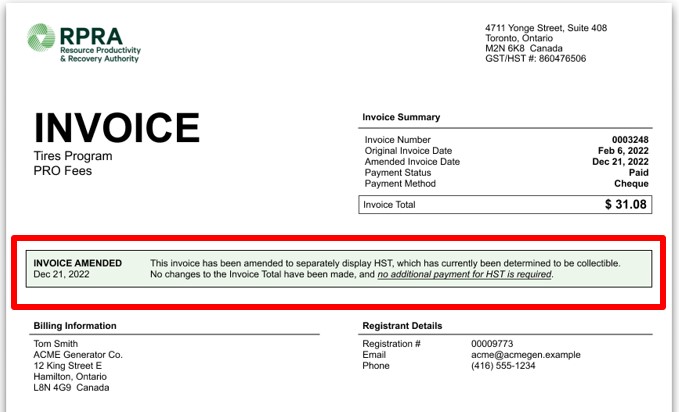
-
Registrants can access past invoices in their Registry account under the “Invoices & Payments” tab. From here, registrants can view, download and pay their invoices.
See sample screenshot below:

-
No. Effective February 6, 2023, RPRA will no longer accept requests for extensions to registration or reporting deadlines. Obligated parties should make every effort to ensure they meet all submission deadlines as part of their obligations under their associated regulation.
For more guidance, read the Late Registration or Report Submissions Compliance Bulletin.
-
A Verifier can be an individual, either an employee of the business or a hired third-party (including a PRO), who has one of the following designations and is not the same person who prepared the supply report:
- CPA (Chartered Professional Accountants) in Canada or CPA (Certified Public Accountant) in the US
- ACCA (Association of Chartered Certified Accounts) Qualification
- CIA (Certified Internal Auditor)
- CPB (Certified Professional Bookkeeper) in Canada
- RPA (Registered Professional Accountant) in Canada
-
Account admins can manage password resets for all active users in the account. Primary users are also able to manage password resets, but only for active users within the programs they are the primary user for. If secondary users require a password reset, they can reach out to the account admin or primary user to do so.
-
The account admin or primary user navigates to the program homepage of which the user requiring a password reset is enrolled in. The account admin or primary user then clicks their username at the top right of the page to show the drop-down list and selects Manage Users.
In the Active Users table, the account admin or primary user clicks Reset Password on the row for the user they want to reset the password for and clicks Confirm.
The user’s password has now been reset. They will receive an email with a password reset link.
Note: the password reset link will expire within 24 hours. If the link expires before the user creates a new password, the account admin or primary must click “Reset Password” again to restart the process.
See the FAQ: Who can reset passwords in the registry?
-
If you need to change an email address in your registry account, please contact the Compliance Team at [email protected]. Registry users cannot update email addresses themselves; this can only be completed by RPRA.
-
If a producer or service provider needs to adjust the performance data reported to RPRA, they must contact the Compliance and Registry Team immediately by emailing [email protected]. Please include the following information in the email:
- The rationale for the change in the data
- Any data that supports the need for a correction (e.g., tonnage purchase or sale contract, audit)
- Any other information to support the change
While it is an offence to submit false or misleading information under the RRCEA, RPRA wants this corrected as quickly as possible to ensure that it has accurate performance data from all registrants.
RPRA can only receive these requests from the primary contact on the company’s Registry account. Your request for an adjustment will be reviewed by the Compliance and Registry team.
-
To request a refund for a payment made by credit card and direct debit, follow these steps:
- Log in to your registry account.
- Select the Program.
- Go to the Invoices & Payment tab.
- Scroll to the Invoices with Credit Balances table.
- Under Action click on Request Refund.
- Click on the green button showing the refund amount.
To request a refund for a payment made by a saved payment method (credit card or direct debit), follow these steps:
- Log in to your registry account.
- Select the Program.
- Go to the Invoices & Payment tab.
- Scroll to the Invoices with Credit Balances table Under Action click on Request Refund
- Check the box to Confirm your Attestation to the information.
- Click on the green button showing the refund amount.
To request a refund for a payment made by EDI, cheque or electronic bill payment, follow these steps:
- Log in to your registry account.
- Select the Program.
- Go to the Invoices & Payment tab.
- Scroll to the Invoices with Credit Balances table Under Action click on Request Refund
- Add your banking information as refunds will only be issued by EFT
- Check the box to Confirm your Attestation to the information.
- Click on the green button showing the refund amount.
Note: The Request Refund button is only available for invoices that have a negative balance.
If a registrant clicks the “Request Refund” button after a refund request has already been submitted, the registrant will see the following message: “A refund has already been requested for invoice 000XXXX on XX Date. We are currently processing your request.”
-
To pay multiple invoices at once, follow these steps:
- Log in to your registry account.
- Select the Program.
- On the program screen click Pay Now in the Total Unpaid Invoices box, located at the top right corner.
- Click the Pay Now button for saved payment methods or select Change Payment Method.
- Choose the payment method, then click Next.
- If the selected payment method is credit card or debit card, please enter your banking information or your credit card information, then click the Pay button.
- If the selected payment method is EDI, electronic bill payment, or cheque, please follow the payment instructions on-screen.
-
To view invoices with a credit balance by program, follow these steps:
- Log in to your registry account.
- Select the applicable Program.
- On the program screen go to the Invoices & Payment tab.
- Click on Outstanding Invoices tab.
- Scroll down to the Invoices with Credit Balances section to view invoices with credit balances.
-
Only account admins can designate an accounts payable (AP) user.
-
An accounts payable (AP) user is responsible for managing the financial aspects of a company’s registry account.
An AP user’s functionality includes:
- Accessing and paying invoices – View, download, and make payments for invoices.
- Managing saved payment methods – Add, update, or remove stored payment options.
- Modifying data across all programs – Modify program-related information as required for billing.
- Receiving billing and payment notifications – Receive email alerts about invoices, payments, and account balances.
- Communicating with RPRA regarding billing or payment questions – Act as the main contact for financial inquiries.
-
Yes, designating an AP User is required for account creation. This ensures financial responsibilities are clearly assigned.
-
Users must designate an accounts payable (AP) user during account set up.
To add an AP user during account set up, follow these steps:
- After adding the Business information and address, click Next.
- After entering the Account Admin information, scroll down.
- Enter the Account Payables User information.
- Check the box: ✅I hereby authorize this user to create/modify data. This confirms the AP User can modify data across all programs.
- Click Next
If you want to assign the account admin as the AP user, check the box labeled:
The Account Admin listed above is the Accounts Payable (AP) User.This will auto-fill the AP User section with the account admin’s information.
See FAQ: 7. What is an accounts payable (AP) user and what can they do in the registry?
-
Follow the steps below to add an AP user to an existing account:
- Log in to the Registry account.
- Go to the Manage Users
- Click on the Set Account Payable User
- Fill in the required details (e.g., name, contact info, etc.).
- Complete the Programs & User Access Levels section
- Check the box: ✅I hereby authorize this user to create/modify data. This confirms the AP user can modify data across all programs.
- Click Save
Note: The new AP user will receive an email invitation to create their password and gain access to the Registry account.
How to change an existing AP user:
- Log in to the Registry account.
- Navigate to the Manage Users
- Click on the Change Accounts Payable User button.
- To select an existing Registry user, type their name or email address in the search field
- Check the box: ✅ I hereby authorize this user to create/modify data. This confirms the AP User can modify data across all programs.
- Click
- To add a new user, click on “Add New User”
- Fill in the required details (e.g., name, contact info, etc.).
- Complete the “Programs & User Access Levels” section.
- Check the box: ✅✅ “I hereby authorize this user to create/modify data.” This confirms the AP user can modify data across all program.
- Click Save
-
RPRA invoices are due on receipt.
RPRA charges a monthly 1.5% late payment fee on outstanding invoices. Late payment fees accrue monthly until the original invoice is paid in full.
If a late payment fee is applied, registrants will receive an email notification, and a late payment fee invoice will be issued to their Registry account.
-
Information for consumers about environmental fees on products sold in Ontario can be found on Ontario Recycles.
Ontario Recycles was created by RPRA in 2026 to keep the public informed about the circular economy and recycling in Ontario.
-
Being selected as a subject of an inspection does not automatically mean a producer is out of compliance. While selection relies on RPRA’s risk-based framework, the first step of the process is an initial assessment, not a formal inspection or audit.
However, subsequent verification and audit activities may be undertaken by RPRA to determine whether enforcement action will be taken.