


Hazardous and Special Products Producers

The 2026 reporting deadline was July 31, 2026. Failure to submit reports on time or submit false or misleading reports may be subject to compliance orders and administrative penalty orders. Log in to your registry account to complete your report(s).

Login

A person is considered a producer under the Hazardous and Special Products (HSP) Regulation if they supply oil filters, oil containers, antifreeze, solvents, paints and coatings, pesticides, pressurized containers (non-refillable and refillable) or refillable propane containers into Ontario and one of the following applies:

  • Are the brand holder of the HSP and have residency in Canada
  • Have residency in Ontario and import HSP from outside of Ontario
  • Have residency in Ontario and markets directly to consumers in Ontario (e.g. online sales)
  • Does not have residency in Ontario and markets directly to consumers in Ontario (e.g. online sales)

A person is considered a producer under the HSP Regulation if they supply oil filters and antifreeze in new vehicles sold in Ontario and one of the following applies:

  • Are the vehicle manufacturer and have residency in Canada
  • Have residency in Ontario and import new vehicles for sale in Ontario
  • Have residency in Ontario and supply directly to consumers in Ontario
  • Does not have residency in Ontario and supply directly to consumers in Ontario

A person is considered a producer under the HSP Regulation if they supply mercury-containing barometers, thermometers or thermostats into Ontario and one of the following applies:

  • Are the brand holder of the mercury-containing device and have residency in Canada
  • If there is no resident brand holder, the brand holder of barometers, thermometers or thermostats supplied to consumers in Ontario that do not contain mercury

A person is considered a producer under the HSP Regulation if they supply fertilizers into Ontario, and

  • They are the brand holder of the fertilizer and have residency in Canada

Even if you do not meet the above definitions, there may be circumstances where you qualify as a producer.

Note: There are exemptions under the HSP Regulation for category A and B. If an HSP producer meets the exemption threshold for a material type, they are not required to establish a collection system, manage those materials or implement a promotion and education program. The exemption thresholds change each year, and a producer must confirm each year. Learn more about determining if you are an exempt HSP producer.


What are my obligations under the HSP Regulation?
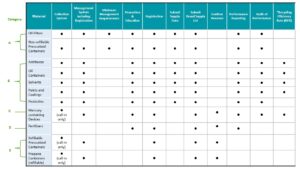
*In 2027, producers of Category B (but not pesticides) and Category C materials must use a processor who met, at a minimum, an average recycling efficiency rate (RER) specified in the HSP regulation, in the calendar year two years prior for the type of HSP. RPRA will provide more guidance at a later time.Click the headings below to learn more about your obligations as a producer for each material. Materials that have the same requirements are grouped together, with differences identified below.
Oil filters and non-refillable pressurized containers are under category A in the HSP Regulation and have the following definitions:

Oil filters that is a fluid filter, other than a gasoline filter. Non-refillable pressurized containers that are used to supply a gas product, including propane, but cannot be refilled.

Registering with RPRA

Under the HSP Regulation, producers of oil filters and non-refillable pressurized containers are required to register with RPRA the first year after their average supply weight exceeds the applicable weight requirement. To confirm if you are exempt from registering, please see our FAQ.

Register here

Have questions about registration? View the following resources:

Collection and Management

Producers are required to establish and operate a collection system for HSP in Ontario. Producers should reference the Hazardous and Special Products Collection Systems compliance bulletin for guidance.

Collection Sites

Producers must ensure that consumers can drop off HSP material free of charge at each site that is part of their collection system and satisfy the following requirements:

  • If the HSP collection site is operated by a municipality or territorial district, the site must accept, at a minimum, all types of HSP in the same category.
  • If the HSP collection site is not a municipality or Local Service Board, it must accept HSP during normal business hours throughout the performance year.
  • Municipal and First Nation collection sites are permitted to operate seasonally or for a limited number of days per week.
  • The HSP collection site must accept, at a minimum, up to 25 kg per day of each type of HSP accepted at the site from any person.

Producers can reduce their accessibility requirements by providing options such as curbside collection, mail back programs, collection events or other alternative collection systems. Read the compliance bulletin for detailed guidance on collection systems for each material type.

Call-in collection

All First Nation communities can contact a large producer or PRO to arrange a pickup once they collect more than 100 kg of HSP material. Large producers or PROs must collect all products that fall under that type of HSP material from the following locations within the applicable timelines:

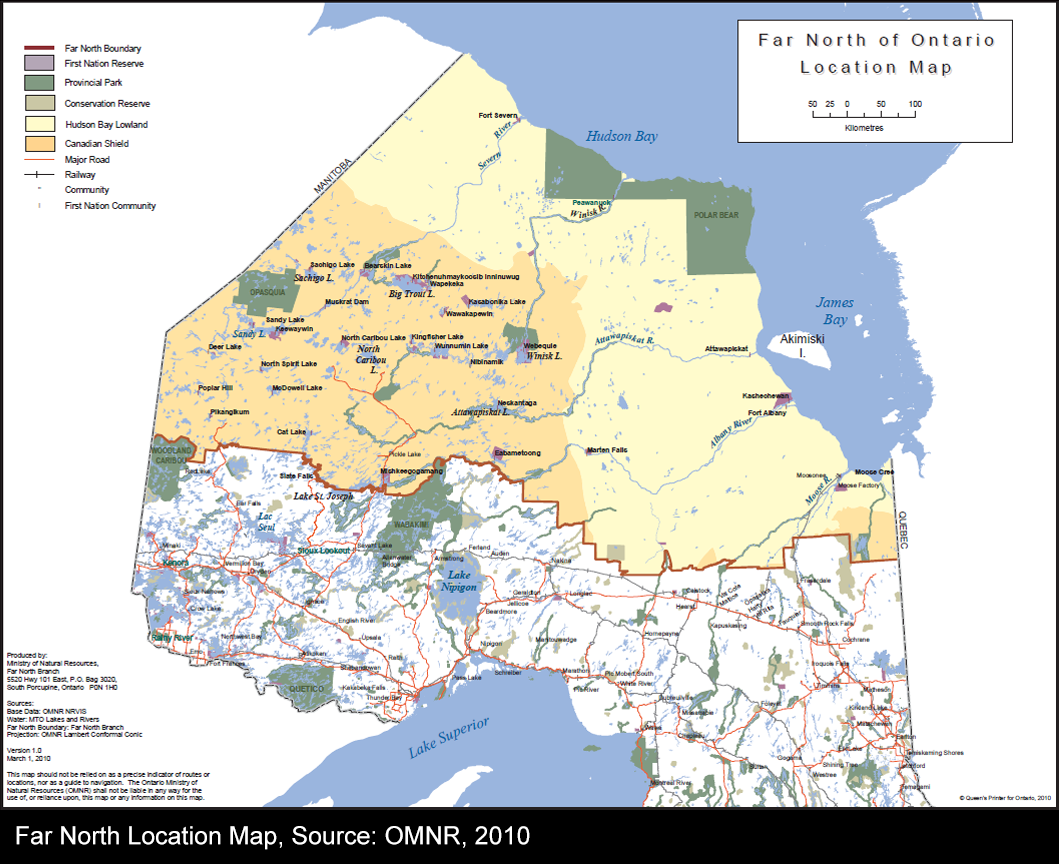
  • First Nation reserves south of the Far North within three months from notification
  • First Nation reserves located in the Far North within one year from notification.
  • Municipalities, territorial districts, and Ontario Crown-operated sites that are not located in the Far North within three months from notification

Producers, or PROs on their behalf, are responsible for the management of all products that fall under a type of HSP, regardless of the brand of the product.

Management Requirements

Producers, or PROs on their behalf, must ensure that all HSP picked up from a collection site, regardless of whether it is part of the producer’s collection system, is managed (reused or processed) within three months of the pickup date.

Every obligated producer shall ensure that at least 85% of oil filters and 30% of non-refillable pressurized containers they supplied into Ontario are reused or recycled.

The weight of recovered resources must meet or exceed a producer’s management requirement, which is calculated based on the average of HSP supplied over three years. For more information on minimum management requirements for future years, review the FAQs.

Recovered resources are:

  • Materials used or destined to be used by a person for the making of new products or packaging
  • Products that are reused by a person

Materials that are not considered recovered (cannot count toward performance) include:

  • Materials that are land disposed
  • Materials that are incinerated or used as fuel or a fuel supplement
  • Materials that are stored, stockpiled, used as a daily landfill cover or otherwise deposited on land

With respect to the weight of recovered resources from oil filters, the following must not be counted:

  • Any oil residue contained in the used oil filter
  • Any oil which is captured, recaptured, extracted, collected or diverted during processing

Producers, or PROs on their behalf, can work with registered HSP processors to meet their management requirements. View the list of HSP processors here.

Promotion and Education

Producers, or PROs acting on their behalf, are required to establish and operate a promotion and education program to:

  • Promote their collection and management services with respect to the type of HSP they are obligated for
  • Provide the following information on a website with respect to that type of HSP:
    • The location of each HSP collection site established or operated by the producer that is accessible to the public and the types of HSP accepted at each site
    • The location and date of each HSP collection event held by the producer and the types of HSP accepted at each event
    • A description of the collection services provided by the producer, other than HSP collection sites and HSP collection events
    • A description of how the producer manages that type of HSP after it is collected
  • Create promotional and educational materials with respect to that type of HSP that include the following:
    • The website address
    • A description of how that type of HSP is collected and managed
  • Solicit feedback from and make the promotional and education materials available to:
    • First Nation communities
    • Municipal governments
    • Retailers that supply that type of HSP
  • The producer shall promote each HSP collection event for that type of HSP in the local municipality or territorial district where it will be held for at least one week prior to the date of the event using a combination of two or more forms of media, including but not limited to:
    • Local print publications,
    • Local print media,
    • Local radio,
    • Local signage, or
    • Social media

Reporting and Audit Requirements

Collection Activity Reporting

Producers, or PROs on their behalf, must regularly update their collection activities in Registry. Collection activities refer to collection sites, events, seasonal events, call-in and other activity types related to material collection systems.

For step-by-step instructions on how to report collection activities, read our guide.

For more information on reported collection activities that may appear on RPRA’s Where to Recycle map, view these FAQs.

Annual Supply Reporting

Each year, HSP producers must submit the following information in RPRA’s Registry about the HSP they supplied into Ontario:

  • The weight of HSP they supplied into Ontario in the previous calendar year.
  • A list of the brands that make up the HSP supplied into Ontario in the previous calendar year.

Producers are also required to pay their annual program fee when submitting their supply report.

To learn more about supply reporting, view the Supply Data Reporting Guide.

Deadline: Supply data must be submitted in accordance with the Hazardous and Special Products Verification and Audit Procedure by July 31 each year.

Supply Data Verification Reporting

Each year, large HSP producers are required to submit a supply data verification report in accordance with the HSP Verification and Audit Procedure. Small producers are not required to submit a verification report but will be subject to inspections.

As outlined in the registry procedure, large producers are defined as such:

  • Large oil filter producer is a producer whose average supply in the previous calendar year is equal to or more than 100,000 kg
  • Large non-refillable pressurized container producer is a producer whose average supply in the previous calendar is equal to or more than 100,000 kg

Deadline: Large producers must verify supply data in accordance with the Hazardous and Special Products Verification and Audit Procedure by July 31 each year.

Annual Performance Reporting

Each year, producers, or PROs on their behalf, will have to report on the extent to which they were able to achieve their management requirement.

Producers, or PROs on their behalf, are required to report the following information annually in the Registry:

  • Total weight of HSP collected
  • Total weight of materials recovered from processing the collected HSP (e.g. metals, plastics, etc.)
  • Total weight of materials processed from that type of HSP that were:
    • Land disposed
    • Incinerated
    • Used as a fuel or a fuel supplement, or
    • Stored, stockpiled, used as daily landfill cover or otherwise deposited on land
    • A description of the activities undertaken by the producer to comply with the promotion and education requirements.

Most producers will work with a PRO to meet their requirements, including reporting. If you have not yet contracted with a PRO, it is important that you do so as soon as possible to ensure that you can meet your obligations. In order for a PRO to report on your behalf, you must identify them in the Registry. Learn more about PROs here.

A PRO may submit the performance report on a producer’s behalf, but it remains the producer’s responsibility to ensure their report is submitted by the deadline.

Deadline: Performance reporting is due July 31 of each year.

Performance Audit Reporting

RPRA is delaying the requirement for producers and PROs to submit a performance audit report in 2026. This decision was made because RPRA is in the process of finalizing its registry procedure for performance audit reporting. HSP producers and PROs will be required to submit their first performance audit report at a later time, to be confirmed in consultation with PROs, and in accordance with the finalized procedure.

Oil containers, antifreeze, pesticides, solvents, paints and coatings are under category B in the HSP Regulation and have the following definitions:

  • Oil containers that have a capacity of 30 litres or less and that is used for the supply of new lubricating oil.
  • Antifreeze that contains ethylene or propylene glycol used or intended for use as a vehicle engine coolant.
  • Pesticides, fungicides, herbicides or insecticides that are registered under the Pest Control Products Act.
  • Solvents that are liquid and intended to be used to dissolve or thin a compatible substance that are either comprised of 10% or more of water-immiscible liquid hydrocarbons, including halogen-substituted liquid hydrocarbons, or are flammable
  • Paints and coatings that contain latex, oil or solvent-based architectural coatings whether tinted or untinted, non-pesticide marine paints, paints for automotive, craft and industrial applications.

Under the following material categories, the product’s primary packaging is also obligated:

  • Antifreeze
  • Paints and coatings
  • Pesticides
  • Solvents

Note: Primary packaging made of corrugated and boxboard boxes, plastic film, shrink wrap or printed materials is not obligated under the HSP Regulation. Please see the Blue Box Regulation for more information and possible obligations.

  • Oil containers, solvents, paints and coatings, fertilizers and pesticides are only obligated when supplied in a container that has a capacity of 30 litres/30 kg, or less.
  • All antifreeze supplied, regardless of container size and including the antifreeze supplied in new vehicles, must be reported. However, the antifreeze container is only obligated when supplied in a container that has a capacity of 30 litres/30 kg, or less.

Registering with RPRA

Under the HSP Regulation, producers of oil containers, antifreeze, pesticides, solvents, paints and coatings are required to register with RPRA the first year after their average supply weight exceeds the applicable weight requirement . To confirm if you are exempt from registering, please see our FAQ.

Register here

Have questions about registration? View the following resources:

Collection and Management

Producers are required to establish and operate a collection system for HSP in Ontario. Producers should reference the Hazardous and Special Products Collection Systems compliance bulletin for guidance.

Collection Sites

Producers must ensure that consumers can drop off HSP free of charge at each site that is part of their collection system and satisfy the following requirements:

  • If the HSP collection site is operated by a municipality or territorial district, the site must accept, at a minimum, all types of HSP in the same category.
  • If the HSP collection site is not a municipality or Local Service Board, it must accept HSP during normal business hours throughout the performance year.
  • Municipal and First Nation collection sites are permitted to operate seasonally or on a limited number of days per week.
  • The HSP collection site must accept, at a minimum, up to 25 kilograms per day of each type of HSP accepted at the site from any person.

Producers can reduce their accessibility requirements by providing options such as curbside collection, mail back programs, or collection events. Read the compliance bulletin for detailed guidance on collection systems for each material type.

Call-in Collection

All First Nation communities can contact a large producer or PRO to arrange a pickup once they collect more than 100 kg of HSP material. Large producers or PROs must collect all products that fall under that type of HSP material from the following locations within the applicable timelines:

  • First Nation reserves south of the Far North within three months from notification
  • First Nation reserves located in the Far North, within one year from notification.
  • Municipalities, territorial districts, and Ontario Crown-operated sites that are not located in the Far North within three months from notification.

Producers, or PROs on their behalf, are responsible for the management of all products that fall under a type of HSP, regardless of the brand of the product.

Management Requirements

Producers, or PROs on their behalf, are required to establish and operate a system for managing HSP, and meet the following requirements:

  • All oil containers, antifreeze, solvents, paints and coatings picked up from a collection site, regardless of whether it is part of the producer’s network, must be processed within three months of the pickup date
  • All pesticides must be disposed of within three months of the pickup date

Recovered resources are:

  • Materials used or destined to be used by a person for the making of new products or packaging
  • Products that are reused by a person; and
  • With respect to paints and coatings, up to 15% of the weight may be counted as recovered resources with respect to concrete and landscaping applications

Materials that are not considered recovered (cannot count toward performance) include:

  • Materials that are land disposed
  • Materials that are incinerated or used as fuel or a fuel supplement
  • Materials that are stored, stockpiled, used as a daily landfill cover or otherwise deposited on land

Producers, or PROs on their behalf, can work with registered HSP processors or disposal facilities to meet their management requirements. View the list of HSP processors and disposal facilities here.

Promotion and Education

Producers, or PROs acting on their behalf, are required to establish and operate a promotion and education program including the following:

  • Promote their collection and management services with respect to the type of HSP they are obligated for
  • Provide the following information on a website with respect to that type of HSP:
    • The location of each HSP collection site established or operated by the producer that is accessible to the public and the types of HSP accepted at each site
    • The location and date of each HSP collection event held by the producer and the types of HSP accepted at each event
    • A description of the collection services provided by the producer, other than HSP collection sites and HSP collection events
    • A description of how the producer manages that type of HSP after it is collected
  • Create promotional and educational materials with respect to that type of HSP that include the following:
    • The website address
    • A description of how that type of HSP is collected and managed
  • Solicit feedback from and make the promotional and education materials available to:
    • First Nation communities
    • Municipal governments
    • Retailers that supply that type of HSP
  • The producer shall promote each HSP collection event for that type of HSP in the local municipality or territorial district where it will be held for at least one week prior to the date of the event using a combination of two or more forms of media, including but not limited to:
    • Local print publications,
    • Local print media,
    • Local radio,
    • Local signage, or
    • Social media.

Reporting and Audit Requirements

Collection Activity Reporting

Producers, or PROs on their behalf, must regularly update their collection activities in RPRA’s Registry. Collection activities refer to collection sites, events, seasonal events, call-in and other activity types related to material collection systems.

For step-by-step instructions on how to report collection activities, read our guide.

For more information on reported collection activities that may appear on RPRA’s Where to Recycle map, view these FAQs.

Annual Supply Reporting

Each year, HSP producers must submit the following information in RPRA’s Registry about the HSP they supplied into Ontario:

  • The weight of HSP they supplied into Ontario in the previous calendar year.
  • A list of the brands that make up the HSP supplied into Ontario in the previous calendar year.

Producers are also required to pay their annual program fee when submitting their supply report.

To learn more about supply reporting, view the Supply Data Reporting Guide.

Deadline: Supply data must be submitted in accordance with the HSP Verification and Audit Procedure by July 31 each year.

Supply Data Verification Reporting

Each year, large HSP producers are required to submit a supply data verification report in accordance with the HSP Verification and Audit Procedure. Small producers are not required to submit a verification report but will be subject to inspections.

As outlined in the registry procedure, large producers are determined as such:

Type of HSPLarge producer’s average weight of supply in the previous calendar year (kg)
Antifreeze300,000 or more
Oil containers55,000 or more
Solvents70,000 or more
Paints and Coatings1,000 or more or more
Pesticides9,000 or more

Deadline: Large producers must verify supply data in accordance with the HSP Verification and Audit Procedure by July 31 each year.

Annual Performance Reporting

Producers, or PROs on their behalf, are required to report the following information annually in the Registry:

  • Total weight of HSP collected
  • Total weight of materials recovered from processing the collected HSP (e.g. metals, plastics, etc.)
  • Total weight of materials processed from that type of HSP that were:
    • Land disposed
    • Incinerated
    • Used as a fuel or a fuel supplement, or
    • Stored, stockpiled, used as daily landfill cover or otherwise deposited on land
  • A description of the activities undertaken by the producer to comply with the promotion and education requirements.

Most producers will work with a PRO to meet their requirements, including reporting. If you have not yet contracted with a PRO, it is important that you do so as soon as possible to ensure that you can meet your obligations. In order for a PRO to report on your behalf, you must identify them in the Registry. Learn more about PROs here.

A PRO may submit the performance report on a producer’s behalf, but it remains the producer’s responsibility to ensure their report is submitted by the deadline.

Deadline: Performance reporting is due July 31 of each year.

Performance audit reporting

RPRA is delaying the requirement for producers and PROs to submit a performance audit report in 2026. This decision was made because RPRA is in the process of finalizing its registry procedure for performance audit reporting. HSP producers and PROs will be required to submit their first performance audit report at a later time, to be confirmed in consultation with PROs, and in accordance with the finalized procedure.

Barometers, thermometers and thermostats are under category C in the HSP Regulation and have the following definitions:

  • Barometers that contain mercury, are intended for residential use and may contain electronic components.
  • Thermometers that contain mercury, are intended for residential use to measure body or air temperature and may contain electronic component.
  • Thermostats that contain mercury and may contain electronic components.

Registering with RPRA

Under the HSP Regulation, producers of mercury-containing barometers, thermometers and thermostats are required to register with RPRA within 30 days of becoming a producer of a type of HSP.

Register here

Have questions about registration? View the following resources:

Collection and Management

Producers are required to establish and operate a collection system for HSP in Ontario. Producers should reference the Hazardous and Special Products Collection Systems compliance bulletin for guidance.

Call-in collection

All First Nation communities can contact a large producer or PRO to arrange a pickup once they collect more than 100 kg of HSP material. Large producers or PROs must collect all products that fall under that type of HSP material from the following locations within the applicable timelines:

  • First Nation reserves south of the Far North within three months from notification
  • First Nation reserves located in the Far North, within one year from notification.
  • Municipalities, territorial districts, and Ontario Crown-operated sites that are not located in the Far North within three months from notification.

Producers, or PROs on their behalf, are responsible for the management of all products that fall under a type of HSP, regardless of the brand of the product.

Management Requirements

Producers, or PROs on their behalf, must ensure that all mercury-containing barometers, thermometers and thermostats picked up from a collection site, are processed within three months of the pickup date.

Recovered resources are:

  • Materials used or destined to be used by a person for the making of new products or packaging
  • Reused by a person

Materials that are not considered recovered (cannot count toward performance) include:

  • Materials that are land disposed
  • Materials that are incinerated or used as fuel or a fuel supplement
  • Materials that are stored, stockpiled, used as a daily landfill cover or otherwise deposited on land

Producers, or PROs on their behalf, can work with registered HSP processors to meet their management requirements. View the list of HSP processors here. 

Promotion and education

Producers, or PROs acting on their behalf, are required to establish and operate a promotion and education program including the following:

  • Promote their collection and management services with respect to the type of HSP they are obligated for.
  • Provide the following information on a website with respect to that type of HSP:
    • The presence of mercury in that type of HSP
    • How to distinguish that type of HSP from similar products that do not contain mercury
    • The hazards to human health and the environment related to mercury
    • How consumers can properly dispose of that type of HSP
    • A description of the collection services provided by the producer under the regulation for that type of HSP
    • A description of how the producer manages that type of HSP after it is collected under the regulation
  • Create promotional and educational materials with respect to that type of HSP that include the following:
    • The website address
    • A description of how that type of HSP is collected and managed

Reporting and Audit Requirements

Annual Supply Reporting

Producers of mercury-containing barometers, thermometers and thermostats are not required to submit supply data to RPRA. However, producers must report annually the following information in RPRA’s Registry about the HSP they supplied into Ontario:

  • Confirmation if their revenue in Ontario is above or below $2 million
  • A list of the brands that make up the HSP supplied into Ontario in the previous calendar year

Producers are also required to pay their annual program fee when submitting their supply report.

To learn more about supply reporting, view the Supply Data Reporting Guide.

Deadline: Supply data must be submitted in accordance with the HSP Verification and Audit Procedure by July 31 each year.

Annual Performance Reporting

Producers, or PROs on their behalf, are required to report the following information annually in the Registry:

  • Total weight of HSP collected
  • Total weight of materials recovered from processing the collected HSP (e.g. metals, plastics, etc.)
  • Total weight of materials processed from that type of HSP that were:
    • Land disposed
    • Incinerated
    • Used as a fuel or a fuel supplement, or
    • Stored, stockpiled, used as daily landfill cover or otherwise deposited on land
  • The weight of mercury recovered from that type of HSP
  • A description of the activities undertaken by the producer to comply with the promotion and education requirements

Most producers will work with a PRO to meet their requirements, including reporting. If you have not yet contracted with a PRO, it is important that you do so as soon as possible to ensure that you can meet your obligations. In order for a PRO to report on your behalf, you must identify them in the Registry. Learn more about PROs here.

A PRO may submit the performance report on a producer’s behalf, but it remains the producer’s responsibility to ensure their report is submitted by the deadline.

Deadline: Performance reporting is due July 31 of each year.

Performance Audit Reporting

RPRA is delaying the requirement for producers and PROs to submit a performance audit report in 2026. This decision was made because RPRA is in the process of finalizing its registry procedure for performance audit reporting. HSP producers and PROs will be required to submit their first performance audit report at a later time, to be confirmed in consultation with PROs, and in accordance with the finalized procedure.

Fertilizers are under category D in the HSP Regulation and have the following definition:

Any substance or mixture of substances containing nitrogen, phosphorus, potassium or other plant food, manufactured, sold or represented for use as a plant nutrient and regulated under the Fertilizers Act (Canada).

Registering with RPRA

Under the HSP Regulation, producers of fertilizers are required to register with RPRA within 30 days of supplying these products in Ontario.

Register here

Have questions about registration? View the following resources:

Promotion and education

Producers, or PROs acting on their behalf, are required to establish and operate a promotion and education program including the following:

  • Provide information on a website about how consumers can use, share and properly dispose of fertilizer
  • Create promotional and education materials that include:
    • The website address
    • A description of how consumers can use, share and properly dispose of fertilizer
  • Solicit, consider feedback from, and make the promotional and education materials available to:
    • First Nation communities
    • Municipal governments
    • Retailers that supply fertilizers
  • Provide information to municipalities on innovative end-use options for fertilizers as an alternative to disposal

Reporting and Audit Requirements

Annual Supply Reporting

Producers of fertilizers are not required to submit supply data to RPRA. However, producers must report annually the following information in RPRA’s Registry about the HSP they supplied into Ontario:

  • Confirmation if their revenue in Ontario is above or below $2 million
  • A list of the brands that make up the HSP supplied into Ontario in the previous calendar year

Producers are also required to pay their annual program fee when submitting their supply report.

To learn more about supply reporting, view the Supply Data Reporting Guide.

Deadline: Supply data must be submitted in accordance with the HSP Verification and Audit Procedure by July 31 each year.

Annual Performance Reporting

Producers, or PROs on their behalf, are required to submit an annual report in the Registry, a description of the activities the producer achieved from the previous calendar year in order to comply with their promotion and education requirements.

Most producers will work with a PRO to meet their requirements, including reporting. If you have not yet contracted with a PRO, it is important that you do so as soon as possible to ensure that you can meet your obligations. In order for a PRO to report on your behalf, you must identify them in the Registry. Learn more about PROs here.

A PRO may submit the performance report on a producer’s behalf, but it remains the producer’s responsibility to ensure their report is submitted by the deadline.

Deadline: Performance reporting is due July 31 of each year.

Refillable propane containers and refillable pressurized containers are under category E in the HSP Regulation and have the following definitions:

  • Refillable propane containers that can be refilled, have a water capacity of 109 litres or less and are used only for propane.
  • Refillable pressurized containers that are used for the supply of a gas product and can be refilled.

Registering with RPRA

Under the HSP Regulation, producers of refillable propane containers and refillable pressurized containers are required to register with RPRA within 30 days of supplying these products in Ontario.

Register here

Have questions about registration? View the following resources:

Collection and Management

Producers are required to establish and operate a collection system for HSP in Ontario. Producers should reference the Hazardous and Special Products Collection Systems compliance bulletin for guidance.

Call-in collection

All First Nation communities can contact a producer or PRO to arrange a pickup  of HSP material. Producers or PROs must collect all products that fall under that type of HSP material from the following locations within the applicable timelines:

  • First Nation reserves south of the Far North within three months from notification
  • First Nation reserves located in the Far North, within one year from notification.
  • Municipalities, territorial districts, and Ontario Crown-operated sites that are not located in the Far North within three months from notification.

Producers, or PROs on their behalf, are responsible for the management of all products that fall under a type of HSP, regardless of the brand of the product.

Management Requirements

Producers, or PROs on their behalf, must ensure that all refillable propane containers and refillable pressurized containers picked up from a collection site are processed within three months of the pickup date.

Recovered resources are:

  • Materials used or destined to be used by a person for the making of new products or packaging
  • Reused by a person

Materials that are not considered recovered (cannot count toward performance) include:

  • Materials that are land disposed
  • Materials that are incinerated
  • or used as fuel or a fuel supplement
  • Materials that are stored, stockpiled, used as a daily landfill cover or otherwise deposited on land

Reporting Requirements

Annual Supply Reporting

As of January 1, 2025, refillable pressurized containers fall under Category E (previously under Category B). Producers of refillable propane containers and refillable pressurized containers are not required to submit supply data to RPRA. However, producers must report annually the following information in RPRA’s Registry about the HSP they supplied into Ontario:

  • Confirmation if their revenue in Ontario is above or below $2 million
  • A list of the brands that make up the HSP supplied into Ontario in the previous calendar year.

Producers are also required to pay their annual program fee when submitting their supply report.

To learn more about supply reporting, view the Supply Data Reporting Guide.

Deadline: Supply data must be submitted in accordance with the HSP Verification and Audit Procedure by July 31 each year.

Working with PROs

Producers have the choice of establishing and operating their own collection and management systems or working with one or more producer responsibility organizations (PROs) registered with RPRA to meet their obligations.

A PRO is a person retained by a producer to provide collection, management or administrative services to help producers meet their regulatory obligations under the HSP Regulation, including:

  • Arranging the establishment or operation of HSP collection and management systems (hauling, recycling, reuse, or refurbishment services).
  • Establishing or operating a collection or management system
  • Implementing a promotion and education program
  • Preparing and submitting reports

PROs operate in a competitive market and producers can choose the PRO (or PROs) they want to work with. The terms and conditions of each contract with a PRO may vary. View the list of registered PROs here.


Upcoming Important Dates

Obligated material(s)RequirementDeadline
Producers of oil filters, non-refillable pressurized containers, oil containers, antifreeze, pesticides, solvents, paints and coatingsRegister with RPRA, unless exemptOn or before July 31 of the first calendar year in which the producer exceeds the threshold outlined here.
Producers of mercury-containing barometers, thermometers and thermostats, fertilizers, refillable propane containers, and refillable pressurized containersRegister with RPRAWithin 30 days of meeting the definition of a producer. Learn more here.
Supply reporting (producers to report)
All producersSubmit annual Supply Report,
– Report the list of brands supplied into Ontario in 2025.
– Pay the 2026 annual program fee
July 31, 2026
Small* producers of oil filters, non-refillable pressurized containers, oil containers, antifreeze, pesticides, solvents and paints and coatingsSubmit annual supply report
– Report the weight of HSP materials supplied into Ontario in 2025
July 31, 2026
Large* producers of oil filters, non-refillable pressurized containers, oil containers, antifreeze, pesticides, solvents and paints and coatingsSubmit annual supply report
– Report the weight of HSP materials supplied into Ontario in 2025

Submit a supply data verification report
– Completed by a verifier/qualified person
July 31, 2026
Producers of mercury-containing barometers, thermometers and thermostats, fertilizers, and refillable propane containersSubmit annual supply report
– Confirm if revenue in Ontario was above or below $2 million in 2025
– Pay the 2026 program fee
July 31, 2026
Performance reporting (producers or a PRO on their behalf)
All producers, or a PRO on their behalf (except refillable pressurized and propane containers) with modifications for fertilizer producersSubmit annual performance report
– Report on your collection, management , promotion and education activities from 2025


Fertilizer producers must:
– Report only on your promotion and education activities from 2025
July 31, 2026
All producers (except fertilizers, refillable pressurized and refillable propane containers)Submit a performance audit report

Note: RPRA is delaying the requirement for HSP producers and PROs to submit a performance audit report in 2026. RPRA will communicate directly with producers and PROs about their performance audit requirements later this year.
Date to be confirmed in consultation with PROs
Unless otherwise stated, all information must be submitted through RPRA’s Registry.

Have questions?

Visit our Registry Resources for HSP to learn more about the HSP Regulation and how to meet your requirements. Resources include reporting guides, FAQs, how-to videos, and compliance documents.

For additional questions, contact our Compliance and Registry Team.