



The Blue Box Regulation provides the framework for the collection of Blue Box materials, such as packaging and paper products, primarily from residential locations in communities across Ontario. This framework operates under a system of “producer responsibility”, where producers of Blue Box materials are accountable for the collection and management of the products they sell once consumers have disposed of them. The amount of material that a producer must collect and manage is called their management requirement.
Most Blue Box producers work with producer responsibility organizations (PROs) to meet their management requirement and other obligations under the regulation. This includes the establishment of collection systems to collect and manage the materials they are responsible for recovering.
Producers and PROs can establish three types of collection systems:
- Common collection system (CCS)
- Alternative collection systems (ACS)
- Supplemental collection systems (SCS)
Of the three systems, only the common collection system and the alternative collection systems can be used to fully satisfy producer management requirements. If a producer chooses to use a supplemental collection system, they must also participate in the common collection system.
Common collection system
The common collection system (CCS), referred to as the “single collection system” in the Blue Box Regulation, was established by the PROs on behalf of producers. The common collection system has been providing residential (i.e. curbside), facility and depot collection services since it came into effect on July 1, 2023. It is one of the options for producers to meet their collection, management, and promotion and education requirements.
Communities across Ontario that are located south of the Far North joined the common collection system in phases during the shift from the legacy Blue Box Program to the current producer-operated Blue Box system.
How do producers join the common collection system?
Producers can join the common collection system by retaining the services of a PRO who has signed a common collection system access agreement. Visit our Blue Box PRO page to find contact information.
Producers who participate in the common collection system are not required to operate an alternative or supplemental collection system. However, some producers may choose to do so.
How are materials collected in the common collection system?
Residential collection service refers to Blue Box collection from residences and specific facilities.
This type of collection service can be provided in three ways: curbside collection, depot collection, or a combination of both methods.
What happens to the materials that are collected?
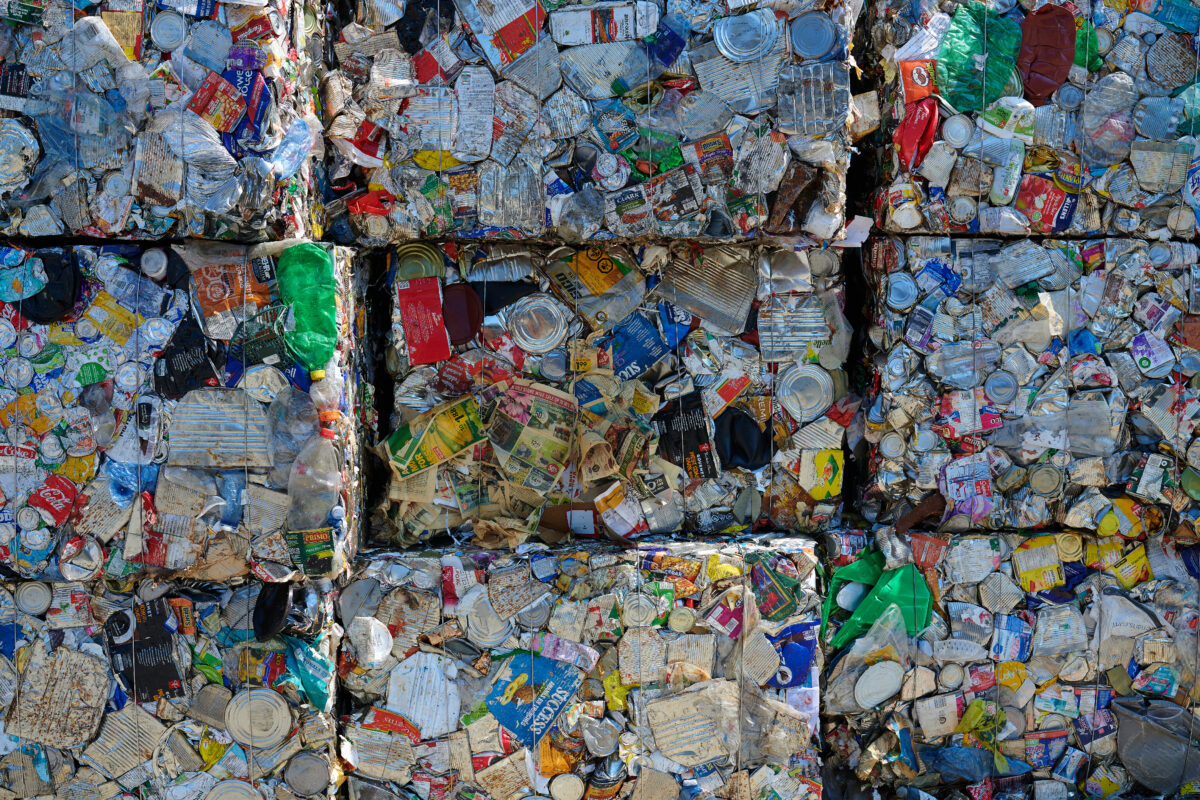
Blue Box materials that have been collected are transported to a network of receiving facilities. Once there, the materials are prepared to be picked up by PROs and sent for the next stage of processing, where they are separated by material type and arranged into bales. These bales, which contain valuable resources, are then further processed until they become a recovered resource.
Companies processing these materials must be registered with RPRA and submit annual reports detailing processed and disposed materials.
Alternative collection systems
An alternative collection system (ACS) is a standalone Blue Box collection system. It operates separately from the common collection system, but they are both required to meet the same producer collection, management and promotion and education requirements. A producer who has a pre-existing take-back program or deposit return program in Ontario may meet the criteria to register its program as an alternative collection system.
Alternative collection systems must service all eligible communities where their materials are supplied. This currently includes municipalities, registered First Nations and local services boards that are south of Ontario’s Far North.
Materials in these systems are typically collected through a depot, return-to-retail or mail-back system. This differs from the common collection system which collects all Blue Box materials through residential collection service.
Producers can choose to establish or participate in an ACS to meet their collection, management, and promotion and education requirements for one or more material instead of joining the CCS. Producers may also participate in both an ACS and the CCS, but not for the same products.
This means that producers that establish an ACS can:
- Use that system to collect all their obligated materials, or
- Use that system to collect one of their obligated materials and join the common collection system for all other materials they are responsible for.
More than one producer can participate in the establishment and operation of an alternative collection system, and a PRO may establish and operate an alternative collection system on behalf of one or more producers.
An alternative collection system must:
- Meet all regulatory requirements as outlined in Part V of the Blue Box Regulation
- Enable a producer to meet their management requirements for one or more of its obligated material categories entirely with materials collected through that system
- Be free of charge to the consumer
- Operate in every eligible community where the producers’ materials are supplied
- Operate year-round and during regular business hours
- Be registered with RPRA, and the registration of that alternative collection system must not have been revoked by RPRA
More information about alternative collection systems can be found in Part V of the Blue Box Regulation.
How do producers register an alternative collection system?
To register an alternative collection system, producers, or PROs on their behalf, must complete a registration form. The following information must be provided on the form:
- A description of the system and type of Blue Box materials it collects
- A description of all methods of collection
- If applicable, the location and business hours of all collection sites and depots in the alternative collection system
- A list of any eligible communities where the Blue Box materials in respect of which the person is a producer are supplied, and an explanation of how the producer determined that those Blue Box materials were only supplied into those eligible communities
- A description of the promotion and education plan for the system
- Evidence that the system enabled the producer to meet the collection and minimum management requirements for material(s) being collected
- A list of processors managing the material collected
- First Nations engagement plan (if applicable)
For a copy of the registration form, please contact RPRA at [email protected].
How are materials collected in an alternative collection system?
Materials collected through an alternative collection system must be collected from eligible sources in communities that have joined the producer-run Blue Box system. This material may be collected at depot locations, or through events, mail, return-to-retail, and/or curbside collection. Materials may also be collected in other ways as long as collection services are provided at no cost to the consumer.
What happens to the materials that are collected?
The materials that are collected through alternative collection systems are sent to facilities for further processing. Companies processing these materials must be registered with RPRA and submit annual reports detailing processed and disposed materials.
Supplemental collection systems
A supplemental collection system (SCS) can be established by one or more producers or PROs to increase the collection of Blue Box material. An SCS is a complementary collection system that producers can use to contribute to their requirements under the Blue Box Regulation. Producers participating in an SCS are required to also participate in the common collection system (CCS).
Supplemental collection systems are not required to service all eligible communities south of Ontario’s Far North and can be targeted to specific locations or methods. This means that a producer cannot satisfy their obligations by only participating in a supplemental collection system.
Since producers participating in an SCS will also participate in the CCS, producers do not have separate promotion and education requirements for the SCS.
How do producers register a supplemental collection system?
To register a supplemental collection system, producers, or PROs on their behalf, must complete a registration form. The following information must be provided on the form:
- A description of the system and type of Blue Box materials it collects
- Producers and PROs name(s) and contact information
- A description of all collection methods and collection locations (if applicable)
- The location(s) of the supplemental collection site(s) (if applicable)
- Where applicable, PRO must update their own registration to include the addition of a supplemental collection system and for which producer(s) the system has been established
- Confirmation of written operational agreements in place
- A list of processors managing the collected material
Note: a producer does not need to demonstrate that the system enables the producer to meet its collection and management requirements.
Producers or PROs that would like to register a supplemental collection system or learn what information is required to do so should contact RPRA at [email protected].
How are materials collected in a supplemental collection system?
Material collected through supplemental collection systems must be collected from eligible sources in participating communities that are south of Ontario’s Far North. This material may be collected at depot locations, through events, mail, return-to retail, and/or curbside collection. Materials may also be collected in other ways as long as there is no cost to the consumer.
What happens to the materials that are collected?
The materials that are collected through supplemental collection systems must only be sent to companies that are registered with RPRA. These processors are required to submit annual reports detailing processed and disposed materials.
Have a question about collection systems?
Our Compliance and Registry Team can provide more information to help you decide which collection system(s) to participate in to meet your producer obligations.
Contact the team at [email protected] or 1-833-600-0530.