




Frequently Asked Questions
Results (18)
Click the question to read the answer.
-
RPRA’s Where to Recycle map displays locations across Ontario where the public can drop off used materials to be recycled, such as batteries, electronics, household hazardous waste (e.g., paint, antifreeze, pesticides), lighting and tires, for free. Materials collected at these locations are reused, refurbished, recycled, or properly disposed of to help keep them out of landfill, recover valuable resources and protect our environment.
Note: In October 2026, the Where to Recycle map moved from rpra.ca to OntarioRecycles.ca, RPRA’s website to keep the public informed about the circular economy and recycling in Ontario.
-
The recycling locations that appear on the map are reported to RPRA by businesses that run the recycling systems in Ontario.
-
Collection sites for batteries, electronics, household hazardous waste, lighting, and tires that are reported by producers, or PROs on their behalf, appear on the map.
Collection sites that are considered private (e.g. a recycling bin inside a business that is not accessible to the public) do not appear on the map.
Note: In October 2026, the Where to Recycle map moved from rpra.ca to OntarioRecycles.ca, RPRA’s website to keep the public informed about the circular economy and recycling in Ontario.
-
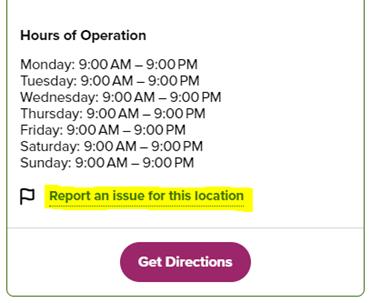
Collection site names are taken from Google Maps. If the name is wrong, request to change it through the map directly by:
- looking up the location,
- clicking the location,
- clicking the ‘Report an issue for this location’ link, and
- filling out the form by providing the correct name.
Note: In October 2026, the Where to Recycle map moved from rpra.ca to OntarioRecycles.ca, RPRA’s website to keep the public informed about the circular economy and recycling in Ontario.
-
Only your PRO can update collection site addresses. Ask your PRO to remove the old address from their collection network and add the new address.
The Compliance Team is unable to make changes to the address of a site that has been reported.
Note: In October 2026, the Where to Recycle map moved from rpra.ca to OntarioRecycles.ca, RPRA’s website to keep the public informed about the circular economy and recycling in Ontario.
-
Business hours are taken from Google Maps. If the information on Google Maps is incorrect, update your Google account information by following these steps. Note: there may be a delay between the time you update your information in Google and it showing on RPRA’s map.
If the information on Google Maps is correct and not showing on the Where to Recycle map, request to change it through the map directly by:
- looking up the location,
- clicking the location,
- clicking the ‘Report an issue for this location’ link, and
- filling out the form by providing the correct business hours.
Note: In October 2026, the Where to Recycle map moved from rpra.ca to OntarioRecycles.ca, RPRA’s website to keep the public informed about the circular economy and recycling in Ontario.
-
Phone numbers are taken from Google Maps. If the information on Google Maps is incorrect, update your Google account information by following these steps. Note: there may be a delay between the time you update your information in Google and it showing on RPRA’s map.
If the information on Google Maps is correct and not showing on the Where to Recycle map, request to change it through the map directly by:
- looking up the location,
- clicking the location,
- clicking the ‘Report an issue for this location’ link, and
- filling out the form by providing the correct phone number.
Note: In October 2026, the Where to Recycle map moved from rpra.ca to OntarioRecycles.ca, RPRA’s website to keep the public informed about the circular economy and recycling in Ontario.
-
Websites are taken from Google Maps. If the information on Google Maps is incorrect, update your Google account information by following these steps. Note: there may be a delay between the time you update your information in Google and it showing on RPRA’s map.
If the information on Google Maps is correct and not showing on the Where to Recycle map, request to change it through the map directly by:
- looking up the location,
- clicking the location,
- clicking the ‘Report an issue for this location’ link, and
- filling out the form by providing the correct website link.
Note: In October 2026, the Where to Recycle map moved from rpra.ca to OntarioRecycles.ca, RPRA’s website to keep the public informed about the circular economy and recycling in Ontario.
-
Wrong materials showing
If your site doesn’t collect the material(s) listed on the map, you can submit a request to change it through the map directly by:
- looking up the location,
- clicking the location,
- clicking the ‘Report an issue for this location’ link, and
- filling out the form by providing which materials should be removed.
Materials not showing
If you collect more materials than what is listed on the map, contact your PRO and they’ll update your collection site information.
If you aren’t already working with a PRO for a specific material and want to add a material to your collection site, you can find a list of PROs and contact information on the applicable program page of RPRA’s website.
Note: In October 2026, the Where to Recycle map moved from rpra.ca to OntarioRecycles.ca, RPRA’s website to keep the public informed about the circular economy and recycling in Ontario.
-
First, contact your PRO to confirm if the collection site should be considered private or if it can be removed entirely from their collection system. If they confirm it can be removed from the system, ask them to deactivate it so it no longer appears on the map.
If you aren’t working with a PRO, request to remove your collection site through the Where to Recycle map directly by:
- looking up the location,
- clicking the location,
- clicking the ‘Report an issue for this location’ link, and
- filling out the form asking to remove the collection site.
Note: In October 2026, the Where to Recycle map moved from rpra.ca to OntarioRecycles.ca, RPRA’s website to keep the public informed about the circular economy and recycling in Ontario.
-
A public collection site must be readily accessible to the public and accept designated used materials during regular business hours. Publicly accessible collection sites and events appear on the Where to Recycle map. Note: In October 2026, the Where to Recycle map moved from rpra.ca to OntarioRecycles.ca, RPRA’s website to keep the public informed about the circular economy and recycling in Ontario.
A private collection site (e.g. office or school that collects designated materials) does not need to be publicly accessible. Private collection sites do not appear on the map.
Read this related FAQ: What does it mean for a collection site to be readily accessible to the public?
-
If your collection site isn’t part of a PRO’s collection network, it won’t appear on the Where to Recycle map. The map populates collection sites with data entered by producers or PROs on their behalf.
If you are working with a PRO and your site is not listed on the map, contact your PRO.
If you aren’t already working with a PRO and want to add your collection site to the map, you can find a list of PROs and their contact information on the applicable program page of RPRA’s website.
Note: In October 2026, the Where to Recycle map moved from rpra.ca to OntarioRecycles.ca, RPRA’s website to keep the public informed about the circular economy and recycling in Ontario.
-
Municipalities are required to accept materials from the sectors identified in their Environmental Compliance Approval (ECA). Municipalities are not required to accept more than what their ECA requires them to.
-
To delete a duplicate collection site, submit a request through the Where to Recycle map directly by:
- looking up the location,
- clicking the location,
- clicking the ‘Report an issue for this location’ link, and
- filling out the form by asking to remove the duplicate collection site.
If the request is for multiple locations, contact the Compliance Team at [email protected] with the following information:
- the issue,
- name and address for each collection site, and
- your contact information.
Note: In October 2026, the Where to Recycle map moved from rpra.ca to OntarioRecycles.ca, RPRA’s website to keep the public informed about the circular economy and recycling in Ontario.
-
To update the type of collection site, submit a request through the Where to Recycle map directly by:
- looking up the location,
- clicking the location,
- clicking the ‘Report an issue for this location’ link, and
- filling out the form by providing the correct collection site type.
If the request is for multiple locations, contact the Compliance Team at [email protected] with the following information:
- the issue,
- name and address for each collection site, and
- your contact information.
Note: In October 2026, the Where to Recycle map moved from rpra.ca to OntarioRecycles.ca, RPRA’s website to keep the public informed about the circular economy and recycling in Ontario.
-
Battery, electronics, lighting and tire collection sites must be operated during regular business hours throughout the calendar year.
Household hazardous waste collection sites may open seasonally. The Where to Recycle map should reflect the time of the year when the collection site operates.
Note: In October 2026, the Where to Recycle map moved from rpra.ca to OntarioRecycles.ca, RPRA’s website to keep the public informed about the circular economy and recycling in Ontario.
-
Readily accessible to the public means a site can be accessed by any consumer who wants to drop off used materials for free to be recycled, reused or refurbished.
A public collection site cannot restrict the type of products accepted. For example, an electronics collection site cannot refuse to accept printers or large televisions. Retail stores are only required to accept materials of a similar size and function to the products supplied at that location. For example, a mobile phone kiosk may choose to accept only mobile phones.
Collection sites can request reasonable requirements when consumers drop off an item to ensure health and safety. For example, sites may require that used oil filters are dropped off in sealed containers, light tubes are taped together, etc.
Publicly accessible collection sites and events will appear on the Where to Recycle map. Note: In October 2026, the Where to Recycle map moved from rpra.ca to OntarioRecycles.ca, RPRA’s website to keep the public informed about the circular economy and recycling in Ontario.
Restrictions
If a collection site has restrictions, for example due to an Environmental Compliance Approval (ECA), municipal by-law, or fire code provision, the restrictions may be applied, and the collection site will still be considered readily accessible to the public. For example, a municipal depot that has an ECA to accept materials only from residents of the community can apply this restriction and still be considered readily accessible to the public. Similarly, a collection site with an ECA that prohibits collection from the industrial, commercial and institutional sectors may apply these restrictions and still be considered readily accessible to the public. And a collection site that has restrictions on how it can be accessed (such as drive-in only) may enforce these restrictions and still be considered readily accessible to the public.
Read this related FAQ: What is the difference between a public and private collection site?
-
As of October 2026, the Where to Recycle map moved from rpra.ca to OntarioRecycles.ca, RPRA’s new website to keep the public informed about the circular economy and recycling in Ontario.
This change supports RPRA’s mandate of making information about resource recovery and waste reduction in Ontario accessible to the public.
For convenience, there are links throughout this website directing users to the map on Ontario Recycles. Learn more about Ontario Recycles here.