


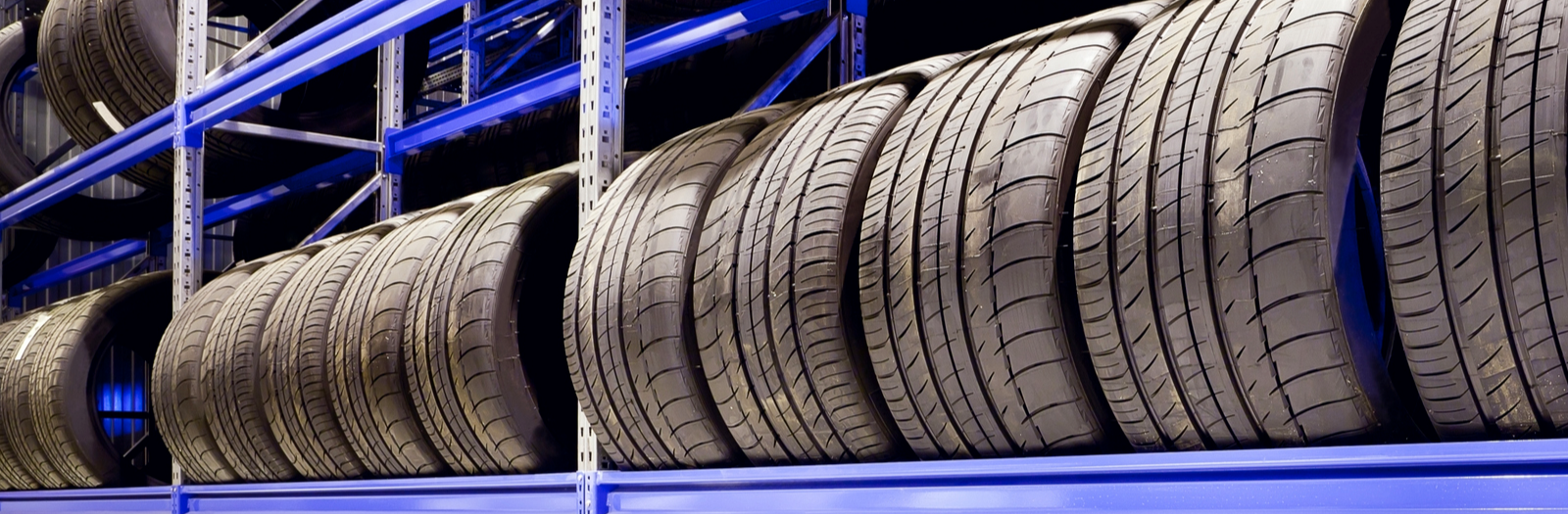
Tire Producers

The 2026 reporting deadline was May 31, 2026. Failure to submit reports on time or submit false or misleading reports may be subject to compliance orders and administrative penalty orders. Log in to your registry account to complete your report(s).

A person is considered a producer under the Tires Regulation if they supply tires into Ontario and one of the following apply:

  • Are the brand holder of the tire and have residency in Canada.
  • Have residency in Ontario, import tires from outside of Ontario, and supply them in Ontario.
  • Have residency in Ontario and market directly to consumers in Ontario (e.g. online sales).
  • Do not have residency in Ontario and market directly to consumers in Ontario (e.g. online sales).
  • Are the vehicle manufacturer and have residency in Canada.
  • Have residency in Ontario and import new vehicles for sale in Ontario.

Even if you do not meet the above definition, there may be circumstances where you qualify as a producer.

Note: There are exemptions under the Tires Regulation. If a tires producer meets an exemption threshold, they are not required to register or report to RPRA. The exemption thresholds change each year, and a producer must confirm each year. Learn more about determining if you are an exempt tires producer.

What are my obligations under the Tires Regulation?

Click the headings below to learn more about your obligations as a producer.

Under the Tires Regulation, producers are required to register with RPRA within 30 days of supplying tires in Ontario.

Register

Have questions about registration? View the following resources:

Producers are required to establish and operate a collection system for tires in Ontario. Producers should reference the Tire Collection Systems compliance bulletin for guidance.

Collection Sites

Producers must ensure that consumers can drop off tires free of charge at each site that is part of their collection system and satisfy the following requirements:

  • If the tire collection site is not a municipality, First Nation, Local Service Board or Crown site, it must accept, at a minimum:
    • Tires that are of a similar rim size and calculated weight as those supplied or provided at the site, and
    • Up to 10 tires per day from any person that are of a similar rim size and calculated weight as those supplied or provided at the site.
  • If the tire collection site is a municipality, First Nation or Crown site, it must accept, at a minimum:
    • Passenger and light truck tires, and
    • Up to 10 passenger and light truck tires per day from any person.
  • The tire collection site must be operated, readily accessible to the public and accept all tires during normal business hours.
  • If the tire collection site is not a municipality, First Nation, Local Service Board, or Crown Site it must be operated and accept tires during normal business hours throughout the performance year.
  • Municipal, First Nation, and Local Service Board collection sites are permitted to operate seasonally or for a limited number of days per week.
  • The tire collection site must accept tires that are still attached to rims.

Producers can reduce their accessibility requirements by providing options such as curbside collection or collection events.

Call-in Collection

For First Nation communities, Ontario Crown sites, and municipal sites located in municipalities with a population less than 1,000, the following requirements apply:

  • Once the site has more than 200 tires, they may notify a PRO or a large producer for pick up.
  • The tires must be collected within one year from notification.

For First Nation communities located in the Far North, PROs or large producers must make reasonable efforts to pick up tires within one year of being notified.

Management Requirements

Producers must ensure that all tires picked up from a collection site, regardless of whether it is part of the producer’s collection system, are managed (reused, retreaded or processed) and reported by March 31 of the following calendar year.

For the 2025-2029 performance periods, producers will have to recover, through reuse, retreading, or processing, at least 65% of all tires and 60% of large tires they supplied into Ontario, based on a three-year rolling average.

The weight of recovered resources should meet or exceed a producer’s management requirement, which is calculated based on the average of tires supplied over three years. For more information on minimum management requirements for future years, review this FAQ.

Recovered resources are:

  • Materials used or destined to be used by a person for the making of new products or packaging.
  • Materials reused for the same or a new purpose.
  • Materials repaired or retreaded for the same purpose.
  • Aggregate from tires (up to 20% of management requirement).

Materials that are not considered recovered (cannot count toward performance) include:

  • Materials that are land disposed.
  • Materials that are incinerated or used as fuel or a fuel supplement.
  • Materials that are stored, stockpiled, used as a daily landfill cover or otherwise deposited on land (unless they enrich soil or as aggregate within allowable limits).
  • Aggregate over the allowed limits.

Producers, or PROs on their behalf, can work with registered tires processors and retreaders to meet their management requirements. View the list of tire processors and retreaders here.

Working with PROs

Producers have the choice of establishing and operating their own collection and management systems or working with one or more producer responsibility organizations (PROs) registered with RPRA to meet their obligations.

Most producers will work with a PRO to meet their requirements, including performance reporting. If you have not yet contracted with a PRO, it is important that you do so as soon as possible to ensure that you can meet your obligations. In order for a PRO to report on your behalf, you must identify them in RPRA’s Registry. Learn more about PROs here.

A PRO is a person retained by a producer for the purpose of carrying out one or more of the following producers regulatory obligations under the Tires Regulation:

  • Arranging the establishment or operation of collection and management systems (hauling, retreading, reuse, or processing services).
  • Establishing or operating a collection or management system.
  • Preparing and submitting reports.

PROs operate in a competitive market, and producers can choose the PRO(s) they want to work with. The terms and conditions of each contract with a PRO may vary. View the list of registered PROs here.

Collection Activity Reporting

Producers, or PROs on their behalf, must regularly update their collection activities in RPRA’s Registry. Collection activities refer to collection sites, events, seasonal events, call-in and other activity types related to material collection systems.

For step-by-step instructions on how to report collection activities, read our guide.

For more information on reported collection activities that may appear on RPRA’s , view these FAQs.

Annual Supply Reporting

Each year, producers must submit the weight of tires they supplied into Ontario in the calendar year, two years prior, in RPRA’s Registry.

Producers are also required to pay their annual program fee when submitting their supply report.

To learn more about supply reporting, view the Supply Data Reporting Guide.

Deadline: Supply data reporting is due May 31 each year.

Supply Data Verification Reporting

Each year, large tire producers are required to submit a supply data verification report in accordance with the Tires Registry Procedure – Audit. Small producers are not required to submit a verification report but will be subject to inspections.

As outlined in the registry procedure,

  • A large tire producer is a producer whose average annual supply, calculated over a rolling three‑year period, is equal to or more than 500,000 kg.
  • The “medium” producer category has been removed.

Note: For the purposes of supply data verification, the definition of large and small producer differs from the definitions used in the Tires Regulation.

For more information on the updated producer definitions, please see our FAQ: ‘For annual supply reporting verification, how do I know if I am a small or large tire producer?’.

Deadline: Tire producers who meet the “large producer” threshold in the updated procedure must submit a supply data verification report by June 30, 2026.

Please note that this deadline has been extended from the deadline in the regulation due to RPRA’s consultation on updating large and small producer category thresholds, which were finalized and posted on May 1, 2026.

Annual Performance Reporting

Each year, producers, or PROs on their behalf, will have to report on the extent to which they were able to achieve their management requirement, including:

  • Number and calculated weight of tires used and collected in Ontario.
  • Number and calculated weight of tires sent for reuse on a vehicle.
  • number and calculated weight of tires sent for reuse for a new purpose.
  • number and calculated weight of tires retreaded.
  • actual weight of processed tire materials, by material type.

Most producers will work with a PRO to meet their requirements, including performance reporting. If you have not yet contracted with a PRO, it is important that you do so as soon as possible to ensure that you can meet your obligations. In order for a PRO to report on your behalf, you must identify them in RPRA’s Registry. Learn more about PROs here.

Performance Audit Reporting

Starting in 2024, and every three years after, producers, or PROs on their behalf, are required to submit a report auditing their performance from the three previous years. This report should be uploaded to the Registry along with the annual performance report. While the annual performance report reflects performance activity for the previous calendar year, the audit report must cover the three preceding years.

More information about tire audit requirements can be found in Appendix B of the Registry Procedure – Audit.

Deadline: The next performance audit report is due October 31, 2027.

Upcoming important dates

RegistrantRequirementDeadline
Tire producers who are required to registerRegister with RPRA, unless exemptWithin 30 days of marketing tires or a vehicle on which new tires are provided in Ontario
Tire producersSubmit annual supply report
– Report on the weight of tires supplied into Ontario in 2024.
– Pay the 2026 program fee.
May 31, 2026
Large tire producersSubmit annual supply data verification report

Note: Please note that this deadline has been extended from the deadline in the regulation due to RPRA’s consultation on updating large and small producer category thresholds, which were finalized and posted.
June 30, 2026
All producers, or a PRO on their behalfSubmit annual performance report

– The unit and weight of tires that were collected in 2025.
– The unit and weight of tires managed by reuse or retreading.
– The weight of resources recovered from processing tires.

Note: There are no performance audit requirements in 2026. The next performance audit report is due in 2027.
May 31, 2026
Unless otherwise stated, all information must be submitted through RPRA’s Registry.

Have questions?

Visit our Registry Resources for Tires to learn more about the Tires Regulation and how to meet your requirements. Resources include reporting guides, FAQs, how-to videos, and compliance documents.

For additional questions, contact our Compliance and Registry Team.